In brief
- India commissioned INS Mangrol on 12 October 2026, the third Mahe-class anti-submarine warfare shallow water craft built by Cochin Shipyard with over 80% indigenous content and waterjet propulsion for littoral operations.
- Pakistan commissioned the first Hangor-class submarine with Stirling-cycle air-independent propulsion in April 2026, while China deploys oceanographic survey vessels mapping thermoclines and acoustic channels across the Bay of Bengal.
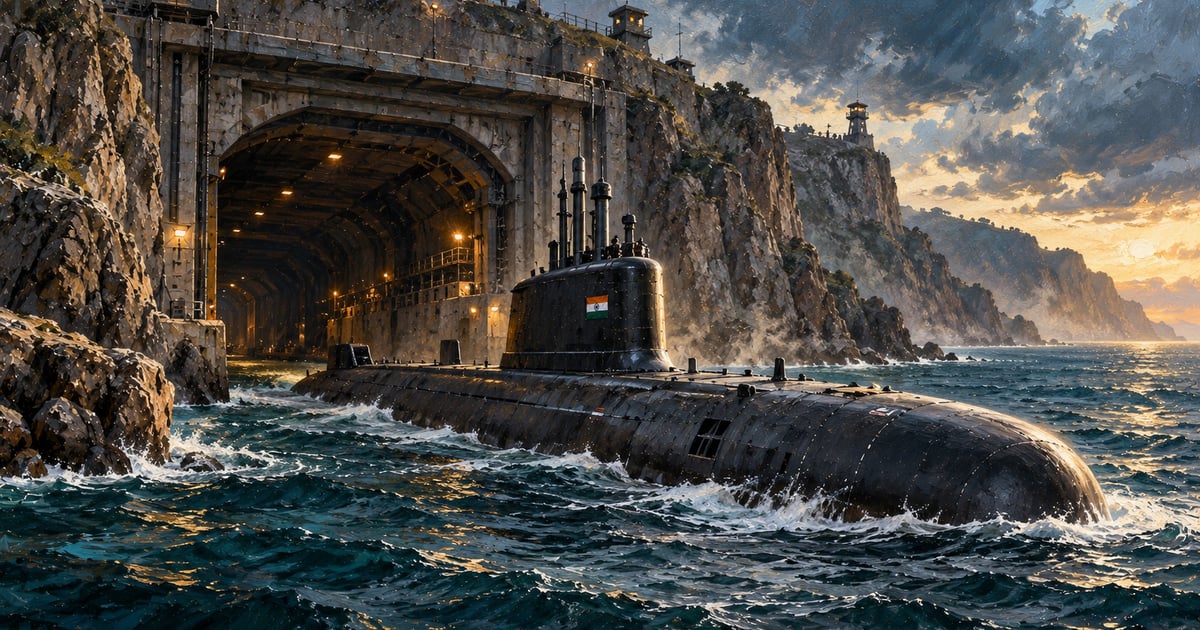
- India is constructing INS Varsha at Rambilli, a subterranean base carved into Eastern Ghats granite with direct deep-water access, to shelter Arihant-class nuclear ballistic missile submarines from satellite surveillance and shallow-water vulnerability.
- The Indian Navy integrates 12 P-8I Neptune aircraft, 24 MH-60R helicopters, hydrophone arrays across the Andaman-Nicobar ridge, six Kalvari-class submarines receiving DRDO fuel-cell AIP, and approved indigenous nuclear attack submarines into a layered undersea warfare grid.
On 12 October 2026, the Indian Navy formally commissioned INS Mangrol (P82) at Naval Dockyard, Mumbai, in a ceremony presided over by Vice Admiral Sanjay Vatsayan, Flag Officer Commanding-in-Chief of the Western Naval Command. Named after the historic maritime town in Junagadh, Gujarat, and reincarnating the battle honours of an erstwhile Soviet-built minesweeper, Mangrol is the third vessel of the Mahe-class Anti-Submarine Warfare Shallow Water Craft (ASW-SWC) to enter active service. Built by Cochin Shipyard Limited (CSL) with over 80% indigenous content, the vessel completed sea trials and formal delivery following its simultaneous launch alongside sister hulls Mahe and Malwan.
Yet the induction of a 78-metre littoral patrol craft represents far more than routine fleet replenishment. It is the visible tip of an expansive, multi-tiered overhaul of India’s undersea warfare posture. While Mangrol and its sister craft take up station along coastal approaches, 1,500 kilometres across the subcontinent on the shores of Andhra Pradesh, the Indian Navy is advancing Project Varsha—a heavily classified naval base near Rambilli designed with subterranean pens carved into the granite rock of the Eastern Ghats.
From shallow coastal waters to deep-sea oceanic trenches, New Delhi is re-engineering its naval architecture around a central priority: mastering subsurface warfare before an adversarial undersea presence locks down the Indian Ocean Region (IOR).
1. Tactical Acoustics: Why Shallow-Water Hunters Matter
Modern anti-submarine warfare is often viewed through the prism of blue-water fleet engagements—heavy 7,000-tonne destroyers deploying towed array sonars across vast oceanic expanses. However, the coastal shelf presents an entirely different acoustic environment.
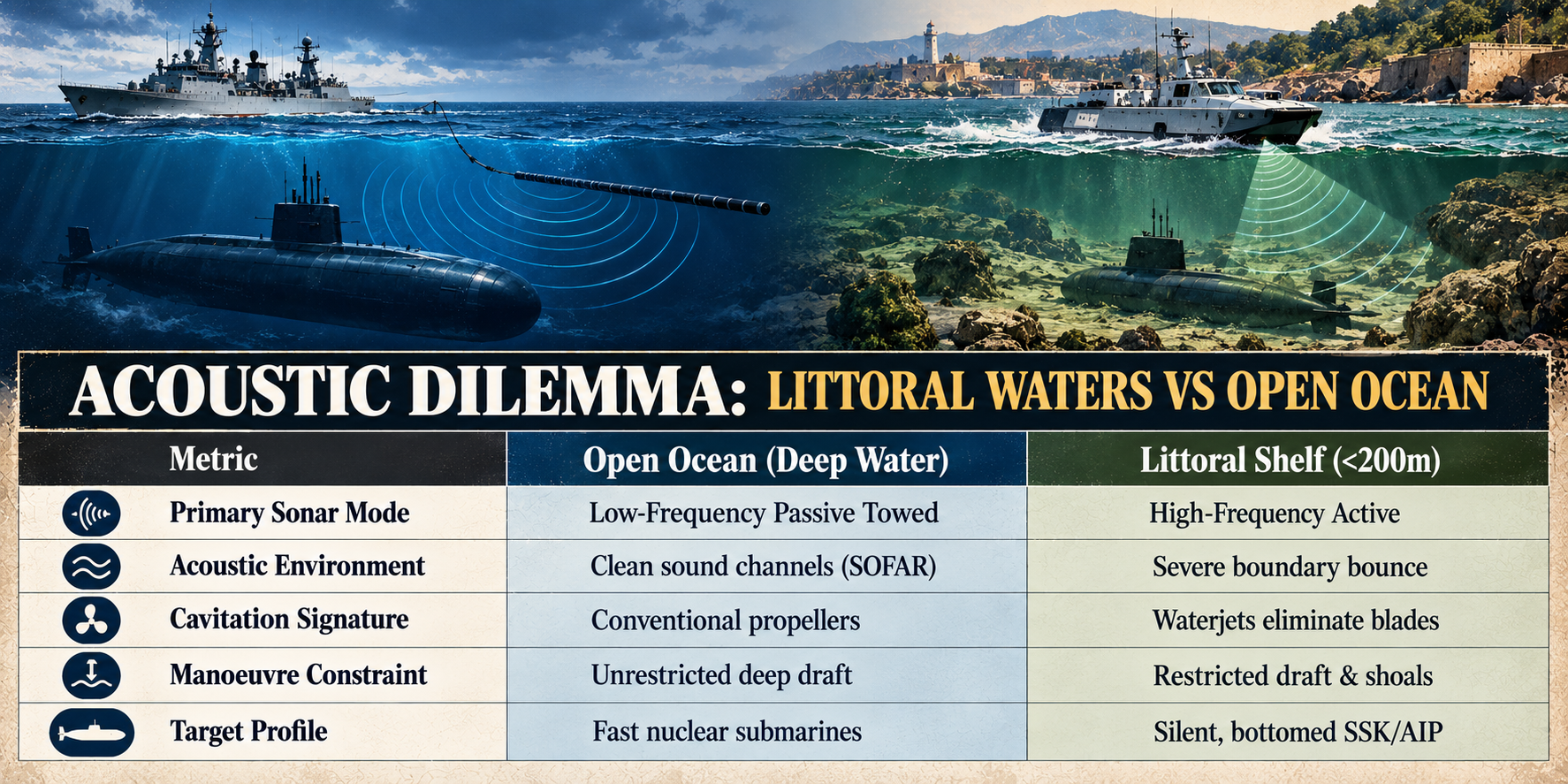
In shallow littoral zones—such as the Gulf of Kachchh, the Gulf of Khambhat, and the approaches to Mumbai or Karwar—underwater acoustics deteriorate rapidly. High levels of ambient background noise from commercial shipping, combined with severe seabed reverberation, complex tidal currents, and sharp salinity-temperature thermoclines, blind the low-frequency passive sonars carried by large warships. Furthermore, deep-draft frigates cannot safely manoeuvre in close coastal waters where enemy diesel-electric submarines, operating on silent battery power or bottoming out on the seabed, can lie in wait to deploy torpedoes or lay covert minefields.
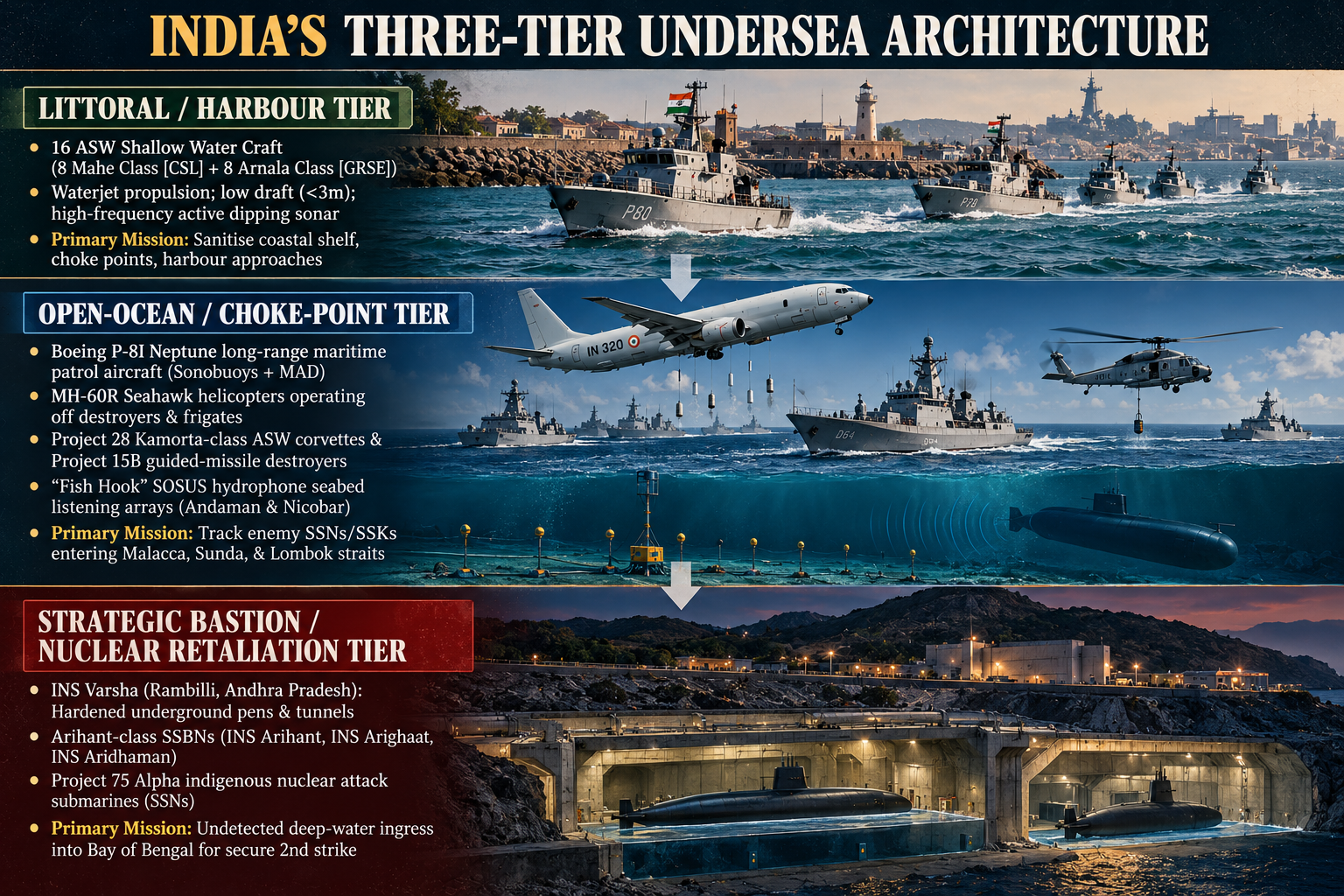
This operational gap prompted the Indian Navy's 16-ship ASW-SWC programme, split evenly between Cochin Shipyard Limited (the eight-ship Mahe class) and Garden Reach Shipbuilders & Engineers in Kolkata (the eight-ship Arnala class).
The Technical Edge of INS Mangrol
According to specifications released by the Press Information Bureau, INS Mangrol is engineered specifically to conquer these acoustic challenges:
Waterjet Propulsion: Instead of conventional marine propellers that produce blade cavitation—the telltale sound of collapsing air bubbles that acoustic listening stations can track—Mangrol relies on advanced waterjets powered by diesel engines. This installation provides sprint speeds exceeding 25 knots while substantially reducing radiated acoustic noise in shallow water.
Low Draft & Agility: Drawing under three metres of water, the vessel operates comfortably in coastal shoals, harbour channels, and inter-island waters that are inaccessible to major surface combatants.
Specialised Sensor Suite: The vessel integrates an indigenous hull-mounted active sonar paired with a variable-depth, high-frequency active dipping sonar. High frequencies cut through local boundary reverberation, allowing operators to detect quiet metallic hulls concealed beneath thermoclines.
Offensive Firepower: For interception, Mangrol carries indigenous lightweight torpedoes, anti-submarine rocket launchers (capable of delivering rapid salvoes of depth-charge-type ordnance onto an acoustic contact), and automated remote-controlled weapon systems for Low-Intensity Maritime Operations (LIMO) and mine-laying capabilities.
2. The Twin Pressure: China’s Ingress and Pakistan’s AIP Leap
India's renewed focus on undersea warfare is not taking place in a vacuum. It is an urgent response to structural transformations in its immediate maritime neighbourhood.
The Hangor-Class Modernisation in Pakistan
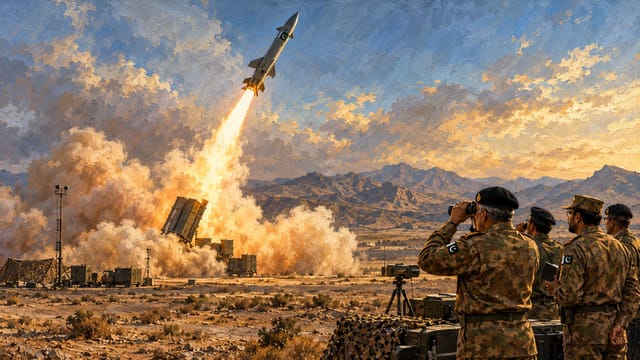
On the western flank, the Pakistan Navy is executing the most consequential fleet recapitalisation in its history. Under an agreement with China, Islamabad is acquiring eight Hangor-class diesel-electric attack submarines, developed from the Chinese Type 039B Yuan class.
As reported by Naval News, the lead vessel, PNS Hangor, was commissioned in April 2026 in Sanya, China, and completed transit to Karachi in June 2026. Sister submarines Ghazi and Mangro are advancing rapidly through launching and fitment stages across Chinese and Pakistani yards.
Crucially, the Hangor class incorporates Stirling-cycle Air-Independent Propulsion (AIP). Unlike legacy diesel boats that must surface or snorkel every few days to run diesel generators—exposing themselves to radar and infrared detection—AIP boats can remain fully submerged for up to three weeks at low patrol speeds. Armed with heavyweight torpedoes and the Babur-3 nuclear-capable submarine-launched cruise missile (SLCM), these stealthy boats pose a serious hazard to Indian commercial shipping corridors, oil refinery offloading points in Gujarat, and major fleet staging facilities.
China's Oceanographic Mapping in the Bay of Bengal
Simultaneously, the People’s Liberation Army Navy has extended its subsurface footprint deep into the Indian Ocean. Since PLAN nuclear attack submarines first docked in Colombo in 2014, Chinese submarine task forces have maintained regular operational cycles across the Arabian Sea and Bay of Bengal, backed by logistical infrastructure at China’s support base in Djibouti and access arrangements spanning Gwadar in Pakistan to Kyaukpyu in Myanmar.
Even more significant than submarine transits is Beijing's preparatory hydrographic campaign. A comprehensive study by the Center for Strategic and International Studies (CSIS) revealed that China has deployed dozens of state-owned "civilian" oceanographic survey vessels—including the Xiang Yang Hong series, Yuan Wang tracking vessels, and Lan Hai 101—across the eastern Indian Ocean.
These vessels are not solely engaged in commercial or climate science. By routinely deploying bathythermographs, sonar profiling equipment, and unmanned underwater gliders, they systematically chart:
The salinity and temperature gradients across different ocean depths (thermoclines).
The underwater topography of ridges, trenches, and undersea canyons.
Ambient acoustic duct channels (the SOFAR channel), which allow sound to travel thousands of kilometres underwater.
This data provides submarine commanders with accurate acoustic roadmaps. It allows them to navigate silent transit lanes, hide beneath thermal layers, and evade detection by enemy maritime patrol aircraft.
3. INS Varsha: The Secret Bastion on the East Coast
While shallow-water craft counter regional threats along the shoreline, India’s grand strategic imperative lies in securing its sea-based nuclear deterrent. This is the operational purpose of INS Varsha.
The Strategic Vulnerability of Visakhapatnam
India's nuclear ballistic missile submarine fleet—the Arihant class—has traditionally operated out of the naval dockyard at Visakhapatnam, the headquarters of the Eastern Naval Command. Yet Visakhapatnam presents major operational constraints:
Commercial Co-location: The naval dockyard shares a narrow approach channel with one of India's busiest commercial ports. Submarine departures and arrivals cannot be fully masked from civilian port traffic or foreign commercial vessels.
Satellite Transparency: Modern commercial and military synthetic aperture radar (SAR) satellites orbit with revisit rates measured in hours. Any surface transit into or out of Visakhapatnam harbour is promptly captured and analysed by foreign intelligence services.
Shallow Exit Profiles: Submarines departing Visakhapatnam must navigate miles of continental shelf waters before reaching deep dive trenches, leaving them vulnerable to shadowing by hostile attack submarines waiting in international waters.
The Rambilli Redoubt: Project Varsha
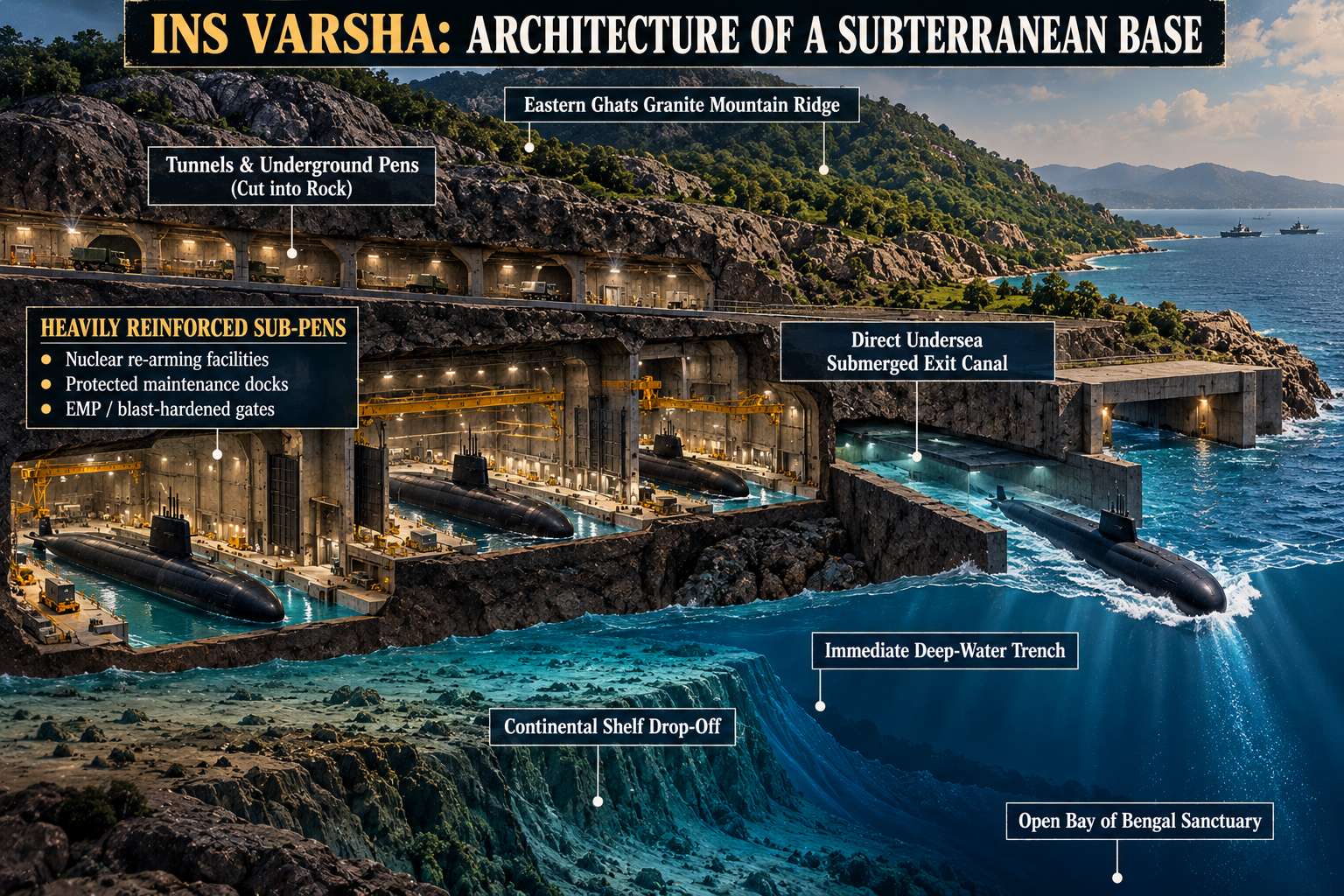
To resolve these vulnerabilities, the Indian Ministry of Defence initiated Project Varsha at Rambilli, approximately 50 kilometres south of Visakhapatnam in Andhra Pradesh. As detailed by SP’s Naval Forces and reporting in The Times of India, INS Varsha is a subterranean military installation spanning roughly 20 square kilometres.
Modelled conceptually on similar hardened redoubts—such as China’s Yulin Naval Base on Hainan Island and Cold War-era Soviet installations on the Kola Peninsula—INS Varsha incorporates:
Tunnels and Hardened Submarine Pens: Underground channels excavated directly into the granite hills of the Eastern Ghats. These hardened bunkers allow nuclear submarines to undergo refits, maintenance, and missile loading under hundreds of metres of overhead rock, shielded from optical satellites, radar surveillance, and precision bunker-buster strikes.
Direct Deep-Water Access: Unlike Visakhapatnam, the bathymetry off Rambilli drops steeply into the Bay of Bengal basin. Submarines can exit subterranean pens submerged and slip directly into deep waters without surfacing, denying adversary reconnaissance any visual or satellite confirmation of their deployment.
Integrated Nuclear Infrastructure: The facility is designed to interface with the Bhabha Atomic Research Centre (BARC) and the Defence Research and Development Organisation (DRDO), providing secure staging for naval reactor servicing and the vertical loading of K-15 (750 km range) and K-4 (3,500 km range) submarine-launched ballistic missiles.
4. The Bastion Strategy: Safeguarding India’s Second-Strike Retaliation
India operates under an explicit nuclear doctrine: No First Use (NFU) combined with Credible Minimum Deterrence. This doctrine requires surviving a devastating first strike and retaliating with overwhelming punitive force.
Land-based silos and air bases are fixed targets that an adversary can locate, monitor, and strike during a first-wave missile salvo. Consequently, the undersea leg of the nuclear triad—the SSBN—is the cornerstone of India’s strategic deterrence.
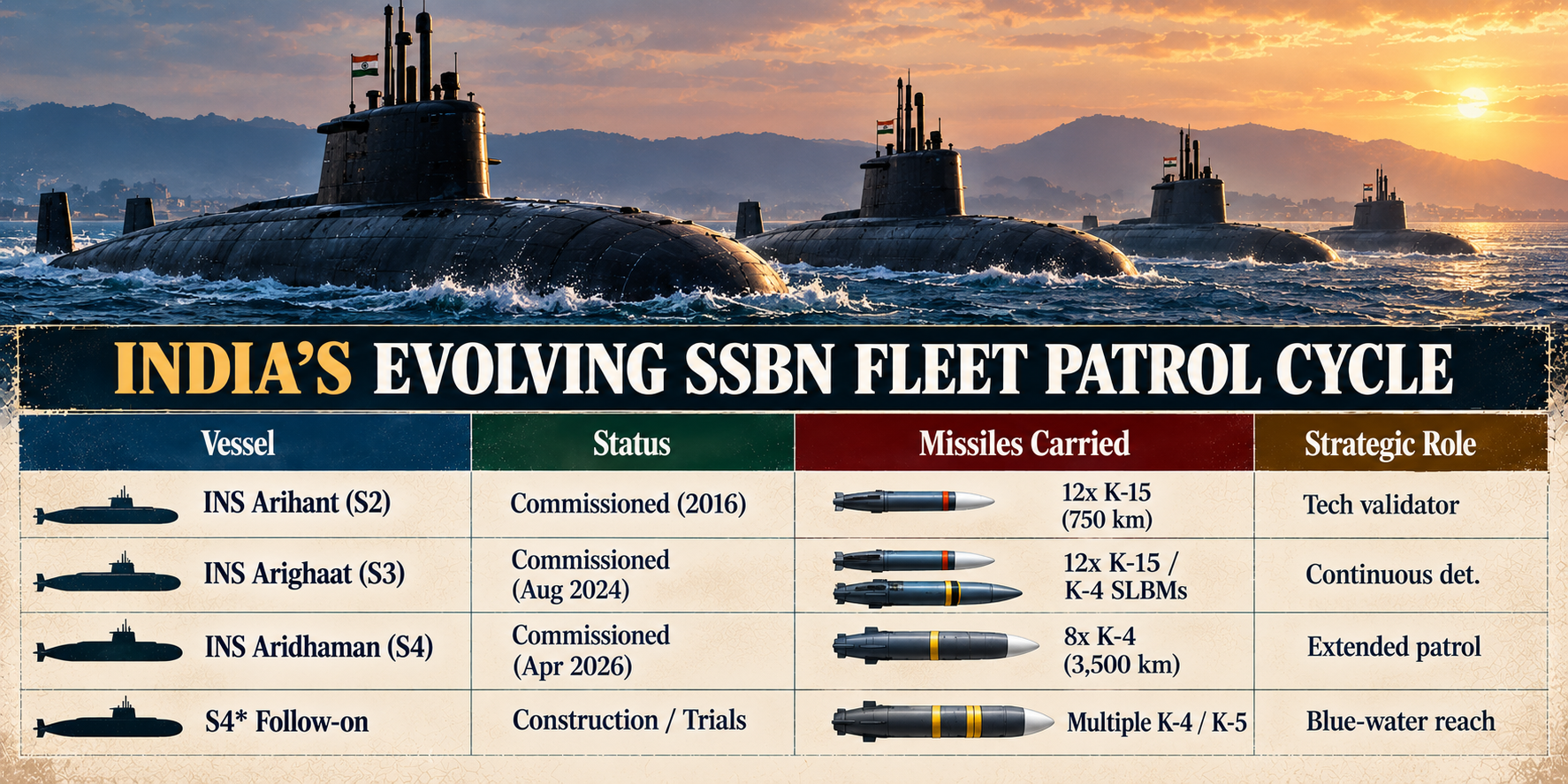
With the commissioning of INS Arighaat in August 2024 and the subsequent induction of the larger Aridhaman (S4) in 2026, the Indian Navy established the operational mass required for continuous at-sea deterrence. However, an SSBN is only as secure as the waters it patrols.
How the Bay of Bengal Functions as a Protected Bastion
Rather than deploying SSBNs across open, vulnerable oceanic expanses where foreign attack submarines could track them, major naval powers establish "bastions"—geographically sheltered oceanic zones guarded by friendly air, surface, and sub-surface forces.
The Bay of Bengal is India’s natural bastion:
Flank Security via the Andaman & Nicobar Islands: The island chain forms a 750-kilometre maritime barrier enclosing the eastern entrance of the Bay. Foreign submarines attempting to enter from the South China Sea must transit narrow choke points—the Malacca, Sunda, or Lombok straits—where Indian Boeing P-8I Neptune maritime patrol aircraft and seabed acoustic monitoring arrays maintain round-the-clock surveillance.
Inner Sanitisation: Within the bastion, surface combatants and naval aircraft routinely clear the water space. Hostile submarines cannot stalk India's SSBNs without entering an acoustic surveillance envelope.
The Role of INS Mangrol: While SSBNs operate in deep waters, they remain vulnerable during the transitional phase when leaving port or approaching maintenance facilities. Shallow-water craft like Mangrol sanitize these vulnerable littoral corridors, sweeping harbour approaches for midget submarines, adversary special forces delivery vehicles, bottom-laid mines, and quiet conventional boats attempting to ambush deploying assets.
5. Completing the Web: The Integrated ASW Grid
Undersea warfare is fundamentally an information discipline. Success relies on layered sensor integration rather than any single weapon system. The Indian Navy has systematically tied these disparate elements into a unified maritime domain awareness grid:
Airborne Surveillance: A fleet of 12 Boeing P-8I Neptune long-range patrol aircraft, operating from INS Rajali (Arakkonam) and INS Hansa (Goa), provides high-speed hunter-killer capabilities. Equipped with AN/APY-10 multi-mode radars, magnetic anomaly detectors (MAD), and air-droppable sonobuoys, these aircraft work alongside 24 MH-60R Seahawk multi-role helicopters deployed aboard front-line surface combatants.
Undersea Listening Arrays ("Fish Hook"): In collaboration with regional maritime partners, India has installed underwater hydrophone arrays across the Andaman and Nicobar ridge to monitor sub-surface traffic passing through the Malacca and Sunda straits. Any metallic contact triggering these sensors is promptly investigated by maritime patrol aircraft.
Conventional Submarine Recapitalisation: Below the surface, the six Kalvari-class (Scorpene) submarines provide defensive screen patrols along the western seaboard. Their upcoming refits will integrate indigenous DRDO fuel-cell Air-Independent Propulsion modules to extend their submerged endurance. The long-delayed Project 75I programme aims to add six larger AIP-equipped attack submarines to reinforce these patrols.
Project 75 Alpha: To safeguard the fleet across the open expanse of the Indian Ocean, India's Cabinet Committee on Security has authorised the construction of indigenous nuclear-powered attack submarines (SSNs). These fast, nuclear-powered boats will serve as blue-water escorts for carrier strike groups and hunt adversary submarines shadowing Indian SSBNs.
The Strategic Balance
The commissioning of INS Mangrol and the operational emergence of INS Varsha demonstrate that India has moved past ad-hoc naval procurement. Undersea warfare is no longer treated as a secondary operational tier behind aircraft carriers and surface combatants.
Instead, New Delhi has recognised that control of the Indian Ocean will be decided beneath the waves. By shielding its coastal waters with nimble, waterjet-propelled hunters like Mangrol and entrenching its strategic nuclear deterrent within the subterranean granite pens of INS Varsha, the Indian Navy is establishing a comprehensive, layered defence. This architecture ensures that even as rival navies expand their presence across the Indo-Pacific, India maintains operational control of its home waters and safeguards the survivability of its strategic second strike.