In brief
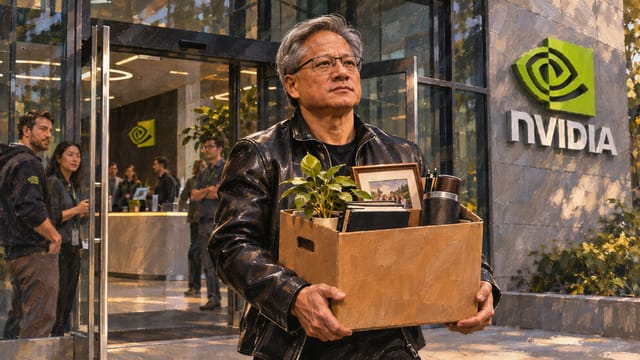
- Nvidia Board Chair Harvey Jones told investors on the company’s third-quarter earnings call that directors did not intend to reinstate co founder Jensen Huang, five days after his resignation in disgrace.
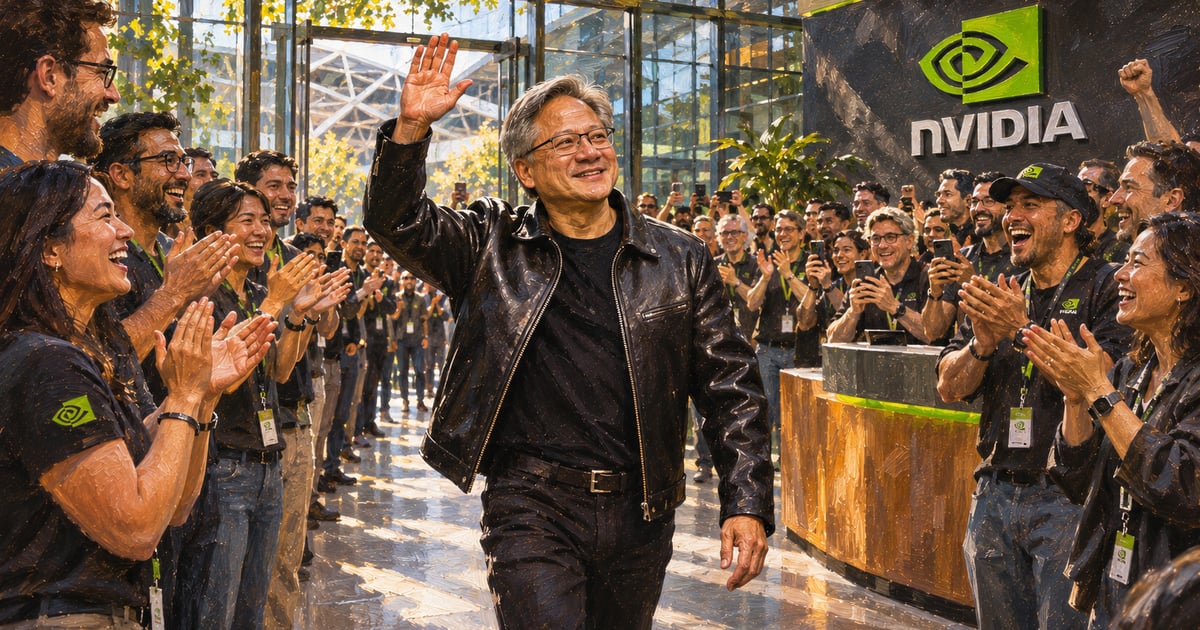
- Six days later the board voted unanimously to restore Huang as President, Chief Executive Officer and Board Director, while an independent investigation into whether he was targeted by foreign intelligence remained unfinished.
- The ouster centred on national security as much as workplace misconduct, with Huang stepping down after acknowledging a relationship with Alice Huang, a Chinese national and former Megaspeed executive, who allegedly remained in contact with a Chinese security official.
- Trump claimed direct credit for the reversal, saying he convinced them and that he spoke with Nvidia’s board directly and indirectly, with Vice President JD Vance also involved in the discussions.
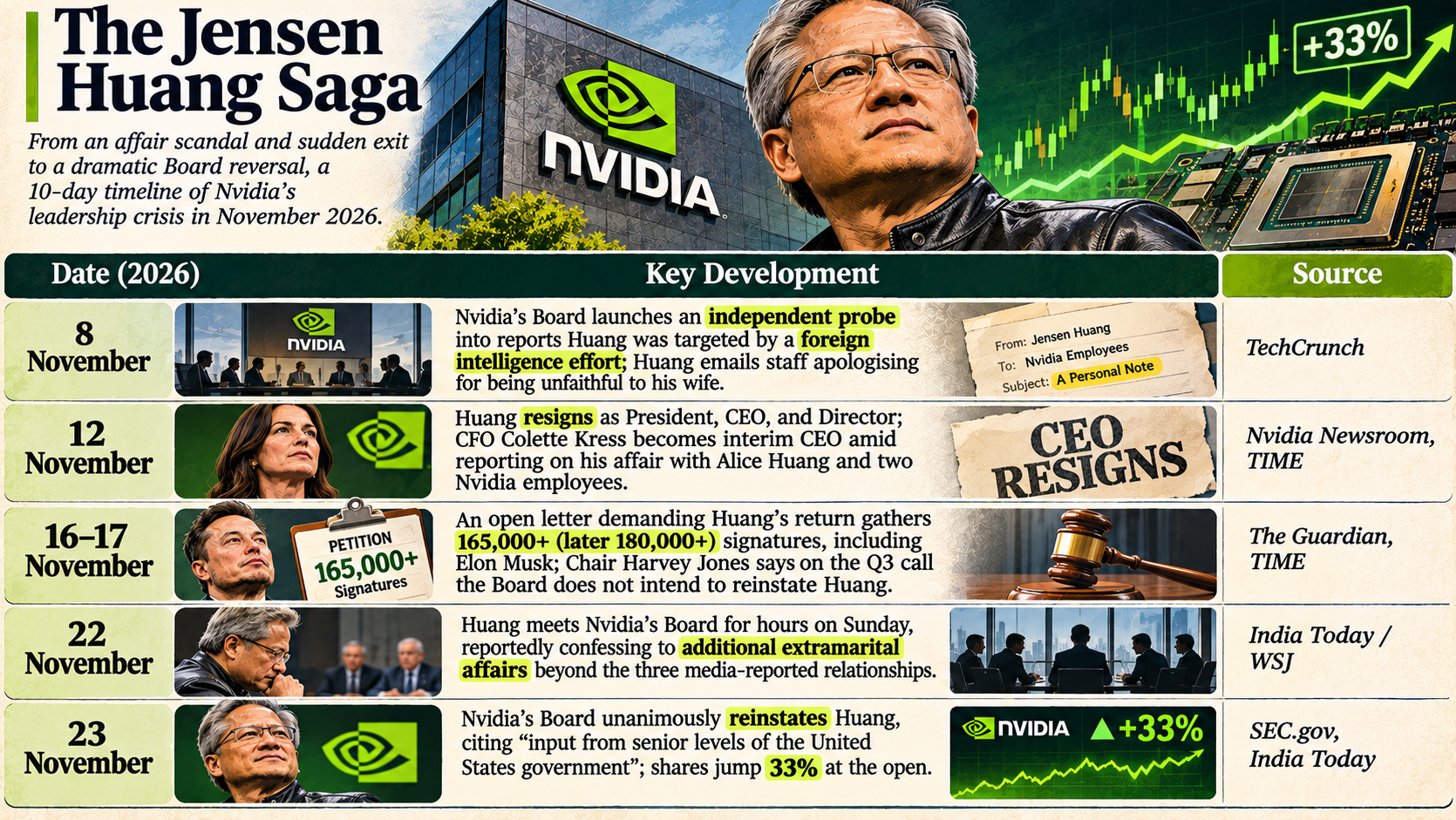
On 17 November 2026, Nvidia Board Chair Harvey Jones told investors on the company’s third-quarter earnings call that directors did "not intend to reinstate" co-founder Jensen Huang, five days after the 63-year-old executive resigned in disgrace (TIME). Six days later, on Monday 23 November, the exact same board voted unanimously to restore Huang as President, Chief Executive Officer, and Board Director—even though its independent investigation into whether he had been targeted by foreign intelligence was still unfinished (SEC.gov).
Nvidia’s shares surged 33% at Monday’s opening bell to $165.57, recovering much of the market’s recent sell-off, while employees lined the walkways of the Santa Clara headquarters to cheer Huang’s return (India Today, Financial Times). Yet the reversal—11 days from resignation to reinstatement—was not driven by a sudden clearing of the facts. It was engineered by an intense lobbying campaign reaching the Oval Office, a marathon Sunday confession in which Huang reportedly admitted to more extramarital affairs than previously known, and a board willing to trade corporate-governance orthodoxy for market stability (TIME, India Today).
How the 11-Day Crisis Unfolded
The speed of Nvidia’s boardroom U-turn is easiest to see across the two-week sequence of public filings and leaks:
At the heart of the original ouster was national security as much as workplace misconduct. Huang had stepped down after acknowledging a relationship with Alice Huang (no relation), a Chinese national and former executive at Singapore-based Nvidia partner Megaspeed (TIME). The New York Times reported that Alice Huang remained in contact with an officer of China’s Ministry of State Security from spring 2025 through autumn 2026, while Bloomberg reported that a company she founded procured Nvidia chips installed at a Shanghai data centre tied to the Megaspeed network (TIME). Beijing has dismissed the espionage allegations as baseless (India Today).
Alongside the Alice Huang revelations, Reuters reported that Huang had misled several company leaders about the nature of that relationship, while separate reports detailed affairs with two Nvidia employees—including Kimberly Powell, Vice President of Healthcare, who reported directly to him (TIME, Human Resources Online).
Donald Trump’s Role in Flipping the Boardroom
With Nvidia’s share price sliding—and rumored internal or external successors failing to reassure Wall Street—allies of Huang mounted an aggressive lobbying push that ran straight through the White House (Morningstar, Financial Times).
President Donald Trump made no secret of his involvement. Speaking to CNBC on 23 November, Trump claimed direct credit for the reversal, stating: "I convinced them" and "I made the deal" (TIME). He confirmed that he spoke with Nvidia’s board "directly and indirectly", and that Vice President JD Vance was also involved in the discussions (TIME). On Truth Social, Trump added that Attorney General Todd Blanche did "not possess evidence" that Huang had engaged in unlawful conduct (TIME).
Nvidia’s official SEC filing stopped short of naming Trump, but confirmed that external political clearance drove the vote: "In the process of reaching its decision, the Board received input from senior levels of the United States government, and based on that input, the Board is confident that Mr. Huang’s reinstatement poses no national security risk" (SEC.gov).
The political intervention immediately drew scrutiny over conflicts of interest and internal White House divisions. Public financial disclosures show Trump purchased between $1 million and $5 million in Nvidia stock in May 2025—days before his administration rescinded a Biden-era chip rule—and made at least three further purchases after permitting Nvidia to sell H200 chips to China; Monday’s stock surge lifted the value of his personal holdings by as much as $15 million (TIME, Financial Times). White House representatives have maintained that Trump’s assets are managed by independent advisers (TIME).
The Sunday Confession: More Affairs Disclosed Before the Vote
Before the Board signed off on Monday’s announcement, directors demanded a full accounting of Huang’s personal conduct. According to The Wall Street Journal, cited by India Today and Forbes, Huang sat through a marathon, hours-long meeting with the Board on Sunday 22 November (India Today, Forbes).
During that session, Huang reportedly admitted to having additional extramarital affairs beyond the three already reported in the press (Alice Huang, Kimberly Powell, and a second unnamed Nvidia employee) and expressed regret over his behaviour (India Today). Board members reportedly lectured him on transparency and candour before concluding that reinstating him remained in shareholders’ best interests (India Today).
That phrasing carried directly into Nvidia’s 23 November press release, which stated that directors were satisfied with "Mr. Huang’s candor and ability to lead NVIDIA" (SEC.gov). To institutionalise oversight, the Board also announced two structural checks: a new National Security and Export Control Committee made up solely of independent directors, and a search for a Chief Compliance Officer reporting directly to the Nominating and Corporate Governance Committee (SEC.gov).
Why the Crisis Is Far From Over
Returning to the corner office has stabilised Nvidia’s stock—at least temporarily—but it has not closed the underlying investigations:
Active Intelligence & Export Probes: Director of National Intelligence Jay Clayton confirmed on Sunday 22 November that the US investigation into Alice Huang and Megaspeed remains ongoing, while US authorities have added Megaspeed to a trade blacklist and California officials are investigating whether restricted chips reached China (TIME, The Guardian). Nvidia’s own independent board committee probe into foreign intelligence targeting also continues (SEC.gov).
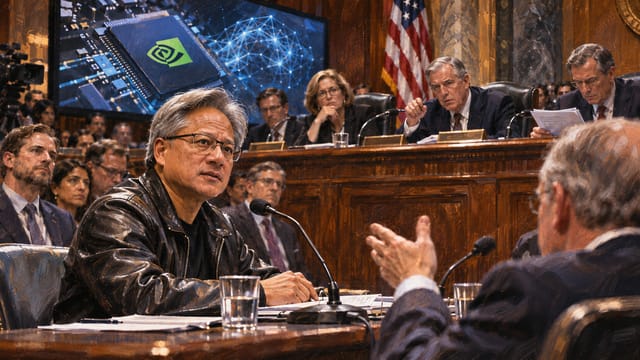
Bipartisan Congressional Scrutiny: Republican Senator John Curtis publicly demanded to know who in the government weighed in and on what basis the board ruled out security risks (TIME). Huang has agreed to a transcribed interview on 1 December 2026 before the House Intelligence, Foreign Affairs, and China committees, and faces a requested public Senate hearing on 3 December 2026—with Democrats set to take control of both chambers in January (TIME).
Governance Credibility: Just as Sam Altman’s 2023 return to OpenAI left him more powerful than before his ouster, Morningstar’s Lindsey Stewart noted that bringing Huang back before an active investigation concludes deepens corporate-governance questions for institutional investors (TIME).
Huang may have won the battle for Santa Clara with help from Wall Street, Silicon Valley, and the White House. Winning over Capitol Hill—and surviving the findings of the ongoing Megaspeed and foreign-intelligence probes—will be a far tougher test.