The geopolitical architecture of the Middle East is undergoing a permanent realignment, moving away from pan-Arab identity politics toward cold, interest-driven security coalitions. In April 2026, the United Arab Emirates formally withdrew from OPEC, terminating its 58-year membership within the cartel. Far from a mere disagreement over crude production quotas, the exit represents a decisive break from Saudi Arabian hegemony.
This diplomatic schism follows direct kinetic friction. Just months earlier, in January 2026, Saudi Arabian forces conducted targeted airstrikes against UAE-backed separatist fighters in Yemen, marking the first instance of a Gulf Cooperation Council (GCC) state openly bombing assets aligned with another member.
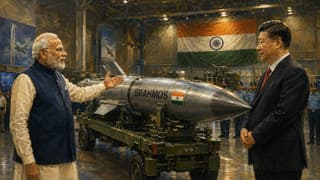
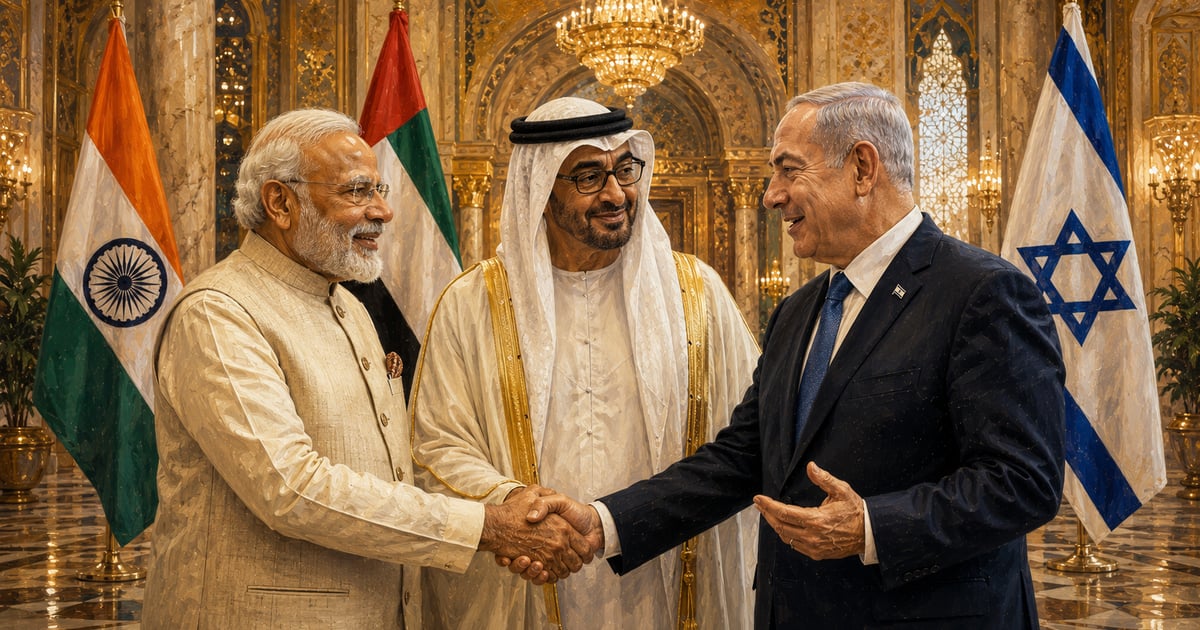
As the traditional six-nation bloc splintered over irreconcilable strategies in Yemen, Sudan, and oil pricing, an entirely different power structure emerged. During the recent regional escalation with Iran, Abu Dhabi integrated Israeli Iron Dome batteries and hosted Israel Defence Forces (IDF) personnel on its soil, marking a historic military deployment. Simultaneously, India has stepped in as the industrial and economic anchor of this configuration. The result is the rise of the India-Israel-UAE triangle, an infrastructure and security axis that is rapidly replacing the legacy diplomatic frameworks of the Gulf.
What is Driving the Collapse of the GCC?
The breakdown of the Gulf Cooperation Council stems from fundamentally incompatible visions of regional order between its two largest economic powers. Saudi Arabia prioritises state sovereignty, territorial hierarchy, and diplomatic de-escalation to safeguard its domestic economic transformations. Conversely, the UAE pursues a strategy built on maritime port-based power projection, maritime chokepoint control, and direct support for separatist movements across the Horn of Africa and the southern Arabian Peninsula.
The Three-Front Proxies and Geopolitical Incompatibility
This structural divergence has manifested across three distinct operational fronts, rendering the 1981 GCC founding charter practically obsolete. Because the charter contains no formal dispute resolution or internal suspension mechanisms, the bloc lacks the institutional machinery to handle internal fragmentation.
The Sudan Proxy War: The conflict has become a direct battleground between the two Gulf states. Saudi Arabia, partnered with Pakistan via a $1.5 billion arms supply arrangement, backs the Sudanese Armed Forces (SAF). The UAE counters this by running a continuous logistical airlift to supply the Rapid Support Forces (RSF) paramilitary group.
The African Horn and Red Sea Control: The strategic rivalry extends into maritime bottlenecks. The UAE has established operational military installations in Berbera (Somaliland) and Bosaso (Puntland), gaining crucial levers near the Bab el-Mandeb strait. This network functions alongside Israel's diplomatic recognition of Somaliland. To check this expansion, Saudi Arabia has formed a defensive counter-coalition alongside Egypt, Somalia, and Eritrea, with Cairo going so far as to close its airspace to UAE cargo flights bound for African proxy theatres.
The OPEC Resource Schism: By exiting OPEC, the UAE removed roughly 12% of the cartel’s total oil production capability. Abu Dhabi’s economic blueprint requires aggressive, immediate production monetisation to fund its domestic artificial intelligence and technology transitions, a reality that clashes directly with Riyadh’s long-term price-support strategies.
The Structural Robustness of the New Power Triangle
Unlike the identity-based alliances of the past, the India-Israel-UAE axis operates purely on commercial and security interdependence. The triangle brings together the distinct, complementary assets of its three nodes: the UAE’s sovereign financial power, Israel’s advanced defence and agricultural technologies, and India’s massive industrial scale and consumer market.
During the recent hostilities with Iran, this operational system was heavily tested. Faced with an offensive involving 550 ballistic missiles and upwards of 2,200 drones directed at Gulf targets, Israeli air defence teams actively intercepted incoming salvos over the UAE. This real-time coordination, supplemented by deployment of active Iron Beam lasers and Spectro surveillance nodes, validated the security logic of the Abraham Accords under live combat conditions.
This security architecture is mirrored by deep economic integration. Bilateral trade between India and the UAE reached a historic $101.25 billion in the 2025-26 financial year, tracking steadily toward a joint target of $200 billion by 2032. The UAE now ranks as India's third-largest global trading partner, backed by a stable baseline of $25.19 billion in foreign direct investment flowing into Indian sectors, complemented by $48.3 billion in Indian outbound investment directed into the Emirates.
Minilateralism in Action: The I2U2 and IMEC Frameworks
Institutional integration is moving ahead through formalised minilateral frameworks that bypass traditional multilateral deadlocks:
The I2U2 Agricultural Corridors: Under this initiative, the UAE is deploying $2 billion in capital to construct high-tech food parks across India. These production facilities utilise Israeli drip-irrigation and water-management systems to secure long-term food supply chains for the Gulf, supported by 30 operational Israeli Centres of Excellence across Indian states.
Energy Integration: Capital flows are solidifying through long-term infrastructure contracts. In January 2026, New Delhi and Abu Dhabi finalised a 10-year liquefied natural gas (LNG) supply agreement delivering 0.5 million tonnes annually, alongside a parallel $330 million hybrid renewable energy project in Gujarat.
The Multi-Modal Transit Corridor: The India-Middle East-Europe Economic Corridor (IMEC) serves as a strategic counterweight to China’s Belt and Road Initiative. By securing assets like the port of Haifa through Indian consortia, the alliance has linked the Indian subcontinent directly to European markets via UAE transit nodes, creating an integrated economic corridor.
Critical Fault Lines: Can the Triangle Hold?
Despite the clear convergence of interests, significant structural pressures could slow the growth of this trilateral alliance. The primary friction point lies in India’s long-standing commitment to strategic multi-alignment. New Delhi maintains a vital relationship with Saudi Arabia, which remains a cornerstone of its energy security and yields over $35 billion in bilateral trade. Indian policymakers will naturally resist any maritime or diplomatic arrangements that force a binary choice between Riyadh and Abu Dhabi.
Furthermore, Israel remains a highly sensitive variable within regional public diplomacy. While the UAE leadership views defence cooperation with Jerusalem as an existential necessity against regional threats, local public sentiment across the wider Gulf remains sharply critical. This friction creates domestic risks for Arab signatories of the Abraham Accords and presents a delicate balancing act for India, which must navigate its growing security alignment with Israel alongside its complex energy dependencies and relationships across the wider Middle East.
Actionable Strategy for Global Market Observers
Diverge from Legacy GCC Indices: Reallocate regional risk assessments away from the GCC as a singular monolithic entity. Financial portfolios should evaluate Saudi-aligned assets and UAE-aligned infrastructure networks as distinct, competing economic systems.
Monitor Critical Maritime Chokepoints: Track capital investments flowing into secondary maritime nodes like Berbera in Somaliland and Haifa in Israel. These locations are outgrowing their domestic roles to become key geopolitical listening posts and logistical strongholds.
Hedge for Continued OPEC Volatility: Anticipate a structural decline in OPEC's long-term market pricing power. The exit of swing producers like the UAE enables individualised, volume-driven energy monetisation strategies that could lead to independent pricing models.
Track Indian Dual-Use Manufacturing: Monitor joint defence ventures based in India, such as the Caracal small arms installations in Hyderabad. These facilities provide an early indicator of how Western and Israeli military technology can scale through Indian industrial capacity.
The breakdown of the old Gulf consensus has permanently altered the geopolitics of the region. As the legacy security frameworks of the Middle East fade, they are being replaced by an unvarnished alignment of money, technology, and military hardware. Investors and strategists who fail to read this new map risk anchoring themselves to an outdated order.