During a diplomatic visit to Oslo, an unscripted confrontation exposed the widening chasm between international data indexes and geopolitical reality. As Prime Minister Narendra Modi exited a joint press statement, Norwegian journalist Helle Lyng directed a pointed challenge toward him: "Prime Minister Modi, why don't you take some questions from the freest press in the world?" The video of the encounter quickly circulated across global networks, framed as a classic confrontation between Western journalistic accountability and non-Western political evasion.
Lyng’s authority rested upon a singular, widely accepted metric: the World Press Freedom Index, published annually by Reporters Without Borders (RSF). In the latest iteration of this index, Norway secures the absolute top spot, whilst India languishes at 157th out of 180 countries.
The underlying message of the exchange appeared definitive, yet the instrument driving this global shaming is structurally flawed. A closer look at the data reveals that the metric relies on a combination of unscientific perception surveys and mathematical models that systematically penalise high-population democracies. Peer-reviewed communication journals have documented these structural failures for well over fifteen years, demonstrating that the index functions less as an objective evaluator of media liberty and more as an ideological soft-power tool.
What is the World Press Freedom Index?
The World Press Freedom Index is an annual global ranking compiled since 2002 by the Paris-based non-governmental organisation Reporters Without Borders. The index evaluates 180 countries by calculating a score based on five distinct contextual pillars: Political Context, Legal Framework, Economic Context, Sociocultural Context, and Journalist Safety. Each pillar is weighted equally, and the final grade combines a qualitative perception questionnaire distributed to selected specialists with a quantitative tally of physical abuses and targeted violence against media professionals.
The Statistical Anomalies of the 2026 Rankings
The structural contradictions of this system become obvious when examining the actual ranking output. The index frequently elevates authoritarian regimes above highly active, if chaotic, electoral democracies.
Table 1: Comparative Framework of Global Press Rankings vs. Hard Custody Data
Nation EvaluatedRSF Global Rank (2026)Stated Regime ClassificationDocumented Imprisoned Journalists (CPJ 2025)Norway1stLiberal Democracy0Qatar75thAbsolute Monarchy0Thailand92ndMilitary-Influenced0Singapore123rdOne-Party Dominant0India157thFederal Democracy2Vietnam174thSingle-Party Communist16+Saudi Arabia176thAbsolute Monarchy0China178thSingle-Party Autocracy50
The data reveals a stark paradox. Qatar, an absolute monarchy entirely devoid of an elected parliament or an independent domestic opposition press, sits 82 places ahead of India, a secular democracy containing hundreds of round-the-clock news channels and over 900 million smartphone users. Singapore, despite its restrictive internal legislative framework, ranks 34 positions higher than India.
Most telling is the comparison with China. The Committee to Protect Journalists (CPJ) identifies China as the world's most prolific jailer of media workers, holding 50 journalists behind bars. India holds two. Adjusted for population, China jails journalists at a rate 25 times higher than India, yet the RSF index clusters them just 21 ranks apart.
Six Structural Flaws Corrupting the Index
1. Opinion Over Objective Reality
The qualitative foundation of the index relies on a subjective questionnaire distributed to an undisclosed circle of international journalists, researchers, and human rights advocates. In an independent evaluation conducted for the University of Pennsylvania’s Annenberg School for Communication, scholar John Burgess noted that the index lacked technical sophistication and suffered from poor survey design.
A separate study by Becker, Vlad, and Nusser in the International Communication Gazette proved that RSF shares a 70% variance with Freedom House data. This correlation is driven by overlapping respondent circles and identical ideological biases rather than objective accuracy.
This methodology creates what social scientists term an "availability bias." In an open society with a vibrant civil space, every single localised infraction is instantly broadcast, discussed, and logged. In a closed society where independent journalism has been completely stamped out, reports of infractions drop to zero. The index succumbs to the "empty cage problem": it mistakes the total absence of critical reporting in autocracies like Qatar for a stable and safe working environment.
2. Broken Mathematics for Populous States
The quantitative component of the framework, the Abuses Score, relies on a logarithmic formula that mathematically disadvantages nations with massive populations. To normalise violence statistics, RSF divides the raw number of incidents by the decimal logarithm ($log_{10}$) of the country's population.
As detailed by analyst Harshit Gupta, if a nation of 10 million people records 10 abuses, and a nation of 1 billion records 1,000 abuses, the per-capita rate of violence is identical. However, because the log denominator only scales from 7 to 9, the highly populated nation receives a vastly more destructive final score. India’s NITI Aayog formally called out this bias, noting that the logarithmic scaling structurally distorts reality for large developing countries.
3. A Black-Box Respondent Pool
The organisation keeps its primary data-gathering methods entirely obscured from public scrutiny. RSF explicitly refuses to publish the total number of completed surveys per country, the identity or professional backgrounds of the participants, or how conflicting answers are reconciled. Academic reviews published in the Pacific Journalism Review highlight indications that RSF occasionally relies on as few as three or four completed questionnaires to determine an entire country’s annual ranking. This allows small, ideological networks to skew the global ranking of an entire nation.
4. Entrenched Western Definitions
The index is designed around an adversarial, market-driven Anglo-American model of commercial media. It lacks evaluative mechanisms to track corporate media ownership concentration, a major issue in India's domestic landscape.
Concurrently, it applies a clear double standard regarding state funding. The top-ranked Nordic nations—including Norway, Sweden, and Denmark—all distribute significant state subsidies to sustain their domestic press corps. Within the RSF matrix, these European subsidies are classified as progressive civic support, whereas any non-Western state interaction with media infrastructure is instantly categorised as authoritarian interference.
5. Geopolitical Funding Links
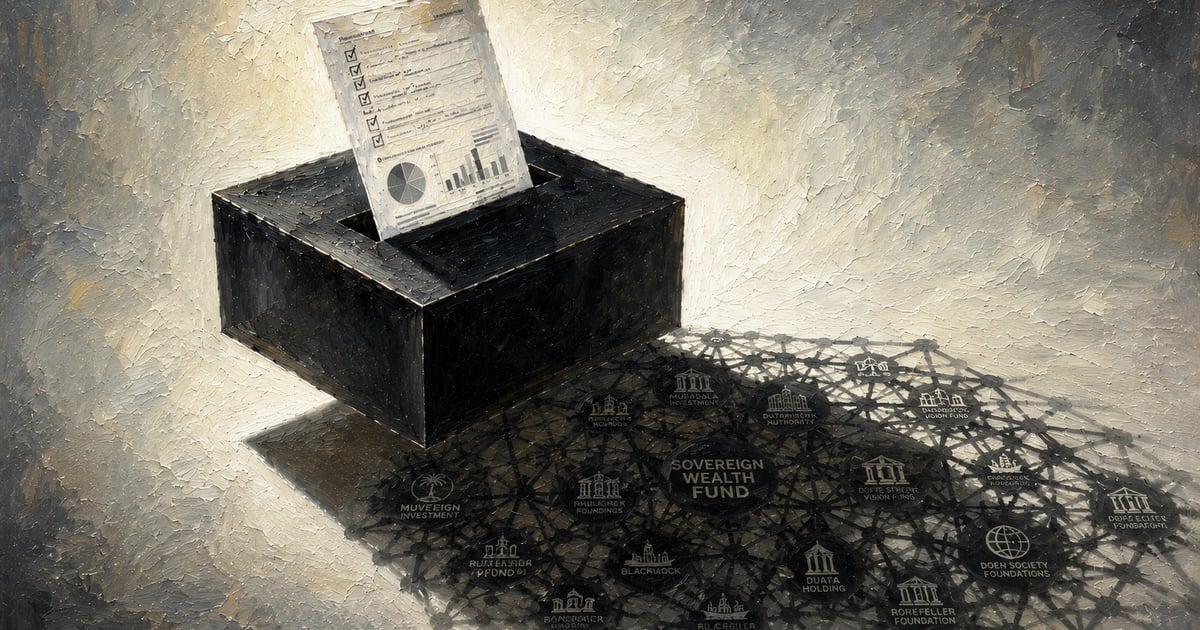
The institutions financing RSF's annual operations raise serious questions about its strict claims of neutrality. The organisation's donor roster features state and intelligence-linked bodies:
The National Endowment for Democracy (NED): A US organisation explicitly established to handle democratic projection initiatives that were historically managed covertly by intelligence agencies. The NED specifically funds RSF's targeted Asian coverage.
The French Ministry of Culture: Direct funding from the French state, whose own government sits at 25th in the global ranking.
SIDA: The international development agency of the Swedish state, which comfortably holds 4th place on the index.
6. Electoral Volatility Over Structural Tracking
A reliable index should track slow-moving institutional, legal, and structural shifts. Instead, the WPFI reacts wildly to short-term electoral outcomes. Following the departure of Jair Bolsonaro and the election of Luiz Inácio Lula da Silva, Brazil shot up 18 places in a single year, before a single media law or safety metric could be altered. Malaysia experienced an artificial 40-place jump following a routine change of government, and Syria rose 36 places immediately after the fall of the Assad regime, despite lacking a functional independent press on the ground. The heavy weighting of the Political Context indicator causes the index to measure shifting Western political satisfaction rather than actual operational safety.
Balancing the Equation: The RSF Justification
Supporters of Reporters Without Borders argue that evaluating media freedom is an inherently qualitative endeavour that cannot be reduced to simple body counts or prison registries. They maintain that the index is designed to assess the broader ecosystem of intimidation, self-censorship, and economic coercion that discourages critical reporting before a journalist is ever arrested.
Furthermore, critics of India’s media landscape point to legitimate challenges: high corporate concentration, such as Reliance owning over 70 media brands and the Adani acquisition of NDTV, alongside the use of restrictive anti-terror legislation like the Unlawful Activities Prevention Act (UAPA). These structural concerns are real, and India's placement reflects these genuine domestic issues. The problem is that RSF's flawed methodology fails to measure these challenges accurately, rendering the resulting ranking scientifically unreliable.
Actionable Strategy for Navigating Sovereign Metrics
Deconstruct Aggregate Scores: When evaluating country risk profiles, isolate raw safety data from qualitative political context scores to get an accurate picture of operational conditions.
Verify Sample Transparency: Disregard indexes that do not publish their sample sizes, response rates, or respondent demographics to protect your data models from hidden biases.
Adjust for Population Scale: Apply linear per-capita models to evaluate safety trends in large countries, bypassing the distortions caused by logarithmic scaling.
Cross-Reference Geopolitical Funding: Evaluate human rights and governance indexes against their funding sources to control for potential ideological and donor-aligned biases.
When a flawed index is used to drive global headlines, it ultimately harms the cause of media freedom. By relying on a broken metric, critics allow governments to dismiss valid concerns about journalist safety and media ownership as mere Western bias. True accountability requires precise, reliable, and transparent tools—not political agendas hidden behind arbitrary numbers.