In brief
- Asim Munir became Pakistan's first five star Field Marshal in sixty years and its inaugural Chief of Defence Forces, and he gained powers surpassing previous military rulers without using tanks or martial law.
- He achieved absolute command over the three branches of the armed forces, control of the nuclear command, veto power over superior judicial appointments, and lifelong constitutional immunity from criminal and civil prosecution by rewriting the constitution in his favour.
- The key legal move was the November 2025 passage of the 27th Constitutional Amendment, which restructured Pakistan's command and legal order across three vital dimensions.
- Munir's strategy did not involve tearing up the constitution with tanks but compelled civilian politicians to rewrite it to fit his aims, effectively making the state operate under a permanent military influence while preserving the constitutional framework.
When previous Pakistani military commanders seized power, they arrived with unmistakable fanfare. In October 1958, General Ayub Khan dissolved the central and provincial assemblies, abrogated the nascent 1956 Constitution, and forced President Iskander Mirza into exile. In July 1977, General Zia-ul-Haq launched Operation Fair Play, deployed troops to Prime Minister Zulfikar Ali Bhutto's residence, and placed the 1973 Constitution in abeyance. In October 1999, General Pervez Musharraf sent commandos over the gates of Prime Minister Nawaz Sharif's house, seized state television studios, and issued a Provisional Constitutional Order (PCO).
Field Marshal Asim Munir chose a radically different path. Not a single tank appeared on Islamabad's Constitution Avenue. No martial law regulations were gazetted. Television broadcasts continued uninterrupted, and an elected Prime Minister remained seated at the head of the federal cabinet.
Yet by mid-2026, Munir had amassed powers surpassing those of any military predecessor. As Pakistan's first five-star Field Marshal in sixty years and its inaugural Chief of Defence Forces (CDF), Munir achieved what previous dictators could only maintain by brute force: absolute command over all three branches of the armed forces, institutional stewardship of the national economy, veto power over superior judicial appointments, control of the nuclear command, and lifelong constitutional immunity from criminal and civil prosecution.
He accomplished this not by tearing up Pakistan's constitution, but by compelling civilian politicians to rewrite it in his favour.
The Evolution of the Coup: From Rawalpindi to Musharraf
To understand the mechanics of Munir's ascent, one must examine the institutional traumas that shaped the Pakistan Army's high command over seven decades. The military's desire for political dominance has remained constant, but the methods have been repeatedly rewritten by the failures of prior interventions.

Pakistan's history of military plotting began in infancy with the failed 1951 Rawalpindi Conspiracy, when Major General Akbar Khan and left-leaning poet Faiz Ahmad Faiz planned to overthrow Prime Minister Liaquat Ali Khan over the ceasefire in Kashmir. Though intercepted and prosecuted, the conspiracy demonstrated that officers viewed themselves as the ultimate arbiters of national destiny.
When direct coups arrived, they proved brittle. Ayub Khan promoted himself to Field Marshal in 1965 following the war with India, but ten years of autocratic modernisation could not withstand mass urban agitation, forcing him to hand power to General Yahya Khan in 1969. Yahya's catastrophic tenure culminated in the 1971 war, the surrender in Dhaka, and the birth of Bangladesh—shattering the military's institutional prestige.
Zia-ul-Haq learned that survival required legal entrenchment. He introduced the Eighth Amendment in 1985, inserting Article 58(2)(b) into the 1973 Constitution, which gave the president the power to dismiss elected governments at will. Yet Zia's system required brutal repression, public floggings, and eleven years of martial law that permanently scarred the polity.
The decisive lesson for Asim Munir, however, came from the downfall of Pervez Musharraf. Musharraf seized power in 1999, suspended the constitution, and later declared an emergency in November 2007. When his political authority dissolved, civilian courts struck back. In December 2019, a special court sentenced Musharraf to death in absentia for high treason under Article 6 of the Constitution—a clause explicitly designed to deter military adventurism by classifying constitutional subversion as an unpardonable capital offence. Though the verdict was subsequently annulled on procedural grounds by the Lahore High Court, the psychological shock inside General Headquarters (GHQ) was profound: direct military intervention left generals exposed to future prosecution once they shed their uniforms.
Moreover, the international cost of traditional coups had become unbearable. A nuclear-armed state facing chronic balance-of-payments crises, inflation, and external debt obligations could not afford the automatic sanctions, loan suspensions, and diplomatic isolation that follow a formal military coup.
Munir's strategic calculation was simple: if martial law carries fatal legal and economic risks, the military must achieve its objectives through the voluntary capitulation of civilian institutions.
Phase One: The Post-May 9 Cleansing and Economic Takeover
General Syed Asim Munir took command of the Pakistan Army on 29 November 2022 amidst unprecedented civil-military turbulence. Former Prime Minister Imran Khan, ousted via a parliamentary vote of no-confidence in April 2022, had broken the traditional taboo against naming senior officers, directly accusing the military establishment and the Inter-Services Intelligence (ISI) of plotting his removal.
The inflection point arrived on 9 May 2023. When Khan was arrested by paramilitary Rangers on court premises in Islamabad, his supporters launched coordinated protests across the country, breaching the Corps Commander’s House in Lahore and demonstrating outside the gates of GHQ in Rawalpindi.
GHQ responded with ruthless institutional efficiency. The protests were categorised as an armed insurrection against the state. Over the ensuing months, thousands of Pakistan Tehreek-e-Insaf (PTI) workers were arrested, senior party leaders were pressured into tearful press-conference resignations, and civilian suspects were transferred to military courts.
Simultaneously, the military expanded its operational footprint into civil governance. In June 2023, the outgoing coalition government of Prime Minister Shehbaz Sharif established the Special Investment Facilitation Council (SIFC). By formal statute, the Chief of Army Staff was given an official seat on the SIFC's apex committee, placing the military at the direct helm of national economic policy, sovereign privatisations, mining ventures (such as the Reko Diq copper-gold project), and agricultural development.
When national elections were held in February 2024, the outcome was engineered to ensure civilian fragility. Despite widespread administrative suppression, independent candidates backed by Khan's banned party secured the largest bloc of seats. GHQ stepped in to assemble a dependent, legitimacy-starved coalition composed of the Pakistan Muslim League-Nawaz (PML-N) and the Pakistan Peoples Party (PPP), with Shehbaz Sharif returning as Prime Minister and Asif Ali Zardari assuming the presidency. Dependent on the military for political survival, this civilian administration became the delivery mechanism for Munir's constitutional revolution.
Phase Two: Tenure Extensions and the Taming of the Courts
Having secured an obedient parliament, GHQ moved to dismantle two long-standing institutional bottlenecks: service term limits and judicial independence.
On 4 November 2024, the National Assembly passed the Pakistan Army (Amendment) Bill, 2024 alongside parallel amendments to the Navy and Air Force Acts. Rushed through both houses without debate or committee review, the law extended the tenure of all service chiefs from three years to five. This eliminated the recurring crisis of succession that had plagued previous army chiefs and guaranteed Munir an extended horizon without requiring ad-hoc extensions.

Next came the subjugation of the judiciary. Pakistan's Supreme Court had historically been an unpredictable player, oscillating between validating coups under the "doctrine of necessity" and asserting robust judicial review. To prevent judges from challenging military trials of civilians or electoral irregularities, the coalition enacted the 26th Constitutional Amendment in late October 2024.
The amendment transformed the appointment process for the Chief Justice of Pakistan (CJP). Rather than the automatic elevation of the most senior judge, appointments were placed in the hands of a parliamentary committee dominated by the ruling coalition. Senior judges known for constitutional autonomy were bypassed, and specialised "constitutional benches" were created under executive oversight, insulating military-backed legislation from judicial scrutiny.
In May 2025, Munir capitalised on brief, militarised border skirmishes with India. Following the cessation of hostilities, the federal cabinet formally elevated General Asim Munir to the rank of Field Marshal. He became only the second officer in Pakistan's history to hold the five-star rank, and the first to receive it through a civilian government's formal decree rather than self-appointment.
Phase Three: The 27th Amendment and the Creation of the CDF
The crown jewel of Munir’s legal strategy arrived in November 2025 with the passage of the 27th Constitutional Amendment. Pushed through the Senate and National Assembly with procedural haste, the amendment fundamentally restructured Pakistan's command and legal order across three vital dimensions.
1. The Creation of the Chief of Defence Forces (CDF)
For nearly fifty years, Pakistan's military maintained a nominal tripartite balance overseen by the Chairman Joint Chiefs of Staff Committee (CJCSC)—a post created under Zulfikar Ali Bhutto in 1976 to coordinate among the Army, Navy, and Air Force without giving operational command to any single service.
The 27th Amendment amended Article 243 of the Constitution, abolishing the CJCSC and establishing the post of Chief of Defence Forces (CDF), to be held concurrently by the Chief of Army Staff. As documented by Al Jazeera, this gave the Army Chief direct operational command over both the Pakistan Navy and the Pakistan Air Force, extinguishing five decades of inter-service autonomy.
Crucially, the amendment reset Munir’s five-year tenure from the date of his formal notification as CDF (4 December 2025), locking his command in place until late 2030. This ensures Munir will oversee the entire legislative cycle, including the next scheduled general elections in 2029.
2. The Two-Thirds Removal Shield
To ensure the military chief could not be summarily dismissed—as Nawaz Sharif had attempted with Musharraf in 1999—the amendment stipulated that the removal of the CDF requires a two-thirds majority in Parliament. In contrast, an elected Prime Minister can be removed by a simple majority (50% plus one vote). The constitutional hierarchy was inverted: the uniformed commander became twice as difficult to unseat as the country's chief executive.
3. Lifelong Legal Immunity (Article 248)
To neutralise the ghost of Article 6, the coalition amended Article 248 of the Constitution. While Article 248 previously provided immunity to the President, Prime Minister, and ministers only while in office, the revised text conferred lifelong immunity from arrest and prosecution to the President and to five-star military officers—a category tailor-made for Field Marshal Munir.
The International Bar Association’s Human Rights Institute (IBAHRI) condemned the move as a flagrant assault on the rule of law, noting that it placed the military leadership permanently beyond the jurisdiction of domestic criminal courts.

Phase Four: The Defence Forces Act 2026 and Total Codification
If the 27th Amendment erected the constitutional pillars, the Defence Forces Act, 2026, passed on 20 August 2026, provided the operational machinery.
Enacted alongside sweeping amendments to the National Command Authority (NCA) Act of 2010, the new law granted CDF Asim Munir unprecedented statutory control over military personnel. Under the act's provisions, the CDF possesses the unilateral authority to:
Retire, discharge, release, or retain any personnel across the Army, Navy, and Air Force;
Accept or reject resignations and grant discretionary age or service relaxations for retirement;
Recommend the appointment and extension of the Commander of the National Strategic Command (a post filled by four-star General Aamer Raza);
Exercise operational control over the Strategic Plans Division, which administers Pakistan's nuclear weapons arsenal.
By vesting the power to hire, fire, and retire personnel across all three branches in a single office, the Defence Forces Act subordinated the entire military hierarchy to the Army Chief. Any dissent from senior naval admirals or air marshals can now be dealt with through summary administrative retirement, without requiring civilian ministerial intervention.
The Architecture of the "Legal Dictatorship"
When comparing Asim Munir's regime to past Pakistani dictatorships, the contrast is stark:
Ayub Khan (1958) relied on civil servants and indirect "Basic Democracies," governing via Martial Law Regulations until his system crumbled under working-class street protests.
Zia-ul-Haq (1977) relied on Islamist political patronage, sweeping ordinances, and public tribunals, living in constant fear of judicial review until he forced judges to take oaths under his 1981 PCO.
Pervez Musharraf (1999) relied on a fractured "King's party" (the PML-Q) and National Security Council edicts, only to be abandoned by his civilian allies and trapped by treason proceedings.
Field Marshal Asim Munir studied these structural vulnerabilities. He recognised that an authoritarian system built upon executive decrees is fragile, while an autocracy woven directly into constitutional text and parliamentary statute is remarkably resilient.
By enlisting the PML-N and PPP—the two historic bastions of Pakistan's civilian political establishment—Munir made the victims of past military interventions the architects of his new imperium. The civilian coalition traded away parliamentary sovereignty, judicial independence, and tri-service balance in exchange for political survival and personal legal immunity for figures like President Zardari.
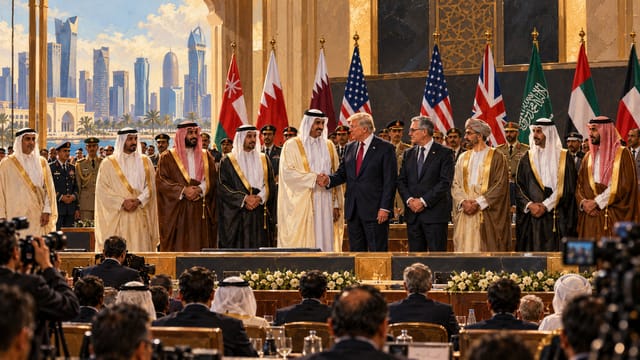
Internationally, the strategy proved equally effective. Because Pakistan maintained a civilian prime minister and an active parliament, international lenders such as the International Monetary Fund (IMF) and Western diplomatic partners faced no statutory requirements to suspend aid or impose sanctions. At the same time, Munir solidified strategic ties with Washington—securing high-level engagement under Donald Trump's administration—and brokered sweeping bilateral defence agreements with Saudi Arabia.
Yet this constitutional consolidation carries profound long-term hazards. By eviscerating institutional guardrails, suppressing the most popular political party in the country, and subordinating the sister services to raw Army dominance, Munir has concentrated unprecedented systemic risk upon his own office. In border provinces such as Balochistan and Khyber Pakhtunkhwa, where insurgent violence from Baloch separatists and the Tehreek-e-Taliban Pakistan (TTP) continues to climb, the state's militarised posture has deepened public alienation.
Field Marshal Asim Munir succeeded where Ayub, Zia, and Musharraf failed: he conquered the state without breaking its supreme law. But in doing so, he transformed the 1973 Constitution from a charter of democratic federation into an instrument of permanent military dominion.