In brief
- Qatar is preparing to unveil a new regional military partnership for joint capacity building and to launch a centre for localised defence production, shifting from foreign arms procurement to regional, indigenous deterrence.
- The move is announced by Qatar at the Global Security Forum in Doha, signalling a recalibration of its long standing reliance on the American military presence at Al Udeid Air Base.
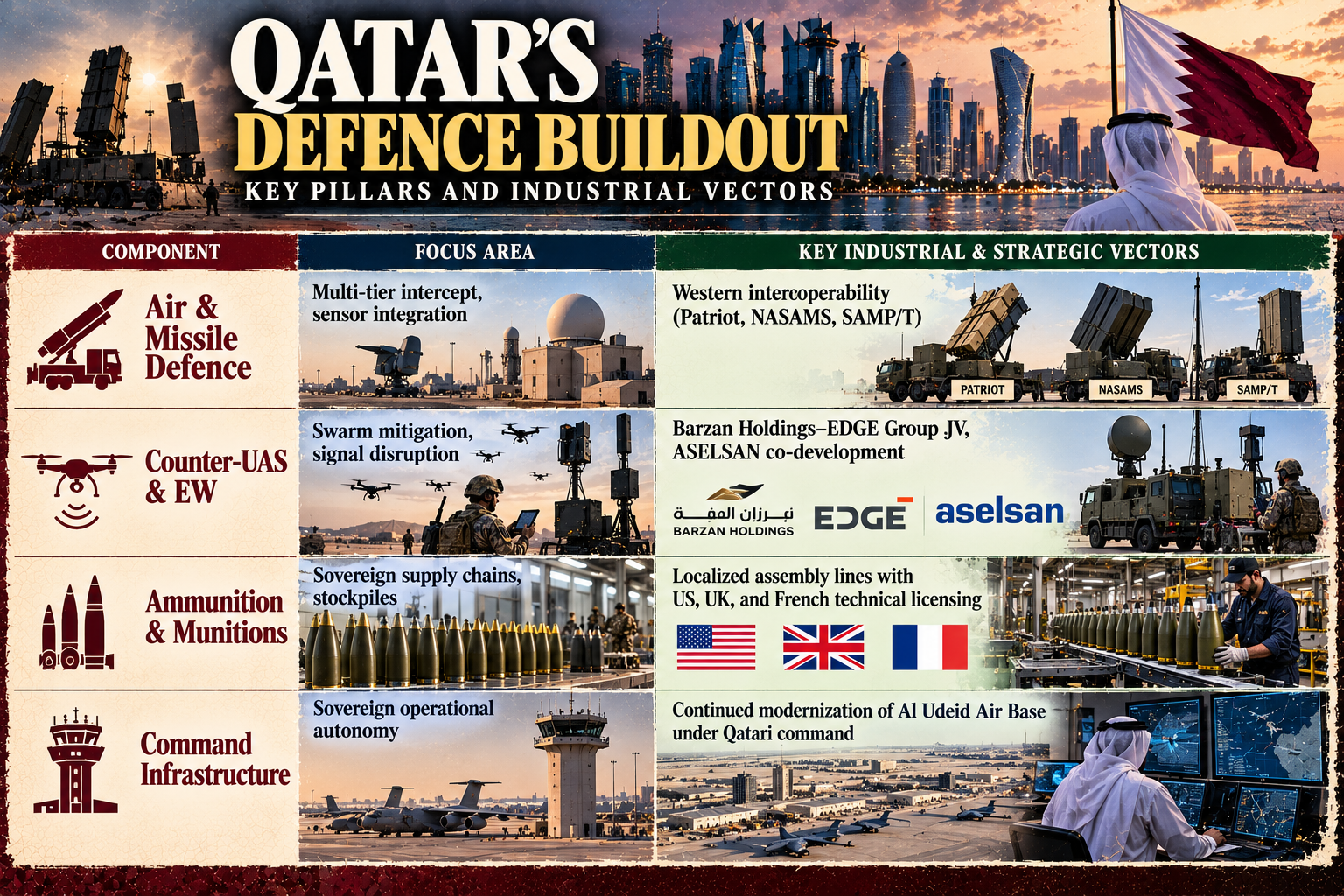
- The partnership aims at modern, asymmetric, distributed warfare with four urgent operational priorities identified in an internal strategic defence review: Air Defence Interoperability, Counter-Unmanned Aerial Systems, Cyber and Electronic Warfare, and Water and Critical Resource Security.
- The defence production centre will be developed with a regional ally and established Western partners including the United States, the United Kingdom, and France, to support joint capability building and deterrence in the Gulf.
For three decades, the conventional wisdom surrounding Qatari statecraft could be reduced to a simple dual formula: anchor national survival to the American military presence at Al Udeid Air Base, and deploy diplomatic neutrality to mediate the region’s intractable conflicts.
On Monday, 19 October 2026, speaking at the opening of the Global Security Forum in Doha, Qatari Deputy Prime Minister and Minister of State for Defence Affairs Sheikh Saud bin Abdulrahman Al Thani signaled a decisive recalibration of that doctrine.
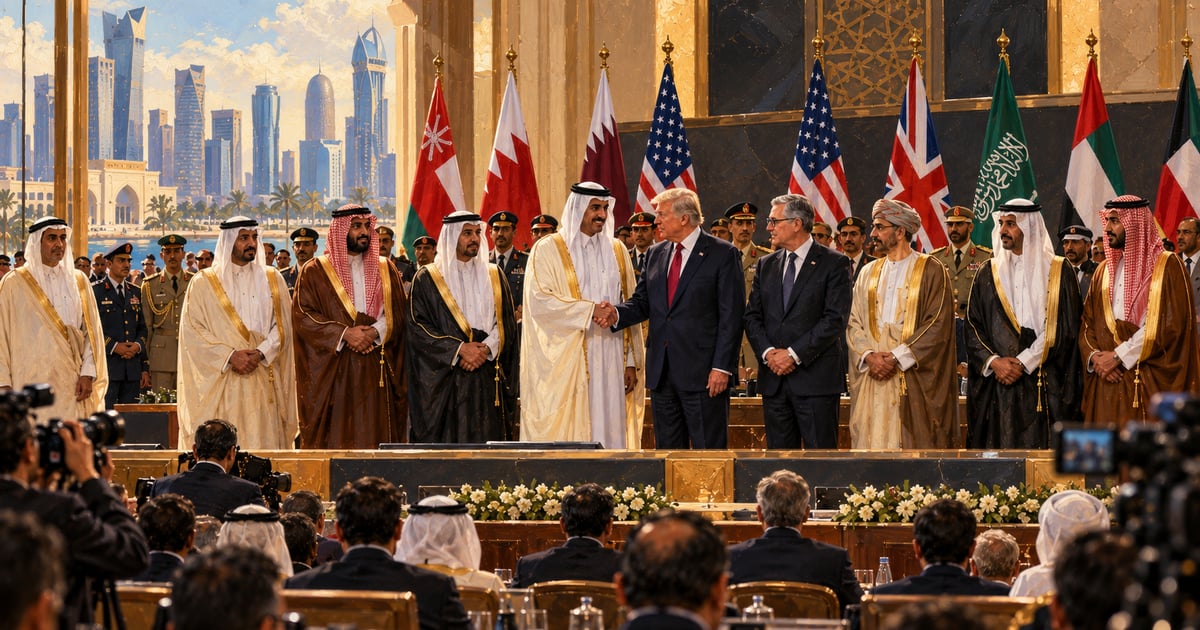
Addressing an audience convened under the theme "The Future of Alliances: Building Enduring Regional Security", Sheikh Saud announced that Qatar is preparing to unveil a new regional military partnership agreement aimed at joint capacity-building. Simultaneously, the state will formally launch a dedicated centre for localised defence production, developed in coordination with an unnamed regional ally and established Western partners including the United States, the United Kingdom, and France.
The initiative marks a structural pivot from off-the-shelf arms procurement and reliance on foreign guarantees towards localized manufacturing, joint regional capability-building, and indigenous deterrence.
The Catalyst: The Fall of the Diplomatic Shield
The immediate driver of Doha’s strategic shift is not theoretical; it is operational.
Despite maintaining functional diplomatic channels with Tehran, Qatar has found that neutrality does not confer immunity in a regional war. In June 2025, an unprecedented attack struck facilities in Ras Laffan Industrial City—the nerve centre of Qatar’s liquefied natural gas (LNG) production, which accounts for roughly one-fifth of global LNG supply. Shortly thereafter, a commercial vessel chartered by Qatar was targeted in Gulf waters, taking place just five days after a memorandum of understanding had been concluded in Geneva.
While Doha engaged in extensive bilateral discussions with Tehran to manage the fallout, the strikes permanently altered Qatar's threat assessment.
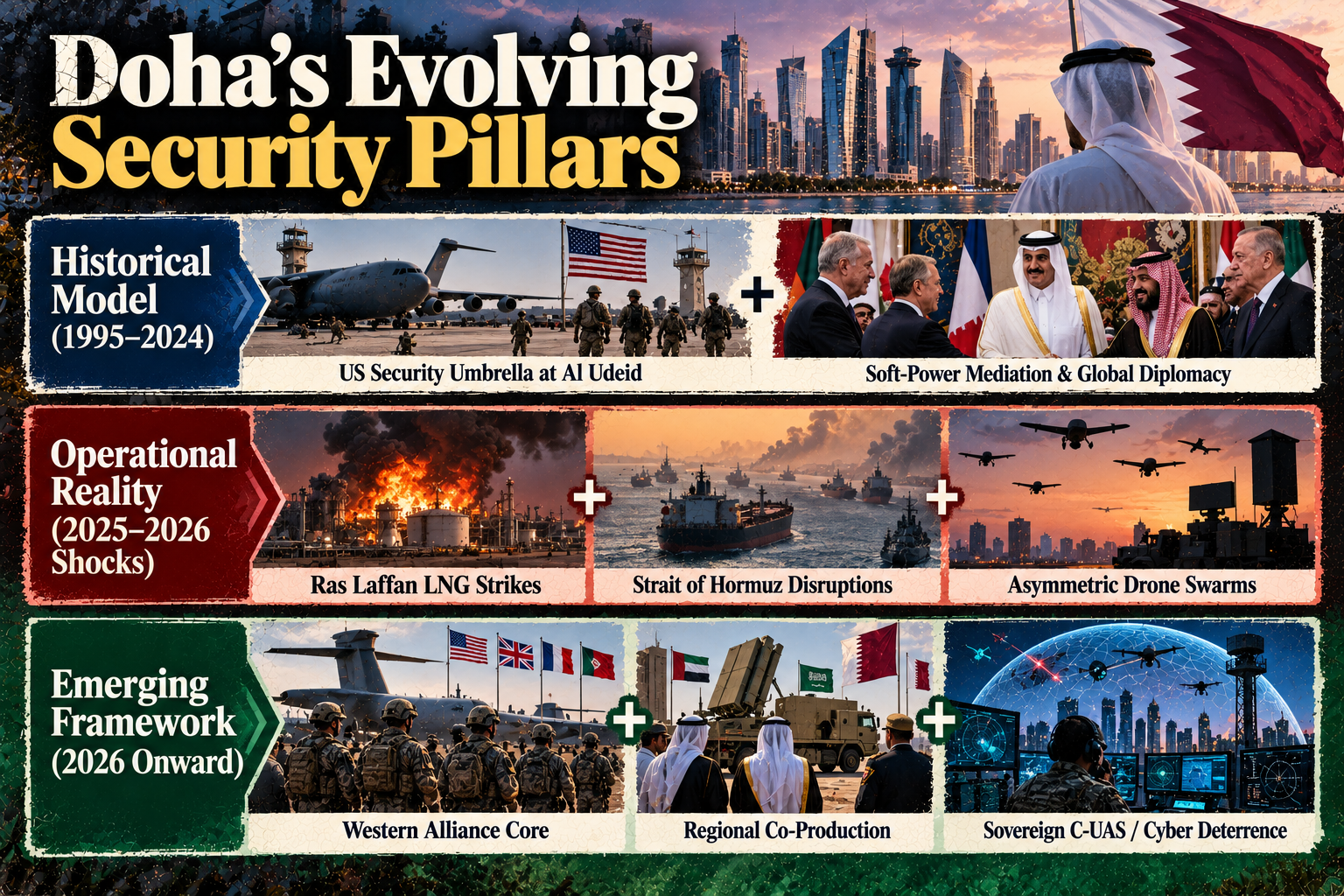
Speaking in Doha, Sheikh Saud acknowledged that Qatar had drawn severe lessons from the Ras Laffan strikes. While affirming that more than 90% of incoming aerial attacks had been successfully intercepted across the Gulf thanks to decades of air-defence interoperability with Western allies, the minister underscored that mediation and military readiness must function as parallel tracks:
"Preventing wars and maintaining readiness to confront threats are complementary objectives."
The Threat Matrix: What the Partnership Actually Targets
Unlike historic Gulf security pacts that concentrated on prestige procurement—such as acquiring fourth- and fifth-generation fighter jets—Qatar's planned partnership is engineered specifically for modern, asymmetric, distributed warfare.
Sheikh Saud confirmed that an internal strategic defence review concluded last year highlighted four urgent operational priorities:
Air Defence Interoperability: Upgrading radar layers to track low-observable cruise missiles and hypersonic trajectories across the Gulf littoral.
Counter-Unmanned Aerial Systems (C-UAS): Developing directed-energy, electronic jamming, and kinetic interceptors capable of neutralizing low-cost, low-altitude drone swarms without expending million-dollar surface-to-air missiles.
Cyber and Electronic Warfare: Safeguarding national command-and-control networks, power grids, and automated energy extraction terminals from state-sponsored disruption.
Water and Critical Resource Security: Protecting critical coastal infrastructure, particularly industrial desalination complexes and LNG chilling trains, whose interruption poses an immediate existential threat to peninsula states.
The Industrial Front: A Local Defence Production Hub
The most consequential element of the announcement is the establishment of a domestic defence production hub.
As reported by The Arab Weekly and Arab News, Sheikh Saud revealed that Qatar is actively negotiating with a primary regional partner, alongside traditional suppliers in Washington, London, and Paris, to establish local manufacturing facilities and take equity stakes in critical defence tech enterprises.
While the Qatari Ministry of Defence did not publicly name the regional partner during the opening session, regional industrial developments point to established avenues of cooperation:
Cross-Gulf Integration (EDGE Group & Barzan Holdings): At the DIMDEX 2026 exhibition in January, Qatar’s state defence investment vehicle, Barzan Holdings, signed a landmark joint venture agreement with the United Arab Emirates’ EDGE Group. The venture established a framework for co-developing autonomous systems, smart munitions, and electronic warfare assets.
The Turkish Industrial Axis: Qatar maintains deep, longstanding military-industrial partnerships with Ankara, encompassing joint production ventures with ASELSAN (the BARQ venture) and equity ownership in tactical vehicle manufacturer BMC.
Western System Integrators: Collaborations with Lockheed Martin, BAE Systems, and Thales provide the intellectual property and precision engineering required to manufacture ammunition and maintenance assemblies locally.
Redefining Al Udeid: Sovereign Base, Allied Platform
The announcement also featured a pointed clarification regarding the legal and operational status of Al Udeid Air Base, the forward headquarters of US Central Command (CENTCOM).
Sheikh Saud stressed that Al Udeid is fundamentally a sovereign Qatari military installation utilized by allied partners, noting that it has hosted armed forces from more than 20 countries across multiple campaigns, including the international coalition against ISIS.
By reiterating that Qatar is expanding and modernising Al Udeid according to its own national defence requirements, Doha is seeking to dispel the perception that its domestic territory is merely a garrison for Western forces. Instead, Qatar is positioning Al Udeid as a central node in an evolving, multi-nation collective security architecture where Qatari forces exercise operational parity.
The Diplomatic Horizon: The "Airbus Model" for Gulf Security
Critically, Qatar’s push toward military self-reliance does not represent an abandonment of regional diplomacy.
On the contrary, Sheikh Saud articulated an ambitious post-conflict vision: a comprehensive security dialogue between the Gulf Cooperation Council (GCC) and Iran, mediated in consultation with key regional players such as Pakistan and Turkey.
Drawing a deliberate historical analogy to European reconstruction, the minister pointed to the creation of the Airbus consortium by France and Germany following decades of ruinous warfare. Mutual economic interests and shared industrial ventures, he argued, built the institutional trust necessary to prevent renewed conflict.
For Doha, the calculus is clear: durable stability in the Persian Gulf cannot be achieved through perpetual military buildup alone, nor can it survive on paper treaties that crumble at the first drone launch. By constructing an organic regional defence partnership and a sovereign industrial manufacturing base, Qatar is establishing the hard-power deterrence necessary to negotiate from a position of resilience.