In brief
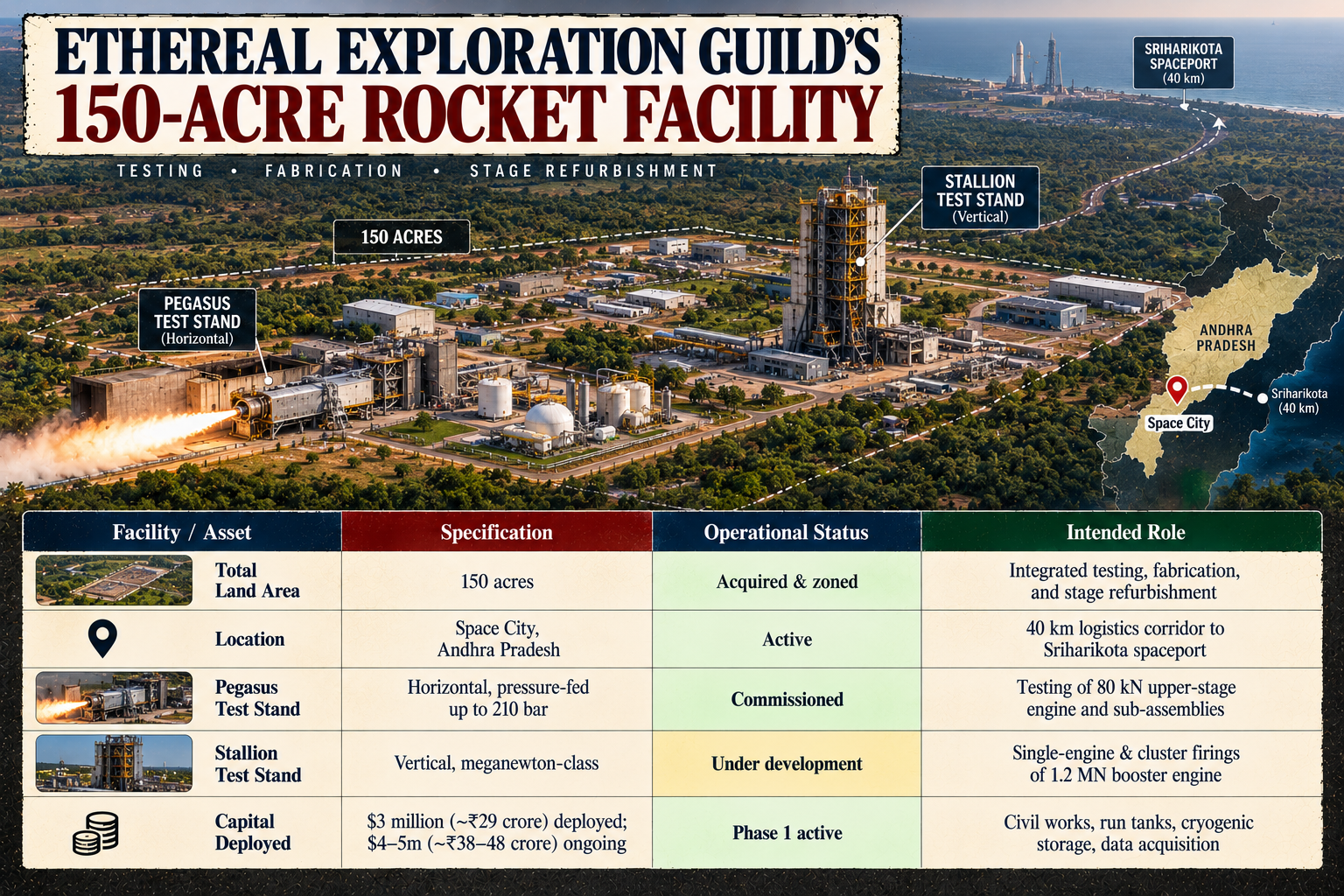
- Ethereal Exploration Guild, operating as The Guild, has unveiled a 150-acre propulsion development and testing complex named The Anchorage near Space City in Andhra Pradesh, about 40 kilometres from ISRO’s SDSC SHAR at Sriharikota.
- The facility features a 210-bar test stand called the Pegasus Horizontal Static Test Facility to support high pressure propellant delivery for engine development.
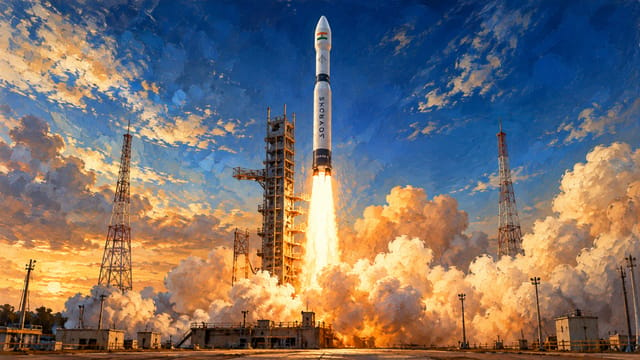
- The Anchorage is designed to develop, qualify, and refurbish Razor Crest Mk 1, the company’s planned medium-lift launch vehicle, using Pegasus and Stallion propulsion architectures.
- The first static hot-fire of the Pegasus engine is scheduled for November 2026, with Pegasus described as an 80 kN thrust semi-cryogenic engine for the upper stage of the Razor Crest Mk 1.
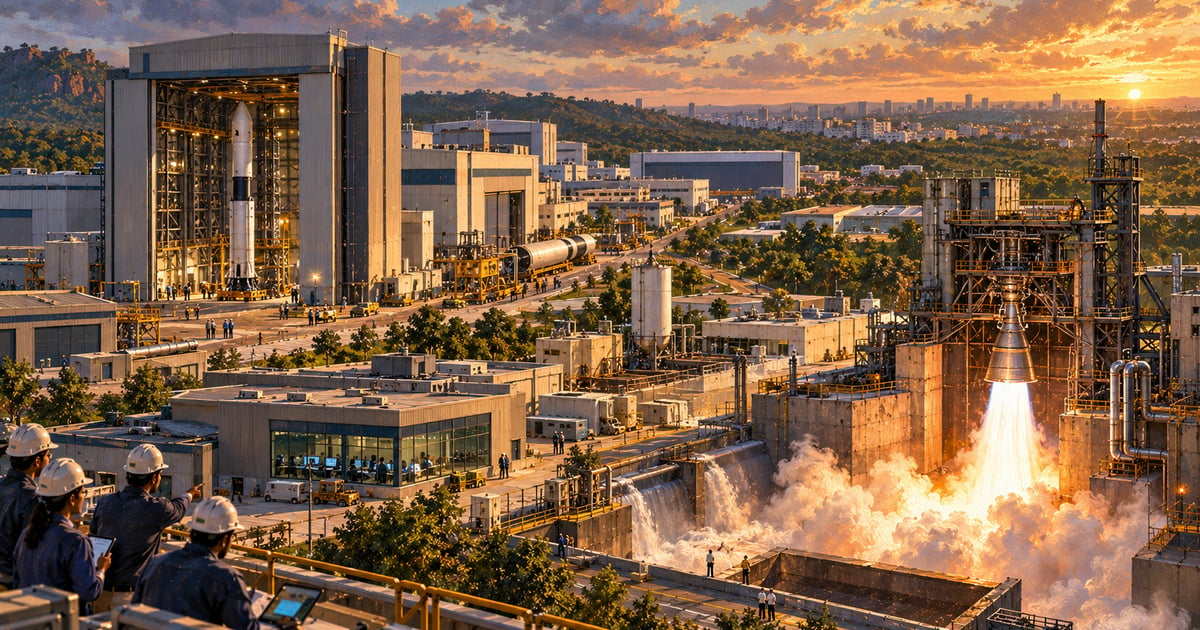
Bengaluru-based private launch vehicle developer Ethereal Exploration Guild (operating commercially as The Guild) has unveiled a 150-acre propulsion development and testing complex named The Anchorage.
Located in Space City, Andhra Pradesh—roughly 40 kilometres from the Indian Space Research Organisation’s (ISRO) Satish Dhawan Space Centre (SDSC SHAR) at Sriharikota—the facility has been established to develop, qualify, and eventually refurbish Razor Crest Mk 1 (RCM1), the company’s planned medium-lift launch vehicle.
The announcement, made on 16 October 2026, marks one of the largest capital commitments to physical ground infrastructure by an Indian spacetech venture. The startup has deployed $3 million (approximately ₹29 crore) into the site to date, with an additional $4 million to $5 million (₹38 crore to ₹48 crore) allocated to complete Phase 1 construction, funded in part by its $20.5 million (around ₹185 crore) Series A round completed in January 2026.
The Infrastructure: 210-Bar Testing and Horizontal Stands
The operational anchor of the 150-acre facility is the commissioned Pegasus Horizontal Static Test Facility.
Rocket engine development requires ground infrastructure capable of feeding propellants at pressures substantially higher than the engine’s internal combustion chamber operating pressure. The Anchorage provides pressure-fed liquid propellant delivery rated up to 210 bar, giving it the highest pressure-fed test stand rating currently operated by a commercial entity in India.
The test bay is plumbed to support:
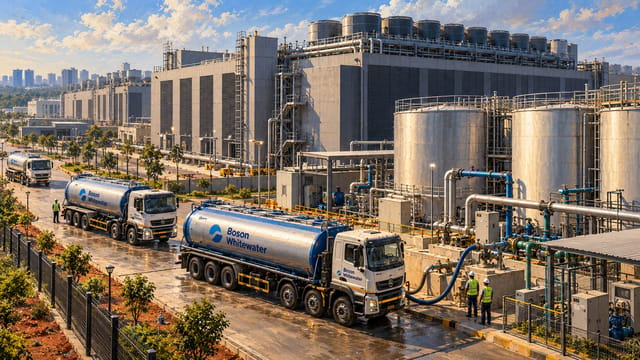
High-pressure RP-1 (refined kerosene) and liquid oxygen (LOX) feed lines.
Igniter and injector head verification.
Thrust chamber assembly firings.
Turbopump and fluid control valve qualification.
Full-duration integrated engine burns.
The startup has scheduled the first static hot-fire firing of its Pegasus engine at the site for November 2026. Pegasus is an 80-kilonewton (kN) vacuum-optimised semi-cryogenic engine designed to propel the upper stage of the Razor Crest Mk 1 vehicle.
The Propulsion Target: Pegasus and Stallion
The Anchorage is tailored around The Guild’s two-tier semi-cryogenic propulsion architecture:
Pegasus (Upper-Stage Engine): An 80 kN thrust semi-cryogenic engine operating on liquid oxygen and RP-1. Unlike conventional expendable upper stages that are discarded in orbit, Pegasus is being engineered for re-ignition, atmospheric re-entry survival, and vertical propulsive landing.
Stallion (Booster Engine): A 1.2-meganewton (MN) gas-generator cycle booster engine. The company describes Stallion as a high-thrust semi-cryogenic engine intended to power the RCM1 first-stage booster.
To support the larger engine, The Guild is currently constructing the Stallion Vertical Test Facility at The Anchorage. This stand is being designed not only for single 1.2 MN firings but also to evaluate clustered engine configurations, assessing acoustic vibration, thermal recirculation, and multi-engine gimbal dynamics before integrating the booster.
Why Sriharikota Proximity Matters
Private launch developers in India have traditionally faced a logistics bottleneck. While component machining and engineering design typically take place in aerospace clusters like Bengaluru, Hyderabad, or Chennai, static testing has often relied on shared test bays at ISRO's Propulsion Complex (IPRC) in Mahendragiri, Tamil Nadu, or constrained private test cells.
Locating The Anchorage in Space City, Andhra Pradesh, 40 km from Sriharikota, serves three practical requirements:
Logistics and Heavy Transport: Eliminates cross-country transit risks for fully integrated rocket stages, pressure vessels, and hazardous propellants moving between test stands and orbital launch pads.
Rapid Turnaround Testing: Allows hardware to move between firing stands, inspection hangars, and flight integration without navigating long public highway corridors.
Post-Flight Refurbishment: For reusable stages recovered downrange or returned to launch sites, The Anchorage is intended to house inspection, non-destructive testing (NDT), ultrasonic flaw detection, and structural requalification bays before stages are cleared for reuse.
Capital Context and Founding Team
Founded in 2022 (initially incorporated as EtherealX) by mechanical engineer Manu J. Nair (CEO) and Prashanth Sharma (CTO), the company rebranded to Ethereal Exploration Guild as it expanded its scope towards medium-lift architectures.
In January 2026, the company secured a $20.5 million (₹185 crore) Series A investment co-led by Japan's TDK Ventures and international deep-tech investor BIG Capital. While that funding provided runway for propulsion hardware and civil infrastructure, heavy rocket development is capital intensive. Phase 1 expenditure of $7 million to $8 million (₹67 crore to ₹77 crore) establishes core test capabilities; however, full development of a medium-lift vehicle with reusable upper stages will require substantial follow-on financing.
Technical Hurdles Ahead
While commissioning a 210-bar test stand provides The Guild with domestic testing autonomy, several major engineering milestones remain unproven:
The November Pegasus Burn: Static firing an 80 kN semi-cryogenic engine under full chamber pressure is a necessary step to prove combustion stability and regenerative cooling jacket performance.
Meganewton-Scale Scaling: Moving from an 80 kN upper-stage engine to a 1.2 MN booster engine represents a fifteen-fold increase in thrust, introducing complex turbomachinery, cavitation risks, and extreme thermal loads.
Full Reusability Economics: Reusing a first-stage booster is an established industry practice (pioneered by SpaceX's Falcon 9). However, recovering an upper stage requires surviving orbital re-entry velocities (Mach 25+), necessitating heavy heat shielding and reserve propellant that severely penalises payload fractions to low Earth orbit (LEO).
By operationalising The Anchorage, Ethereal Exploration Guild has shifted its programme from computer simulations to physical test firing. The real test of the facility begins in November 2026, when the first semi-cryogenic flames ignite on the Pegasus stand.