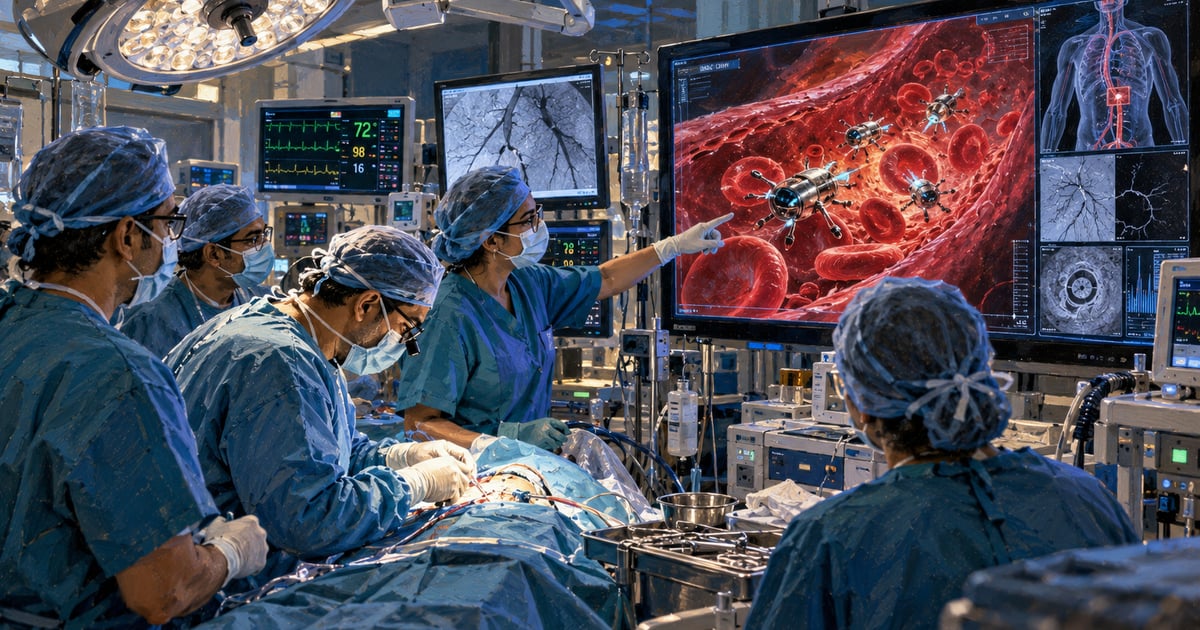
In brief
- Researchers at IISc Bengaluru have developed 400-nanometre magnetic corkscrews, called Theranautilus nanorobots, that drill through viscous cancer stroma where systemic drugs fail. This technology aims to overcome the mechanical barriers of solid tumours in oncology.
- Theranautilus is a deep-tech startup spun out of IISc in 2020 by Prof. Ambarish Ghosh, Dr Debayan Dasgupta, and Dr Shanmukh Srinivas Peddi, and has validated their nanorobots in animal models.
- The nanorobots are magnetically actuated and coated with a cytocompatible magnetic ferrite layer followed by a bioceramic outer layer, enabling drilling through biological matrices.
- Regulators cleared the company to enter first-in-human clinical trials in late 2026, and initial oncology protocols will focus on intratumoural or catheter-assisted regional delivery rather than systemic administration.
In the physics of the microscopic world, water is not a free-flowing liquid. At the scale of a few hundred nanometres, biological fluid possesses the effective viscosity of cold bitumen or thick molasses. For decades, the vision of medical "nanobots" navigating the human circulatory system to seek out and dismantle tumours remained stranded on blackboards, defeated by a basic law of fluid dynamics: at low Reynolds numbers, reciprocal motion produces zero forward movement. A microscopic object that flaps back and forth simply rocks in place.
At the Centre for Nano Science and Engineering (CeNSE) within the Indian Institute of Science (IISc) in Bengaluru, that hydrodynamic barrier has been turned into a propulsion mechanism.
Theranautilus, a deep-tech startup spun out of IISc in 2020 by Prof. Ambarish Ghosh, Dr Debayan Dasgupta, and Dr Shanmukh Srinivas Peddi, has engineered magnetically actuated, corkscrew-shaped nanorobots that actively drill through viscous biological matrices. Having validated their technology in animal models and secured regulatory clearance to enter first-in-human clinical trials in late 2026, the company is positioning its active micro-swimmers to solve the most stubborn physical bottleneck in oncology: the mechanical impenetrability of solid tumours.
The Solid Tumour Problem: A Fortress of Fluid and Fibre
Most systemic cancer therapies do not fail because the chemotherapeutic molecules lack biological potency. They fail because they cannot reach their target.
When a solid tumour—such as in breast, pancreatic, or glioblastoma cancers—grows, it builds a dense, aberrant microenvironment. It surrounds itself with a fibrotic extracellular matrix (ECM) rich in collagen and hyaluronan, cross-linked into a tight biological mesh. Compounding this barrier is the tumour’s defective, hyper-permeable vascular network, which causes fluid to leak into the extracellular space without adequate lymphatic drainage. The result is elevated interstitial fluid pressure (IFP) inside the malignant mass.
When an oncologist administers an intravenous drug, the medicine travels through the bloodstream driven by passive diffusion. As it approaches the tumour, it encounters an outward fluid pressure gradient and an impenetrable collagen barrier. The drug bounces off the periphery. To kill the malignant cells at the centre, clinicians are forced to escalate systemic doses to toxic levels, damaging healthy organs, hair follicles, and bone marrow while leaving the tumour core under-treated.
For two decades, the pharmaceutical industry hoped that passive nanoparticles—liposomes and polymer vesicles—would solve this through the Enhanced Permeability and Retention (EPR) effect. Yet clinical results have been sobering. Meta-analyses of nanomedicine clinical trials show that, on average, less than 1% of administered passive nanoparticles successfully accumulate in solid tumours.
Passive particles drift with fluid flow; they cannot swim against an outflow pressure gradient. Active locomotion is not a luxury in tumour biology; it is a physical necessity.
The Physics of the Screw: How Theranautilus Nanobots Move
Theranautilus has resolved this limitation by designing an artificial flagellum that exploits the low-Reynolds-number regime first described by physicist Edward Mills Purcell in his 1977 landmark paper, Life at Low Reynolds Number.
Purcell’s "Scallop Theorem" proved that to swim in microscopic viscous environments where viscous drag overwhelms inertia, an organism must execute non-reciprocal movement—a sequence of shapes that does not look identical when played in reverse. Many bacteria, such as Helicobacter pylori, solve this by spinning chiral, helical flagella, converting rotational force into linear thrust like an Archimedes screw.
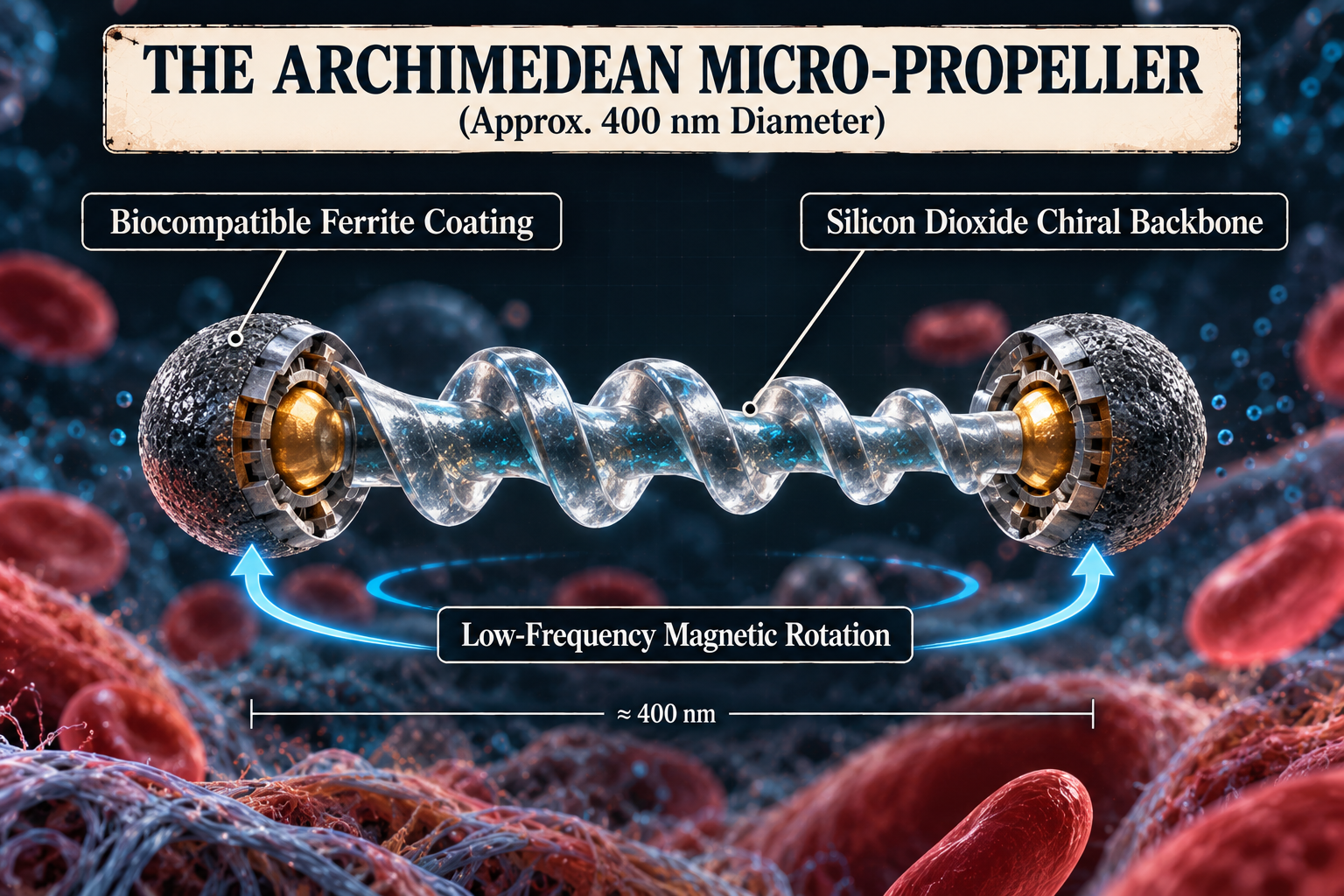
The Theranautilus nanorobot mimics this biological architecture:
Dimensions: Each device measures roughly 400 nanometres in diameter and between 1 and 3 micrometres in length—roughly one-twentieth the diameter of a red blood cell.
Materials: Fabricated using physical vapour deposition inside the cleanrooms of CeNSE at IISc, the structure begins as a helical silicon dioxide backbone.
Magnetic Core and Cytocompatible Shield: The nanobot is coated with a microwave-synthesised, cytocompatible magnetic ferrite layer, followed by a proprietary bioceramic outer layer. The bioceramic prevents the magnetic material from corroding in physiological fluid while preventing cellular toxicity.
Because the nanorobots contain an intrinsic magnetic dipole moment oriented perpendicular to their helical axis, they respond to external magnetic manipulation. When placed inside an alternating, rotating magnetic field generated by an external coil system named Theradrive, the fields cause the nanobots to rotate around their long axes.
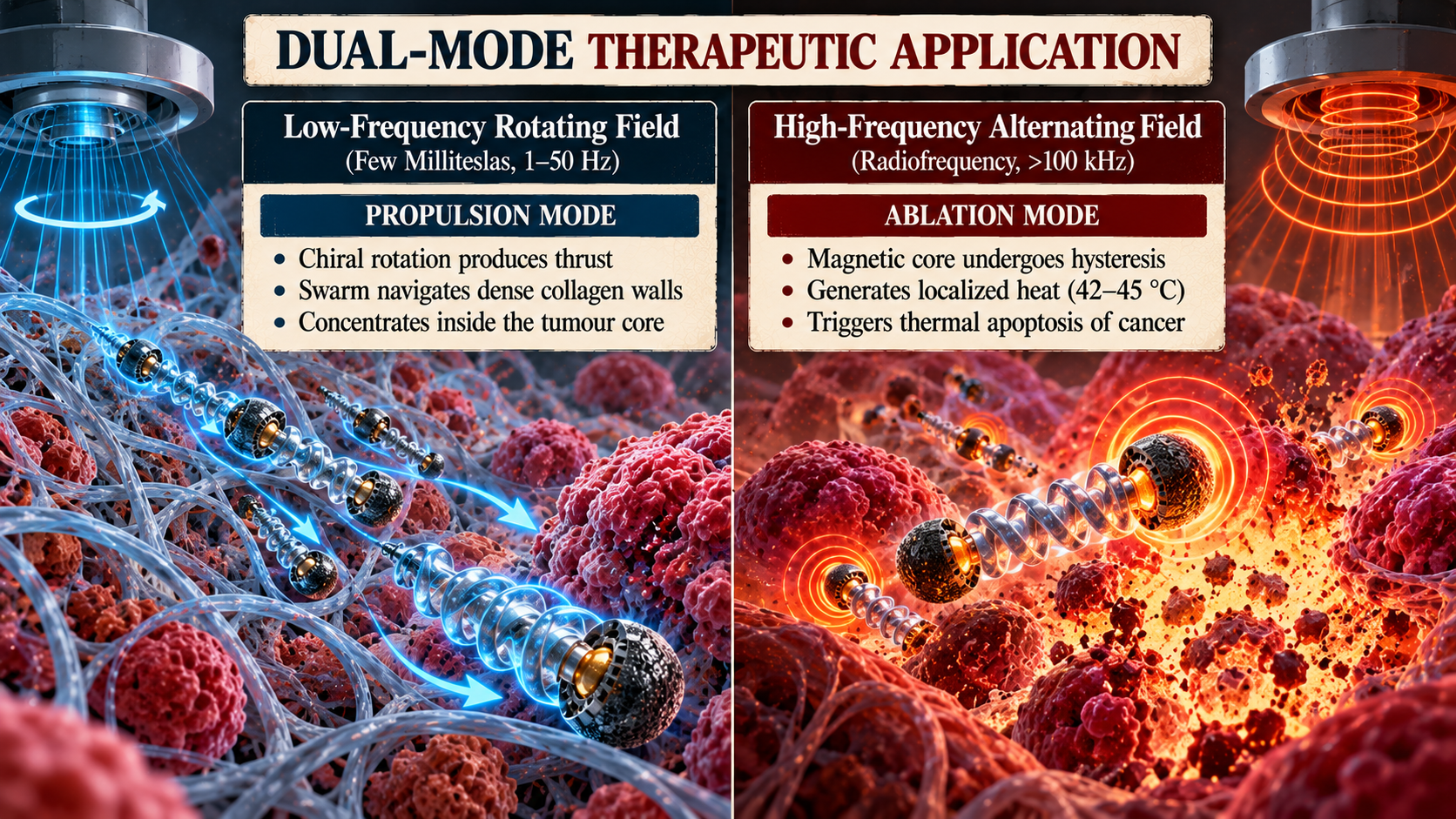
The chiral geometry translates this rotation into forward propulsion. Operating at magnetic field strengths of only a few milliteslas—lower than the field of an ordinary refrigerator magnet and orders of magnitude below an MRI scanner—the nanobots can swim against fluid currents and drill through collagen networks without requiring chemical fuels or internal batteries.
From Tooth to Tumour: The De-Risked Translation Roadmap
Developing deep-tech hardware for medical applications is notoriously fraught. Introducing a novel nanotechnological platform directly into human oncology trials requires years of systemic safety testing, pharmacokinetics validation, and multi-million-pound capital expenditure.
Theranautilus adopted a different translation strategy: start in a closed anatomical compartment before venturing into the systemic bloodstream.
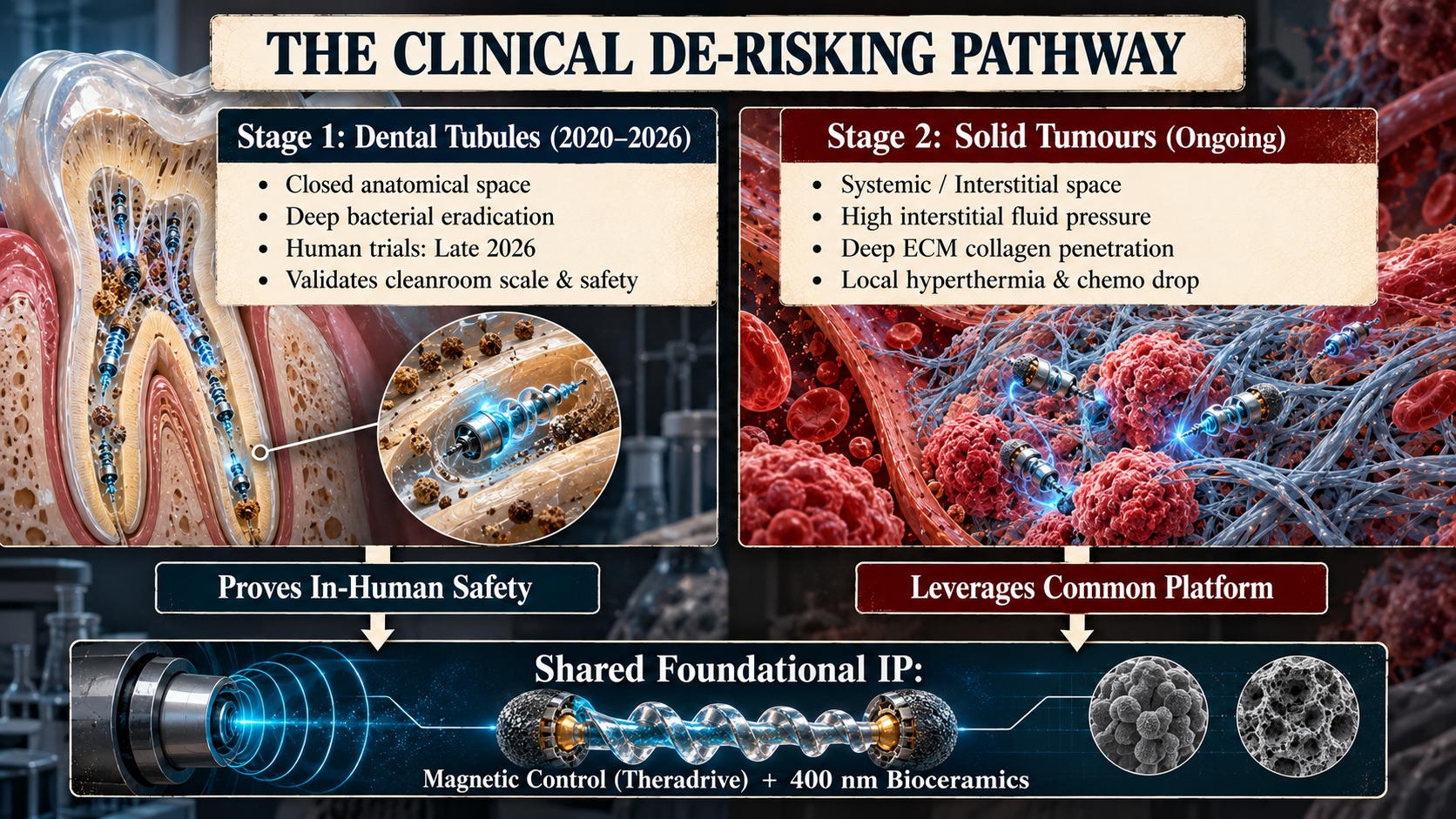
The company initially validated its platform in endodontics (root canal therapy). Standard dental disinfectants penetrate only 100 to 200 micrometres into the microscopic dentinal tubules surrounding a tooth root, leaving deep bacterial colonies intact and causing root canal failures in 14% to 16% of procedures worldwide.
In a series of landmark studies published in Advanced Healthcare Materials and Advanced Science, the IISc team demonstrated that their magnetic nanobots could be guided up to 2,000 micrometres deep into dentinal tubules, where they can either be heated via high-frequency magnetic fields to destroy bacteria or release bioceramics to seal open tubules and treat dental hypersensitivity.
This dental application allowed Theranautilus to:
Establish scalable, Good Manufacturing Practice (GMP)-compliant cleanroom fabrication protocols for hundreds of millions of nanobots at a time.
Build and clinicalise the external magnetic actuation hardware (Theradrive).
Demonstrate biocompatibility, non-toxicity, and retrieval capabilities in human clinical tissue.
In September 2026, Theranautilus announced at The Economic Times Startup Awards, where it was named Top Innovator, that it will initiate human trials for its dental platform by the end of 2026. This trial provides the safety, manufacturing, and regulatory foundation upon which its oncology programme is built.
The Oncology Frontier: Sensing, Hyperthermia, and Targeted Drug Delivery
With its manufacturing and steering platforms established, Theranautilus has accelerated its oncology research through a sequence of peer-reviewed papers:
1. Nanomechanical Mapping of the Tumour Microenvironment
Before destroying a tumour, nanobots can map its defences. In research published in Angewandte Chemie, the IISc team demonstrated that magnetically driven nanorobots can act as microscopic probes inside living 3D cancer spheroids.
By measuring changes in the nanobots' rotational speed and trajectory in response to calibrated magnetic fields, the researchers created real-time, nanoscale maps of local extracellular viscosity, matrix density, and physicochemical heterogeneities. This capability enables clinicians to measure how stiff and impermeable a patient’s specific tumour stroma is prior to administering treatment.
2. Cooperative Swarm Navigation
Individual nanobots are too small to be controlled one by one. In a 2025 paper published in Nature Communications, the team demonstrated that by applying "intermittent randomisation"—briefly cycling magnetic fields between directional rotation and disordered wobbles—thousands of nanobots can navigate through complex, tortuous porous networks collectively without clumping together.
This swarm behaviour allows a concentrated dose of millions of micro-propellers to migrate through the tumour matrix simultaneously.
3. Targeted Hyperthermia and Payloads
Once embedded inside the malignant core, the nanorobots provide a multi-modal therapeutic attack:
Magnetic Hyperthermia: By switching the external field from low-frequency rotation (propulsion) to high-frequency oscillation, the magnetic cores generate localised, frictional thermal energy. Heating the malignant microenvironment to 42–45 °C destabilises tumour cell membranes and induces apoptosis while leaving adjacent healthy tissue undamaged.
Direct Intratumoural Delivery: The nanorobots' bioceramic coatings can be functionalised to bind chemotherapeutic agents such as doxorubicin or paclitaxel. Because the nanobots physically transport the molecules into the centre of the tumour mass before release, the required therapeutic payload is a fraction of systemic chemotherapy, suppressing systemic toxic side effects.
Commercial Capital and the Deep-Tech Ecosystem
Pioneering hardware at the nanoscale requires deep-pocketed, patient capital. In November 2024, Theranautilus raised a $1.2 million seed round (approximately ₹10 crore) led by Bengaluru-based deep-tech fund pi Ventures, with co-investments from Golden Sparrow Ventures and prominent angel investors including Abhishek Goyal (Tracxn) and Lalit Keshre (Groww).
The backing highlights a broader transformation in the Indian startup ecosystem. Where Indian venture capital historically concentrated on consumer software, e-commerce marketplaces, and fintech, funds are increasingly backing research-heavy spin-outs from premier public institutions.
Alongside developments like NexCAR19 (India’s first homegrown CAR-T cell therapy developed by ImmunoACT and IIT Bombay), Theranautilus represents a cohort of domestic startups developing original intellectual property in biotechnology rather than adapting Western platforms. The company maintains broad international patent protection covering nanorobot architecture, magnetic actuation coils, and bioceramic surface functionalisation across India, the United States, Europe, and Australia.
The Road Ahead: Challenges on the Path to Intravenous Oncology
Despite rapid laboratory progress, significant scientific and clinical obstacles separate Theranautilus's current milestones from routine oncological practice.
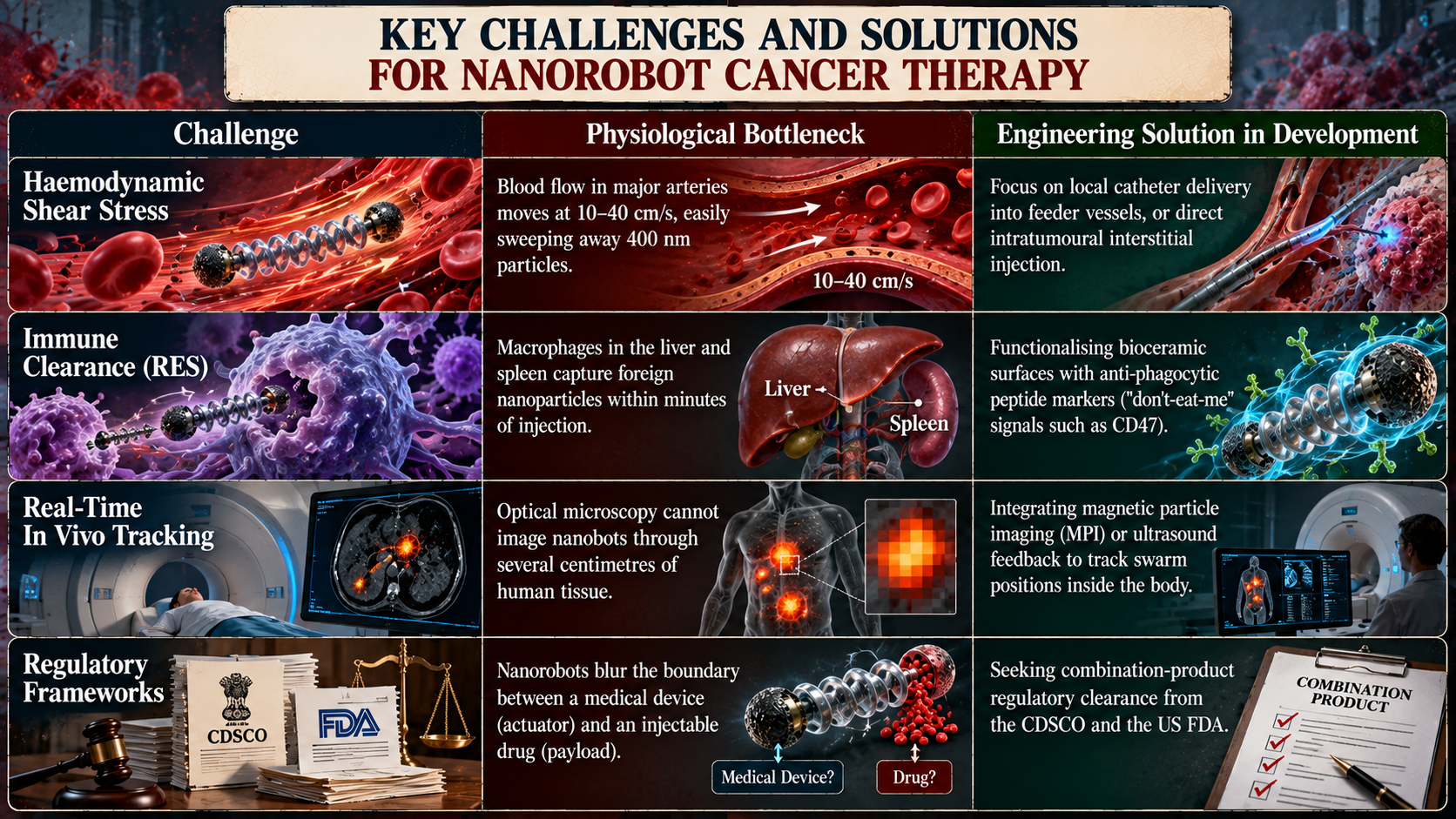
The immediate hurdle is navigating the haemodynamic force of human circulation. While swimming against capillary flow is feasible, propelling nanobots upstream through major arteries is physically impractical. Consequently, Theranautilus's initial oncology protocols will focus on intratumoural or catheter-assisted regional delivery—depositing swarms directly into the tumour's feeding micro-vasculature or injecting them into resected surgical margins to sterilise residual micro-metastases.
The Emerging Paradigm
For over half a century, the core strategy of pharmaceutical oncology has been biochemical: finding a molecule that binds more tightly to malignant receptors than healthy ones.
Theranautilus represents a shift towards a biophysical paradigm. By recognising that cancer is a mechanical disease—a physical fortress protected by viscous fluid, fibrotic barriers, and pressure gradients—the Bengaluru startup has shown that defeating it requires mechanical tools.
If human clinical trials over the coming years replicate the precision seen in laboratory trials, the defining cancer therapies of the next decade may not be larger chemical molecules, but microscopic swarms of magnetic machines designed to swim where medicine has never gone before.