In brief
- India's CPI inflation reached 5.54% in September 2026, the highest in nearly two years and near the RBI's 6% tolerance limit, marking the eleventh straight month of accelerating prices.
- Food prices drove the surge with the Consumer Food Price Index at 7.74%, as onions doubled year-on-year, ginger rose 62.9% and garlic 54.6%, while services inflation remained sticky.
- The RBI raised the repo rate by 25 basis points to 5.50% on 7 October 2026, its first hike since February 2023, and revised its FY2026-27 inflation forecast to 5.20%.
- Inflation is expected to stay between 5.00% and 5.50% through the third quarter of FY27 due to delayed harvests, a weak rupee near ₹96 to the dollar and unfavourable base effects.
India’s consumer price index (CPI) quickened to 5.54% in September 2026, marking its highest level in nearly two years and climbing uncomfortably close to the Reserve Bank of India’s (RBI) upper tolerance band of 6.00%. Data released on 12 October 2026 by the Ministry of Statistics and Programme Implementation (MoSPI) revealed that headline inflation rose from representing the eleventh consecutive month of accelerating consumer prices across the country.
The sharp acceleration was driven primarily by an intensifying spike in domestic food prices, alongside persistent imported cost pressures from global crude markets and currency depreciation, according to latest figures tracked by Trading Economics. With month-on-month headline inflation rising 0.69%, the reading confirms that household budgets are absorbing broad-based price increases, vindicating the central bank's hawkish rate hike announced less than a week earlier.
The Anatomy of the Spike: Vegetables, Fuel, and Sticky Services
The primary catalyst behind the September acceleration was food. The Consumer Food Price Index (CFPI), which accounts for nearly half of the overall consumer basket, climbed to 7.74% year-on-year, up from 5.95% in August, as detailed in the government's official release via the Press Information Bureau (PIB).
Perishable kitchen essentials bore the brunt of supply disruptions:
Onions: Retail prices more than doubled year-on-year, driven by supply gaps between the depleted summer buffer stock and delayed winter crop arrivals.
Spices and aromatics: Ginger prices surged by 62.9% and garlic rose 54.6% year-on-year.
Transport and energy: Transport and communication inflation reached 5.01%, as elevated global crude prices and domestic logistics costs fed directly into freight charges.
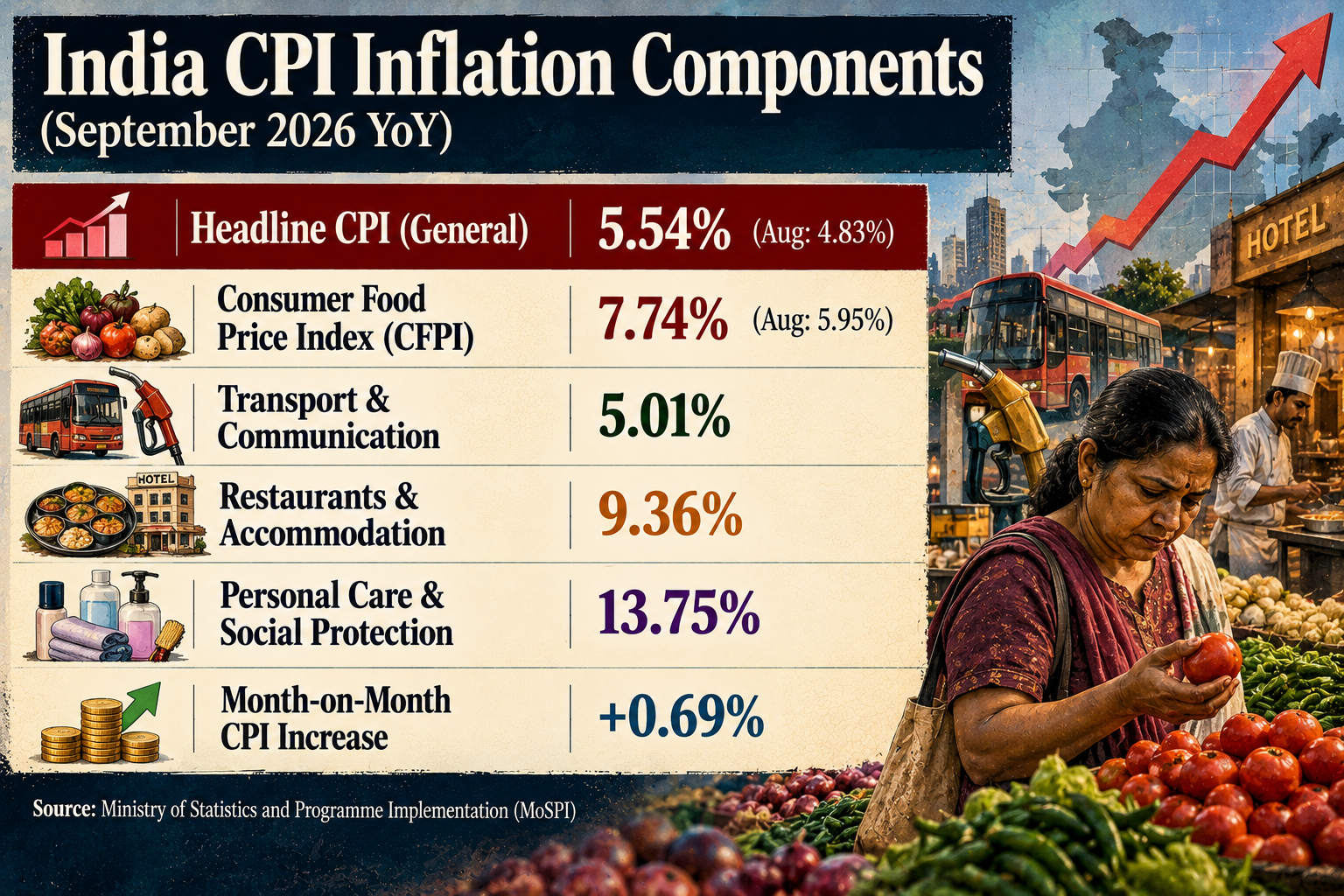
Beyond agricultural perishables, price increases showed signs of becoming entrenched in the broader services economy. Restaurant and accommodation charges grew at 9.36%, while personal care services posted a 13.75% increase. This divergence indicates that service providers are steadily passing higher operational and labour expenses on to end consumers.
Why the RBI Raised Rates Before the Print
The September reading explains why the RBI’s Monetary Policy Committee took preemptive action during its 63rd meeting concluded on 7 October 2026. Led by Governor Sanjay Malhotra, the MPC voted to raise the benchmark repo rate by 25 basis points to 5.50% (its first rate hike since February 2023) and shifted its policy stance to "calibrated tightening", as outlined in the RBI Monetary Policy Statement.
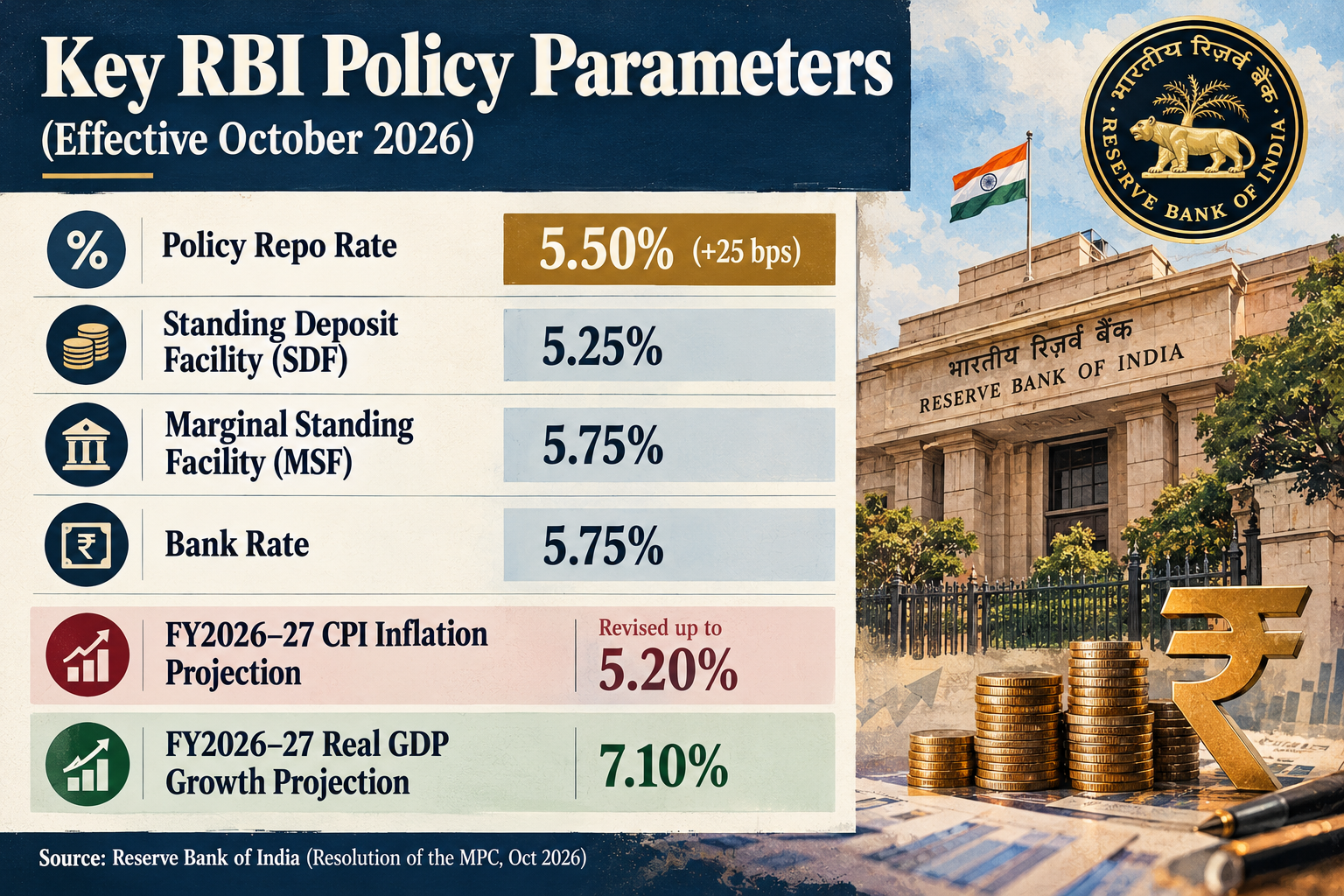
As reported by The Hindu, the central bank revised its annual CPI inflation projection for FY2026–27 upward to 5.20%, while maintaining a robust growth forecast of 7.10%. The committee's rationale was straightforward: while headline growth remains resilient, recurring supply-side food shocks risk spilling into core inflation and unanchoring household inflation expectations.
Are More Troubles Ahead? Evaluating the Road to Winter
Whether this 23-month high represents the peak or the start of a prolonged inflationary wave depends on three interdependent factors:
1. Kharif Harvest Arrivals
The sharpest driver of September’s inflation—perishable vegetables—is traditionally cyclical. As Kharif harvest arrivals enter wholesale mandis across Maharashtra, Madhya Pradesh, and Karnataka from late October into November, vegetable supplies should improve. However, unseasonal downpours in late September damaged early standing crops in parts of central India, creating a temporary supply bottleneck that could keep onion and tomato prices elevated into early November.
2. The Rupee and Global Energy Volatility
India imports over 85% of its crude oil requirements. With Brent crude trading firm due to persistent geopolitical friction in West Asia and the Indian rupee hovering near ₹96 to the US dollar, imported inflation remains a structural vulnerability. Currency depreciation amplifies the landed cost of crude oil, industrial chemicals, and edible oil imports, preventing transport inflation from retreating quickly.
3. Unfavourable Base Effects
Statistically, the coming months face a demanding comparison. In late autumn 2025, consumer inflation in India dropped to unusually low levels (touching historical lows in October 2025). Because year-on-year inflation measures price changes against the index level twelve months prior, this depressed 2025 statistical base will mechanically push year-on-year headline figures higher through October and November 2026, even if month-on-month price increases moderate.
What It Means for Borrowers, Businesses, and Savers
The combination of 5.54% inflation and a 5.50% repo rate has immediate implications for the domestic financial landscape:
Higher Floating-Rate EMIs: Because commercial banks link floating retail loans (such as home and personal loans) to external benchmarks—principally the RBI repo rate—the 25 bps rate increase will automatically lift interest rates on loan resets, raising monthly equated monthly instalments (EMIs) or extending tenures.
Deposit Rate Competition: Banks will need to adjust fixed deposit (FD) offerings upward to attract retail household savings, particularly as headline inflation of 5.54% temporarily pushes real yields on ordinary savings deposits into negative territory.
Discretionary Spending Moderation: Higher essential grocery bills combined with steeper debt-servicing costs could dampen urban discretionary consumption during the festive season, placing pressure on retail and consumer goods sectors.
India’s inflation trajectory over the coming quarter is unlikely to plunge immediately. While winter vegetable harvests should provide partial relief on dining tables by December, currency headwinds, energy costs, and statistical base effects suggest headline CPI will hover close to 5.00%–5.50% through the third quarter of FY27. For monetary policymakers and consumers alike, patience will be required before genuine price stability returns.