In brief
- On 5 October 2026 the Nobel Assembly awarded the 2026 Nobel Prize in Physiology or Medicine to Karl Deisseroth, Peter Hegemann and Georg Nagel for discovering light gated ion channels and developing optogenetics.
- The laureates share 12 million Swedish kronor (SEK 12 million, about ₹9.6 crore or $1.15 million) for work that solved the long standing problem of pinpointing which neurons drive behaviour and illness.
- Optogenetics is already used in clinical trials to restore sight to the blind, improve bionic hearing, find drug targets for neuropsychiatric disorders and refine deep brain stimulation for Parkinson’s disease.
- By inserting light sensing algal proteins into mammalian brain cells the scientists created a biological switch that lets light pulses activate or silence specific neural circuits with millisecond precision.
On 5 October 2026, the Nobel Assembly at Karolinska Institutet awarded the 2026 Nobel Prize in Physiology or Medicine jointly to Karl Deisseroth, Peter Hegemann, and Georg Nagel for their pioneering discoveries concerning light-gated ion channels and the development of optogenetics.
The three scientists share the prize of 12 million Swedish kronor (SEK 12 million, or approximately ₹9.6 crore / $1.15 million). Their work resolved one of the oldest quandaries in biology: how to untangle the brain’s astronomical web of billions of interconnected neurons and determine which specific cells cause our movements, thoughts, memories, and illnesses.
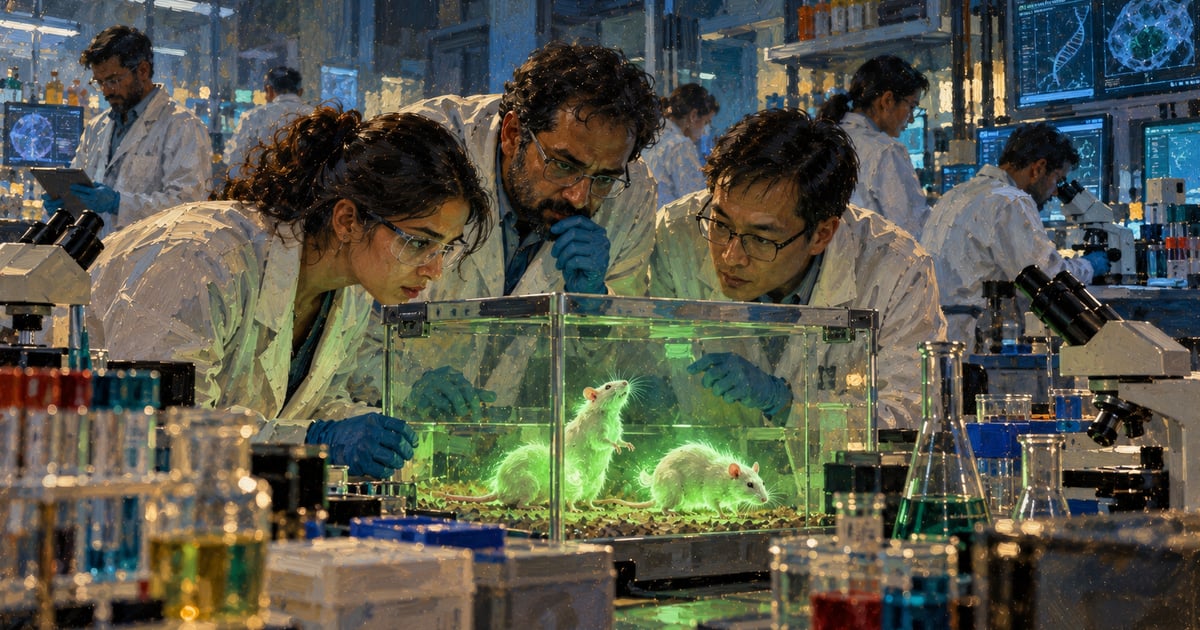
By harvesting light-sensitive proteins from pond algae and inserting their genetic blueprints into mammalian brain cells, the laureates created a biological light switch. Today, researchers can flash pulses of light through micro-optic fibres to activate or silence individual neural circuits with millisecond precision in living animals.
The implications for healthcare are vast. Optogenetics has transformed basic neurobiology from observational correlation into direct causal medicine. It is currently being deployed in clinical trials to restore sight to the blind, redesign high-resolution bionic hearing, identify specific drug targets for neuropsychiatric conditions, and refine electrical neuromodulation for Parkinson’s disease.
What the Laureates Discovered: From Pond Algae to Neural Remote Controls
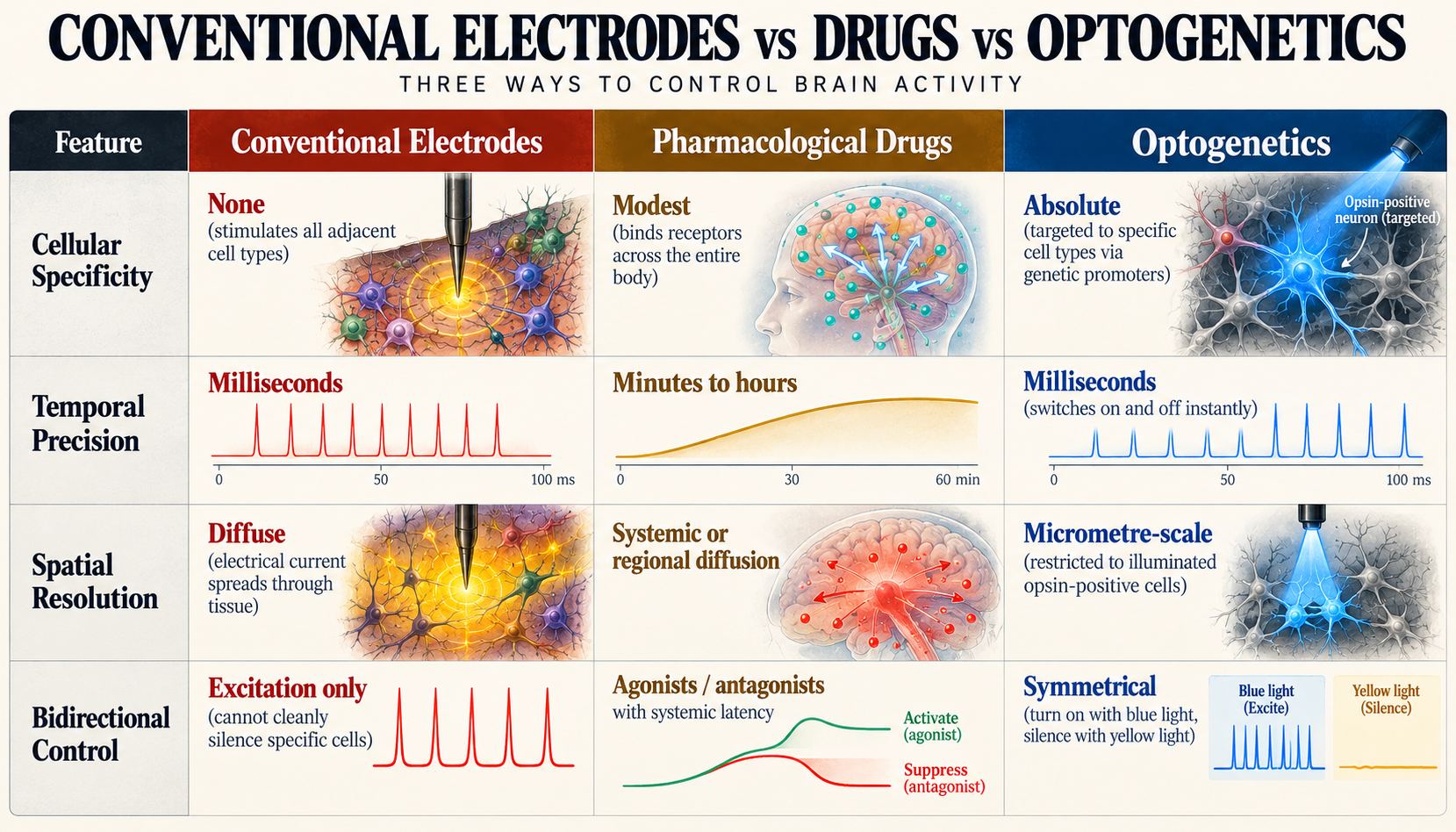
For over a century, neuroscientists faced a persistent engineering barrier. Nerve cells communicate through action potentials—brief electrical impulses that last only milliseconds. When scientists attempted to manipulate brain tissue using conventional electrodes, the electrical current spread indiscriminately, stimulating every cell body, passing axon, and inhibitory interneuron within the vicinity. When they used chemical drugs, molecules took minutes to take effect, bathed entire brain regions, and lingered for hours.
In 1979, molecular biologist Francis Crick famously speculated that the ideal tool for neuroscience would be light, because light could theoretically be directed with supreme speed and pinpoint spatial accuracy. However, human neurons do not naturally respond to light.
The answer lay in an organism with no brain at all: Chlamydomonas reinhardtii, a single-celled photosynthetic green alga that swims towards sunlight to nourish itself.
The Three Milestones Behind the Nobel Prize
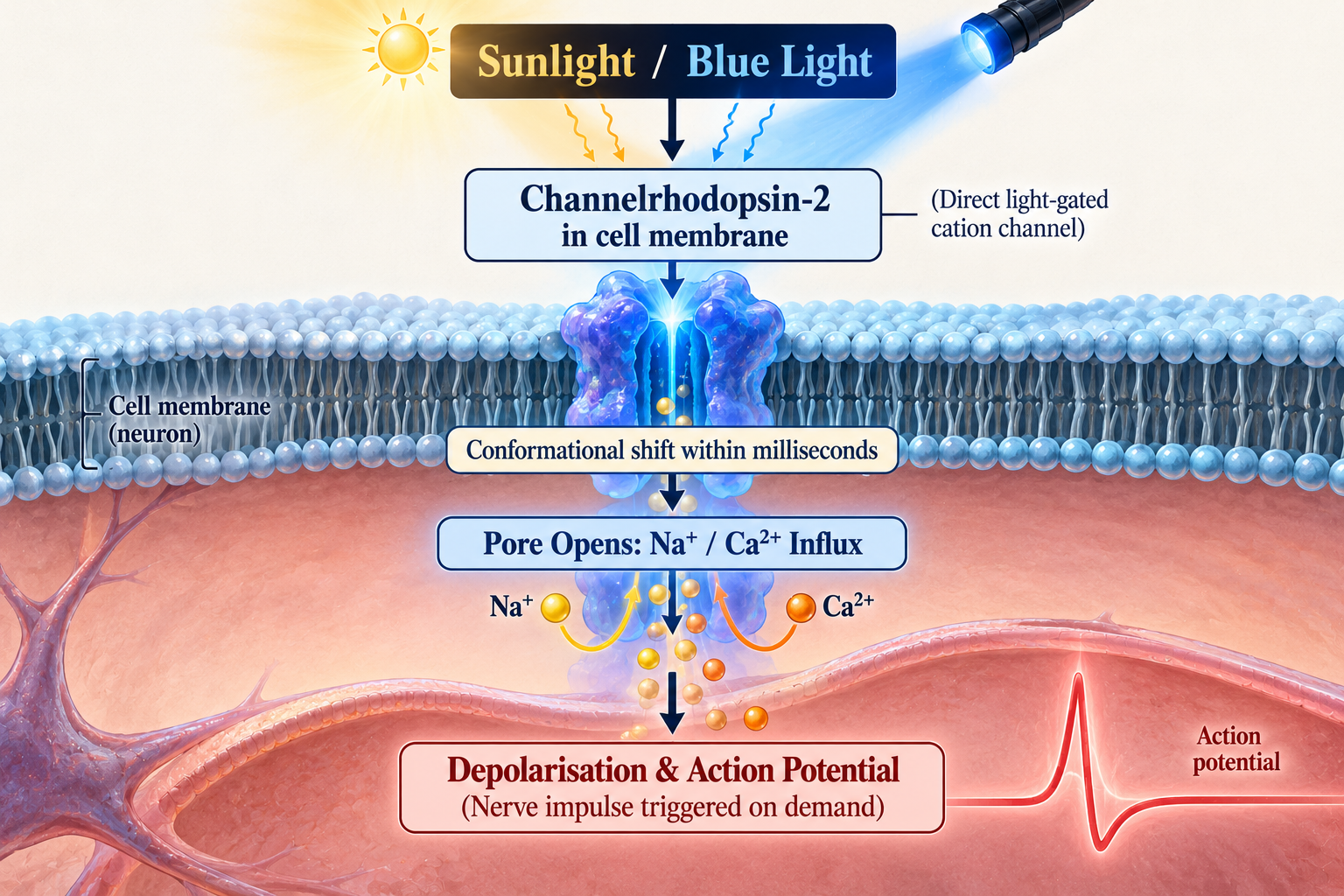
The Algal Current (Peter Hegemann): In the early 1990s at the Max Planck Institute for Biochemistry in Martinsried, biophysicist Peter Hegemann investigated how Chlamydomonas steered towards light. He discovered that illuminating the alga triggered an instantaneous transmembrane electrical current. Hegemann hypothesised that, unlike mammalian photoreceptors that rely on multi-protein biochemical cascades, the alga possessed a photoreceptor that acted directly as an ion channel.
Cloning the Channelrhodopsins (Georg Nagel & Peter Hegemann): Working with biophysicist Ernst Bamberg at the Max Planck Institute of Biophysics in Frankfurt, Georg Nagel and Hegemann isolated and cloned the genes encoding these algal proteins. In landmark papers published in Science (2002) and PNAS (2003), Nagel injected the genetic code into frog oocytes (Xenopus laevis). When exposed to blue light, the proteins—named Channelrhodopsin-1 (ChR1) and Channelrhodopsin-2 (ChR2)—opened their central pores, allowing positively charged ions to flood the cell. They had discovered the world’s first directly light-gated ion channels.
The Mammalian Neural Switch (Karl Deisseroth): At Stanford University, neuroscientist and psychiatrist Karl Deisseroth recognised that ChR2 could fulfill Crick’s dream. Collaborating with graduate students Edward Boyden and Feng Zhang, alongside Nagel and Bamberg, Deisseroth packaged the ChR2 gene into a benign lentiviral vector and introduced it into cultured mammalian neurons. In a breakthrough paper in Nature Neuroscience (2005), the team demonstrated that brief pulses of blue light provoked neurons to fire authentic, millisecond-precise action potentials at physiological frequencies.
In 2006, Deisseroth coined the term optogenetics. By 2007, his Stanford laboratory demonstrated that inserting an optical fibre into the motor cortex of living, behaving mice allowed researchers to control the movement of specific whiskers simply by turning a light on and off.
Soon after, Deisseroth and other groups introduced light-driven chloride and proton pumps—such as Halorhodopsin (activated by yellow light) and Archaerhodopsin (activated by green light)—which hyperpolarise neurons, allowing scientists not only to switch cells on, but also to silence overactive circuits instantaneously.
Why Optogenetics is a Fundamental Game Changer for Healthcare
The medical value of optogenetics operates across two distinct frontiers: indirect diagnostic and drug-discovery transformation (which has already revolutionised medical science over the past two decades) and direct clinical gene therapies (which are currently navigating human trials).
1. Cracking the Circuit Pathology of Mental Illness and Brain Disorders
Historically, psychiatric medicine has operated on blunt biochemical models, such as the "chemical imbalance" hypothesis of depression. While neurotransmitters like serotonin and dopamine matter, the brain is fundamentally an electro-chemical computational network. Psychiatric symptoms arise when specific circuit loops malfunction.
Because Karl Deisseroth is a practicing psychiatrist, his laboratory utilised optogenetics to locate the actual wiring faults underlying complex psychiatric conditions:
Depression and Anhedonia: Optogenetic stimulation of dopamine-producing neurons projecting from the ventral tegmental area (VTA) to the nucleus accumbens demonstrated that restoring specific phasic firing patterns could immediately reverse anhedonia (the inability to experience pleasure) in stressed animal models.
Anxiety and Fear: Researchers mapped the precise projections within the amygdala and bed nucleus of the stria terminalis that trigger acute panic, distinguishing them from neighbouring circuits that suppress fear. In a famous 2012 study conducted with Nobel laureate Susumu Tonegawa, researchers reactivated a specific memory engram in mice using light, causing the animals to recall a fearful memory without any environmental danger present.
Sleep and Arousal: By expressing ChR2 in hypocretin/orexin-producing neurons in the hypothalamus, researchers proved that activating this tiny population of cells instantly woke sleeping animals, establishing foundational knowledge for modern narcolepsy and insomnia drugs.
By identifying the exact synaptic pathways that generate symptoms, pharmaceutical developers no longer have to design indiscriminate compounds that saturate the entire brain. Instead, they can evaluate prospective drug candidates based on whether they rescue specific circuit dynamics.
2. Revolutionising Deep Brain Stimulation (DBS) for Parkinson's Disease
Deep Brain Stimulation (DBS) is a standard surgical treatment for advanced Parkinson’s disease, where an implanted pulse generator sends electrical currents into the subthalamic nucleus (STN). For decades, clinicians argued over why DBS worked: did it excite or suppress the STN?
Using optogenetics, Deisseroth’s team discovered that the therapeutic relief of Parkinsonian motor symptoms was not caused by stimulating the local nerve cell bodies of the STN itself. Rather, it was driven by the stimulation of afferent axonal projections originating in the motor cortex that pass through the area. This discovery has allowed neurosurgeons and biomedical engineers to redesign DBS electrodes, creating directional, closed-loop stimulation parameters that alleviate tremors while avoiding debilitating psychiatric side effects like hypomania or depression.
3. Direct Clinical Therapy: Restoring Vision in Retinitis Pigmentosa
The most advanced direct clinical application of optogenetics is currently in ophthalmology. Diseases such as retinitis pigmentosa (RP) and dry age-related macular degeneration (AMD) cause progressive blindness by destroying light-sensing photoreceptors (rods and cones). However, the underlying neural infrastructure—the bipolar and retinal ganglion cells (RGCs) that carry signals to the optic nerve—remains largely intact.
Instead of trying to replace millions of dead photoreceptors, clinical gene therapy delivers an algal opsin gene directly to the surviving retinal ganglion cells using an adeno-associated viral (AAV) vector:
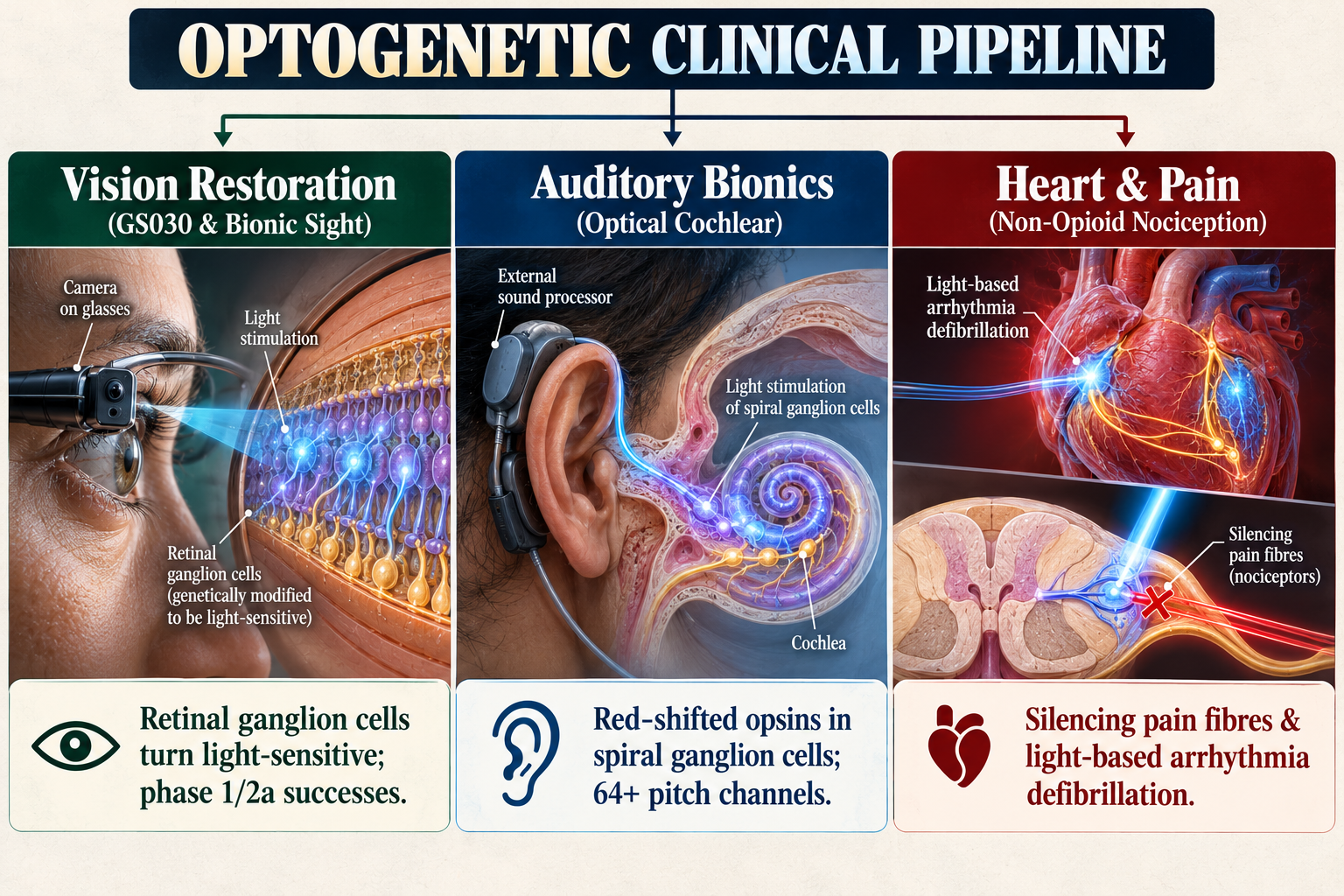
In a landmark clinical study published in Nature Medicine, a blind 58-year-old patient with end-stage retinitis pigmentosa received the GS030 optogenetic therapy (developed by GenSight Biologics).
An engineered amber-light opsin called ChrimsonR was injected into one eye.
The patient was fitted with specialized neuromorphic goggles that capture real-time visual scenes and project corresponding high-intensity amber light pulses onto the genetically modified retina.
Following therapy and visual training, the patient was able to perceive, locate, count, and grasp everyday objects on a table, such as a notebook or a small box, and discern pedestrian crossings outdoors.
Multiple clinical trials (including trials by Bionic Sight and Ray Therapeutics) are actively refining this approach, offering the realistic prospect of restoring functional vision to thousands of patients with inherited retinal dystrophies.
4. Next-Generation Optical Cochlear Implants
Traditional cochlear implants have granted hearing to hundreds of thousands of profoundly deaf individuals. However, they rely on electrical micro-arrays placed in the fluid-filled cochlea. Because electrical currents spread broadly in saline fluid, stimulation channels cross-talk, limiting users to between 8 and 22 effectively independent frequency bands. Consequently, traditional implant users frequently struggle to understand speech in noisy environments or appreciate music.
Researchers at the University of Göttingen and worldwide are pioneering optical cochlear implants. By using AAV gene therapy to introduce ultrafast channelrhodopsins into spiral ganglion auditory neurons, the auditory nerve can be stimulated with thin micro-LED arrays. Because light beams do not disperse in fluid the way electrical currents do, optical implants can deliver 64 to 128 discrete frequency channels—a massive leap in spectral resolution that could enable near-natural speech comprehension and musical pitch perception.
5. Non-Opioid Pain Management and Pain-Free Defibrillation
Chronic, intractable pain affects hundreds of millions of individuals globally, driving reliance on addictive opioid prescriptions. Preclinical optogenetic research has successfully expressed light-activated inhibitory chloride pumps (such as Halorhodopsin) in peripheral nociceptors (pain-sensing nerve fibres). When illuminated with miniature, wireless subdermal LEDs, spontaneous neuropathic firing stops instantly without sedative or systemic side effects.
In cardiac electrophysiology, optogenetics is rewriting how arrhythmias are treated. Standard implantable cardioverter-defibrillators (ICDs) rescue patients from lethal ventricular fibrillation by administering massive, agonizing electrical shocks (typically hundreds of volts) that cause severe myocardial tissue trauma. By expressing light-gated ion channels in cardiac myocytes, biomedical teams have demonstrated that gentle, silent pulses of red or blue light can extinguish lethal arrhythmias painlessly across the heart surface.
Translational Roadblocks: What Still Needs to Be Solved?
While optogenetics has established itself as the indispensable research engine of 21st-century neuroscience, several practical hurdles must be resolved before it becomes an everyday medical intervention inside the human skull:
Viral Delivery and Genetic Stability: The human body must receive foreign microbial genes via viral delivery vehicles (typically AAV vectors). Ensuring long-term, stable expression exclusively in target cell populations without provoking an adverse immune response remains a significant regulatory challenge.
The Physics of Light Penetration: Brain tissue scatters and absorbs light rapidly. While blue light activates classical Channelrhodopsin-2, it penetrates less than one millimetre of mammalian brain parenchyma. To reach deep human brain structures, researchers had to develop red-shifted opsins (such as Chrimson, Crimson, and ChRmine), because near-infrared light passes much deeper through tissue and bone.
Invasive Hardware: While the eye is naturally transparent and admits light without surgery, activating brain or peripheral nerve circuits requires implanting micro-LED arrays or optical fibres, which carry risks of tissue inflammation, heat dissipation, and mechanical failure over decades of use.
These engineering challenges are why optogenetics first reached clinical practice in the eye. For deep-brain conditions, its immediate impact will remain indirect: delineating the precise circuit targets that next-generation precision drugs, focused ultrasound, and adaptive neurostimulation devices must modulate.
The Verdict on the 2026 Award
The Nobel Assembly’s decision to honour Karl Deisseroth, Peter Hegemann, and Georg Nagel celebrates an archetypal scientific journey. What began as humble, fundamental research into the biophysics of single-celled pond algae evolved into an apparatus capable of controlling the most intricate organ in the known universe.
By uniting molecular botany, genetic engineering, and neurobiology, the 2026 laureates gave humanity its first direct steering wheel for the nervous system. As clinical gene therapies mature over the coming decade, the legacy of optogenetics will be measured not only by the scientific mysteries it has unravelled in the laboratory, but by the restoration of sight, hearing, and mental stability at the patient’s bedside.