In brief
- On 11 October 2026 Pakistan’s federal government placed Khyber Pakhtunkhwa under direct control by invoking Articles 232 and 234, removing the elected provincial government and transferring powers to Islamabad.
- Chief Minister Muhammad Sohail Afridi, Provincial Assembly Speaker Babar Saleem Swati and senior PTI leaders were placed in preventive detention, shipping containers sealed Peshawar’s Red Zone, schools were shut in several districts and NetBlocks reported widespread mobile internet disruptions.
- The government cited rising militancy, noting PICSS recorded 1,066 armed attacks in Pakistan in 2025, up from 908 in 2024, and 1,232 attacks in the first nine months of 2026, mostly in Khyber Pakhtunkhwa and Balochistan.
- Under Article 232 proclamation must be approved by two houses within 10 days, deadline 21 October 2026, and laid before a joint sitting within 30 days; Article 234 allows governor’s rule for up to six months in two month extensions.
On Sunday, 11 October 2026, Pakistan’s federal government executed an extraordinary constitutional manoeuvre in the country’s northwest, placing Khyber Pakhtunkhwa under direct federal control.
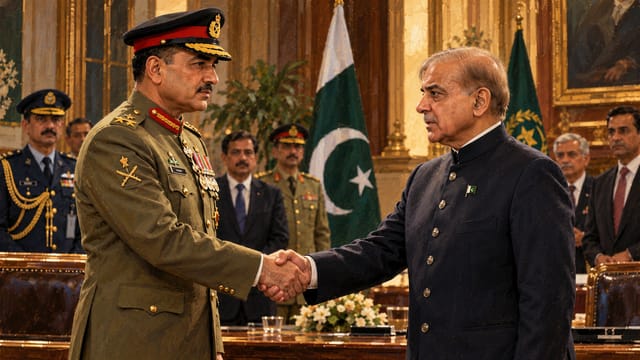
Acting on the advice of Prime Minister Shehbaz Sharif, President Asif Ali Zardari signed a proclamation that simultaneously invoked Article 232 and Article 234 of Pakistan’s Constitution. The order declared that the elected provincial government had ceased to exist, stripped provincial ministers of their portfolios, transferred legislative powers to the federal Parliament in Islamabad, and placed executive authority in the hands of Governor Faisal Karim Kundi.
By Monday morning, Khyber Pakhtunkhwa’s Chief Minister Muhammad Sohail Afridi, Provincial Assembly Speaker Babar Saleem Swati, and several senior leaders of the opposition Pakistan Tehreek-e-Insaf (PTI) were placed in preventive detention. Shipping containers cordoned off Peshawar’s administrative Red Zone, public educational institutions were ordered shut across several districts, and network monitoring agency NetBlocks reported widespread disruptions to mobile internet connectivity.
The move marks the sharpest escalation in Pakistan’s protracted political and institutional crisis since the disputed February 2024 general election. While Islamabad has justified the takeover on grounds of urgent counter-terrorism requirements, PTI leaders and legal scholars argue the emergency is an unconstitutional instrument designed to crush political mobilisation.
Why Did the Federal Government Intervene?
At a joint press conference in Islamabad on 11 October, Law Minister Azam Nazeer Tarar, Information Minister Attaullah Tarar, and Interior Minister Mohsin Naqvi outlined the official rationale. The ministers argued that the provincial administration had failed to counter a surging wave of cross-border militancy and domestic insurgent violence.
Security data underscores the deterioration of law and order along the Afghan frontier. Independent monitoring by the Pakistan Institute for Conflict and Security Studies (PICSS) recorded 1,066 armed attacks in Pakistan during 2025, up from 908 in 2024. Violence accelerated further in 2026, with PICSS recording 1,232 attacks nationwide in the first nine months alone—the overwhelming majority concentrated in Khyber Pakhtunkhwa and south-western Balochistan.
Federal ministers alleged that the provincial administration was uncooperative with military and intelligence operations. Information Minister Attaullah Tarar went as far as claiming the PTI government was "hand in glove with terrorists", though the federal cabinet offered no public intelligence dossier to substantiate the charge.
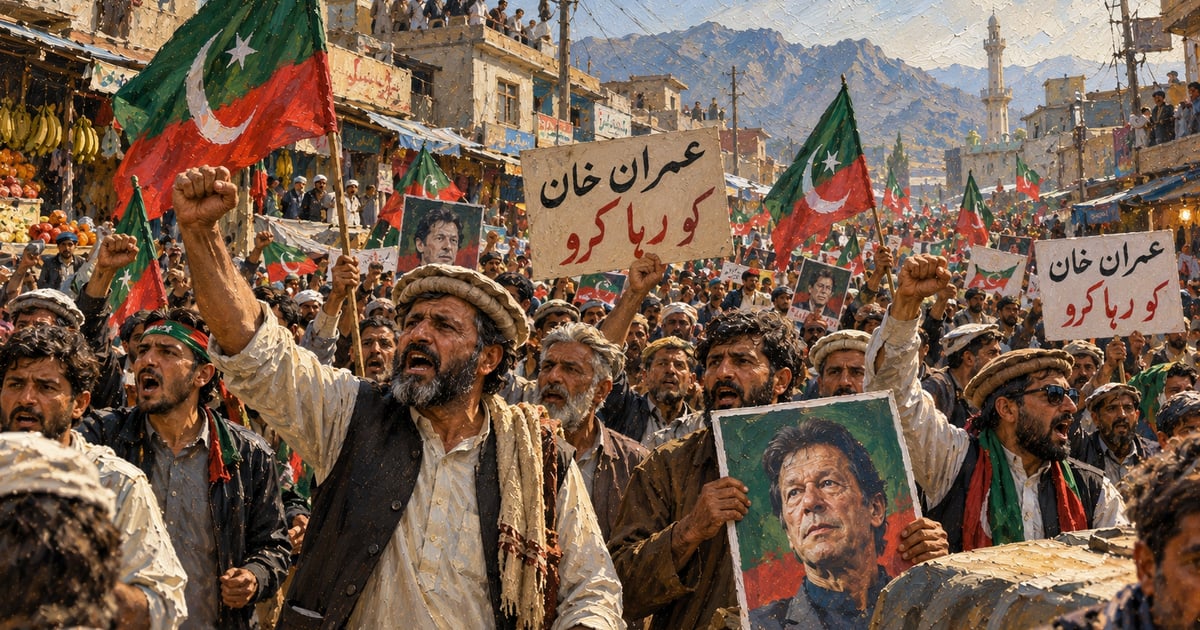
However, the timing points to an acute political trigger. Negotiations between the federal government and PTI collapsed late last week over a planned march to Islamabad. Chief Minister Sohail Afridi had mobilised provincial party structures for a "Long March" from Lakki Marwat to the federal capital to demand medical access, family visits, and the unconditional release of jailed PTI founder Imran Khan. In late September 2026, authorities in Punjab had already placed Khan’s three sisters—Aleema Khan, Uzma Khan, and Noreen Niazi—under 30-day preventive detention to suppress earlier protests. With thousands of marchers preparing to converge on the federal capital, the central government chose to dismantle the provincial government organising the push.
The Legal Dual-Track: Article 232 vs Article 234
The federal proclamation is legally unusual because it merges two distinct parts of the Constitution that serve different legal ends:
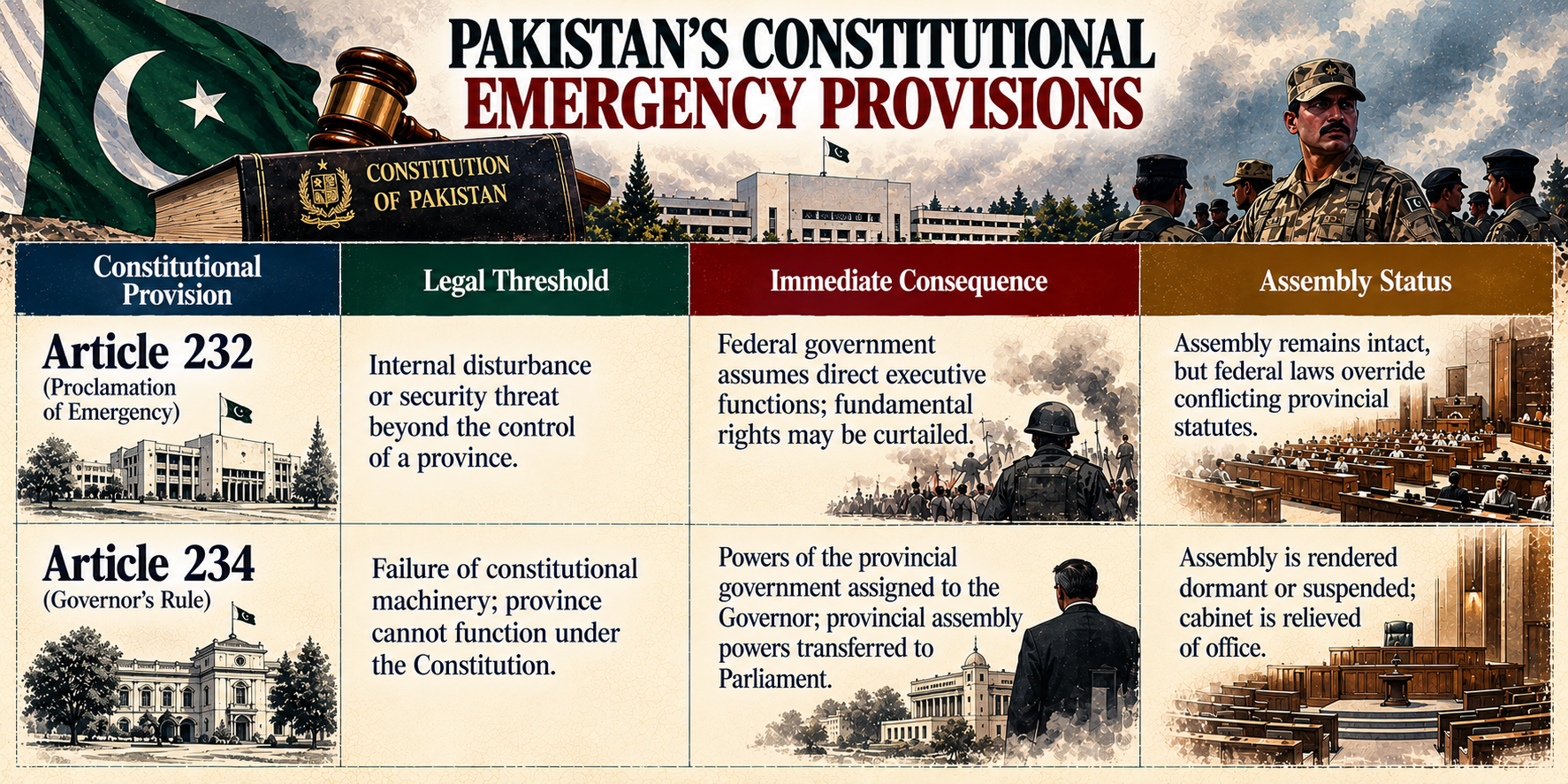
Under Article 234, the provincial executive—the Chief Minister and cabinet—is deemed non-functional. However, as constitutional lawyers Mirza Moiz Baig and Rida Hosain noted, governor’s rule does not permanently dissolve the provincial assembly. Once the proclamation lapses or is withdrawn, the elected cabinet and chief minister are legally restored.
Governor Faisal Karim Kundi, a senior leader of the Pakistan Peoples Party (PPP)—the principal coalition partner of Prime Minister Sharif’s Pakistan Muslim League-Nawaz (PML-N)—now runs the province alongside an 11-member advisory council. Units of the Pakistan Army, already deployed in the province, have been formally mandated to assist the civil administration under aid-to-civil-power provisions.
The 12 Border Districts: A Parallel Executive and Suspended Judiciary
Beyond the removal of the provincial cabinet, the federal government issued a companion executive order establishing a specialised administrative secretariat for 12 designated districts. These districts, located primarily along the Durand Line in the merged former Federally Administered Tribal Areas (FATA), constitute the core operational theatre for groups such as the Tehrik-e-Taliban Pakistan (TTP).
This designated secretariat will be led by an Additional Chief Secretary, whose administrative orders carry the direct force of provincial government decisions. Interior Minister Mohsin Naqvi stated the arrangement was purely logistical, designed to direct resources into war-torn districts without formally dividing the province.
The order contains a far more contentious clause: it explicitly suspends the constitutional requirement separating the judiciary from the executive within those 12 districts. Under this suspension, executive district officers and commissioners have been re-empowered to carry out judicial functions, mirroring the colonial-era Frontier Crimes Regulation (FCR) framework that parliament abolished in 2018.
Political and Human Rights Fallout
The move has drawn condemnation from opposition leaders and international monitors. PTI Chairman Barrister Gohar Ali Khan announced that the party will challenge the proclamation in the Supreme Court and high courts, stating: "If there is terrorism and an emergency is needed in 12 districts, then why is governor's rule across the whole province?" Former provincial finance minister Taimur Jhagra rejected accusations of provincial negligence, arguing that if security metrics alone justified federal takeovers, Balochistan would have faced emergency rule long before KP.
Human rights watchdogs have raised alarms over due process. Amnesty International warned that the state of emergency must not serve as a pretext to bypass constitutional safeguards, silence political opposition, or institutionalise arbitrary detentions. The organisation expressed deep concern over the pre-emptive arrests of parliamentarians and widespread communication blackouts.
What Happens Next: The Constitutional Clock
The federal government faces strict constitutional deadlines to keep the measures legally viable:
The 10-Day Parliamentary Threshold (Article 232): Because President Zardari declared an emergency without an endorsing resolution from the Khyber Pakhtunkhwa Provincial Assembly, the proclamation must be approved by both the National Assembly and the Senate within 10 days—setting a deadline of 21 October 2026.
The 30-Day Joint Sitting: The emergency proclamation must subsequently be laid before a joint sitting of Parliament within 30 days. It lapses automatically after two months unless reaffirmed by a resolution passed in that joint sitting. Once endorsed, Article 232 sets no fixed expiration date, remaining operational until revoked or voted down.
The Six-Month Outer Limit (Article 234): Governor’s rule operates on a stricter clock. Parliament can authorise it for an initial two months and extend it only in two-month increments up to an absolute ceiling of six months.
With the ruling PML-N and PPP coalition holding majorities in both houses of the federal Parliament, initial legislative approval is expected. However, with the PTI pledging mass street protests, legal challenges headed to the superior judiciary, and security forces stretched thin along the western frontier, the federal takeover risks deepening the very instability it claims to solve.