In brief
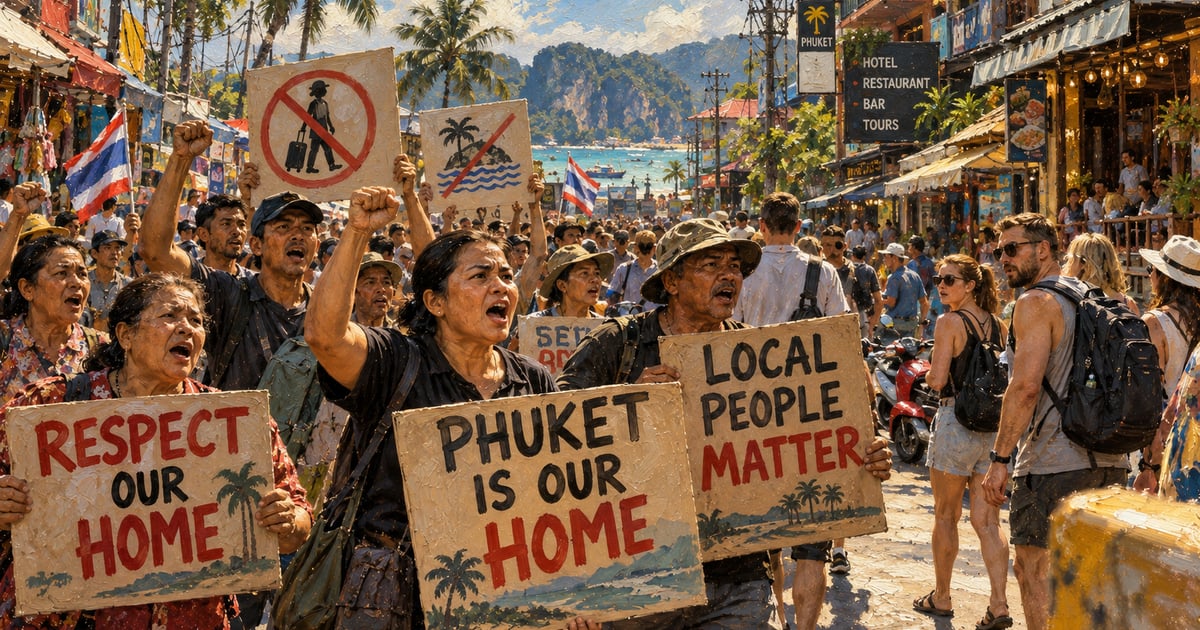
- Locals in Thailand are protesting under “Take Back Thailand”, angry at foreigners who settle long-term and take over local business.
- Viral incidents set it off, like a Swiss man kicking a Thai doctor in Phuket and disputes on Koh Phangan.
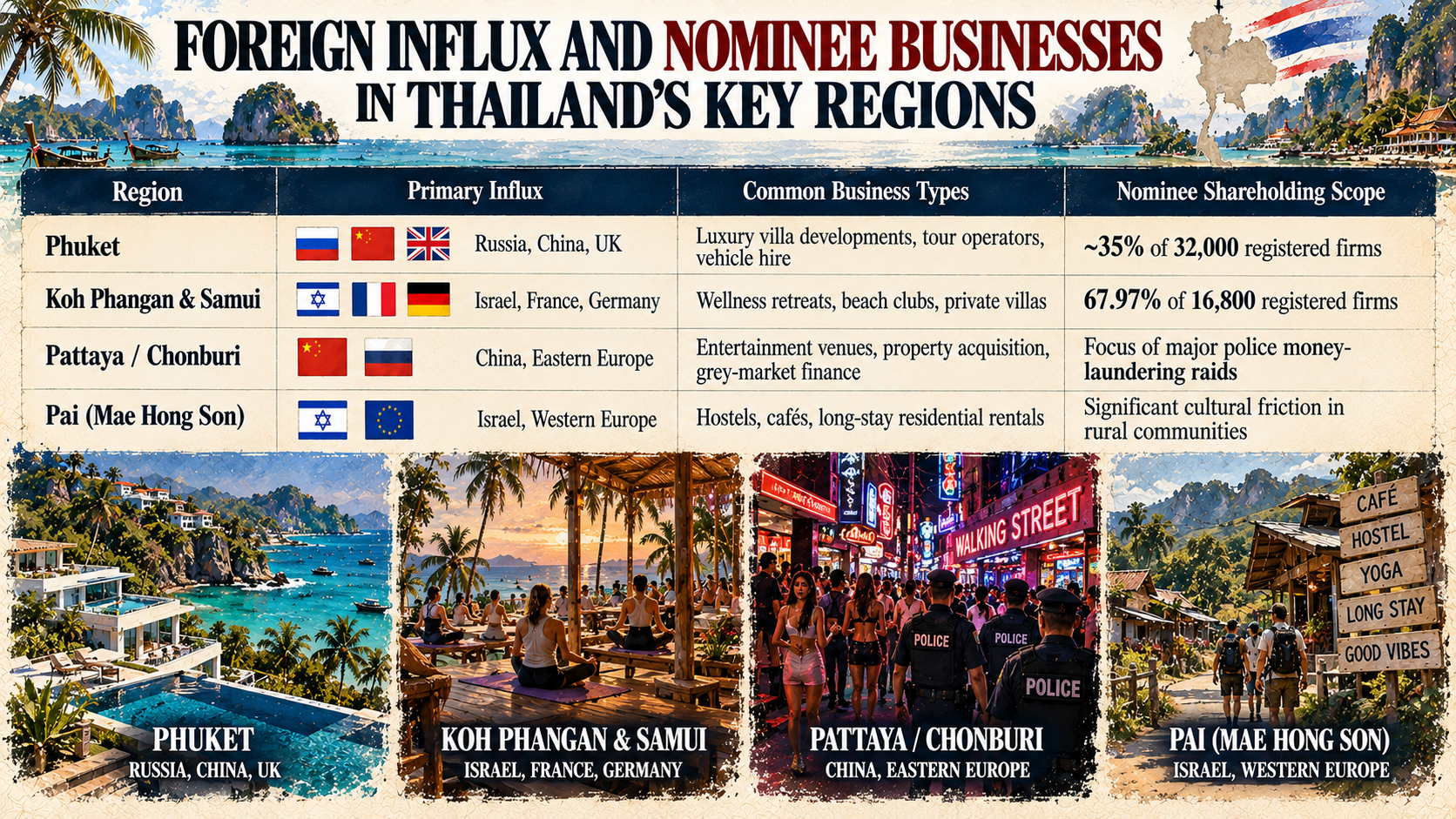
- Foreigners can’t own most tourism businesses, so they use fake “nominee” companies. About 68% of firms on Koh Phangan and Koh Samui had foreign shareholders.
- Thailand can’t shut the door, since tourism is about 4 million jobs and up to a fifth of GDP.
- The government is cracking down: 110+ arrests, 240+ nominee setups shut down, and visa-free stay cut back to 30 days from 15 September 2026.
For more than half a century, Thailand’s pitch to international travellers was built on an uncomplicated promise: warm hospitality, pristine tropical beaches, energetic nightlife, and unhindered access. That hospitality transformed the kingdom into one of the most visited destinations on earth, generating an industry that sustains roughly 4 million jobs and contributes up to a fifth of the country’s gross domestic product.
In recent months, however, that welcoming façade has cracked.
From the palm-fringed hillsides of Koh Phangan and the luxury developments of Phuket to the diplomatic quarter of Bangkok, demonstrations have erupted under the banner "Take Back Thailand". Rather than a rejection of leisure travel, the backlash represents an escalating revolt against the transformation of Thai holiday destinations into closed-loop foreign enclaves that push out local residents, inflate living costs, and bypass domestic commerce.
What Sparked the Protests?
The immediate triggers for the demonstrations were a series of public confrontations involving foreign nationals that circulated widely across Thai social media.
In early September 2026, several hundred demonstrators rallied outside the Israeli Embassy on Sukhumvit 21 in Bangkok. The demonstration was organised by veteran political activist Sondhi Limthongkul’s "Take Our Thailand Back" campaign. Demonstrators carried national flags and signs calling for the strict enforcement of Thai laws and sovereignty, responding to altercations between long-stay visitors and local workers.
The protest followed months of simmering friction across the southern islands:
The Yamu Beach Incident (Phuket): The cultural flashpoint began in March 2024, when a Swiss villa tenant assaulted a local Thai doctor, Dr Thandao Chandam, who was sitting on concrete stairs leading to Yamu Beach. When authorities discovered that the villa's steps illegally encroached on public beach land, hundreds of Phuket residents rallied at the site, turning the staircase into a symbol of foreign encroachment on public commons. The Swiss national was later sentenced by the Phuket Appeals Court to a month's imprisonment in absentia.
Territorial Disputes on the Islands: On Koh Phangan and Koh Samui, friction expanded beyond individual behaviour into property disputes. In July 2026, an official inspection of an unlicensed Jewish community centre on Koh Phangan prompted public anger when foreign visitors confronted Thai inspectors and reportedly claimed the premises constituted foreign territory.
The Samui Zoo Confrontation: In August 2026, an Israeli national was swiftly deported under newly tightened immigration rules after threatening a local zoo operator over the display of a Palestinian solidarity banner.
While diplomatic representatives, including Israeli Ambassador Alona Fisher-Kamm, noted that misconduct involved only an isolated minority, Thai sociologists observe that public anger has reached a tipping point. As Dr Jirayudh Sinthuphan of Chulalongkorn University’s Institute of Asian Studies pointed out, the grievances reflect a cumulative frustration with waves of foreign arrivals from Russia, China, Europe, and the Middle East who establish long-term settlements with little regard for local customs or statutory laws.
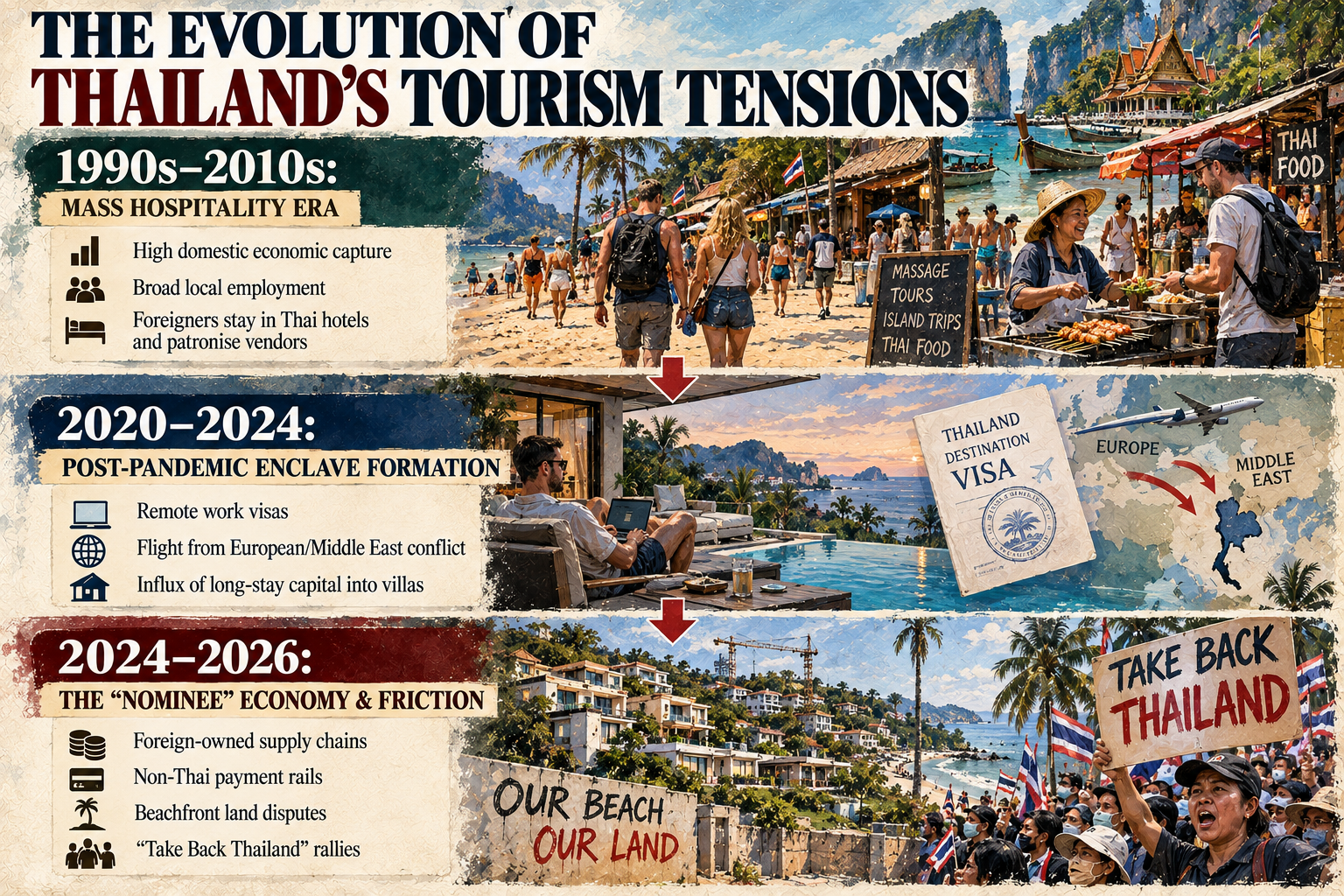
What Changed: The Rise of Closed-Loop Economies
The fundamental driver of local anger is economic displacement. In past decades, foreign visitors stayed in Thai-owned guesthouses, ate at local night markets, and hired licensed domestic guides. The post-pandemic landscape, however, saw the proliferation of "closed-loop" tourist ecosystems.
Under Thai law, specifically the Foreign Business Act B.E. 2542 (1999), foreign nationals are barred from holding majority ownership in hospitality, passenger transport, tour guiding, and restaurant businesses unless granted rare exemptions. Foreigners are likewise prohibited from owning freehold land.
To circumvent these rules, foreign investors increasingly utilise "nominee structures"—corporate entities where Thai citizens hold a 51% stake on paper but exercise no management authority or economic interest.
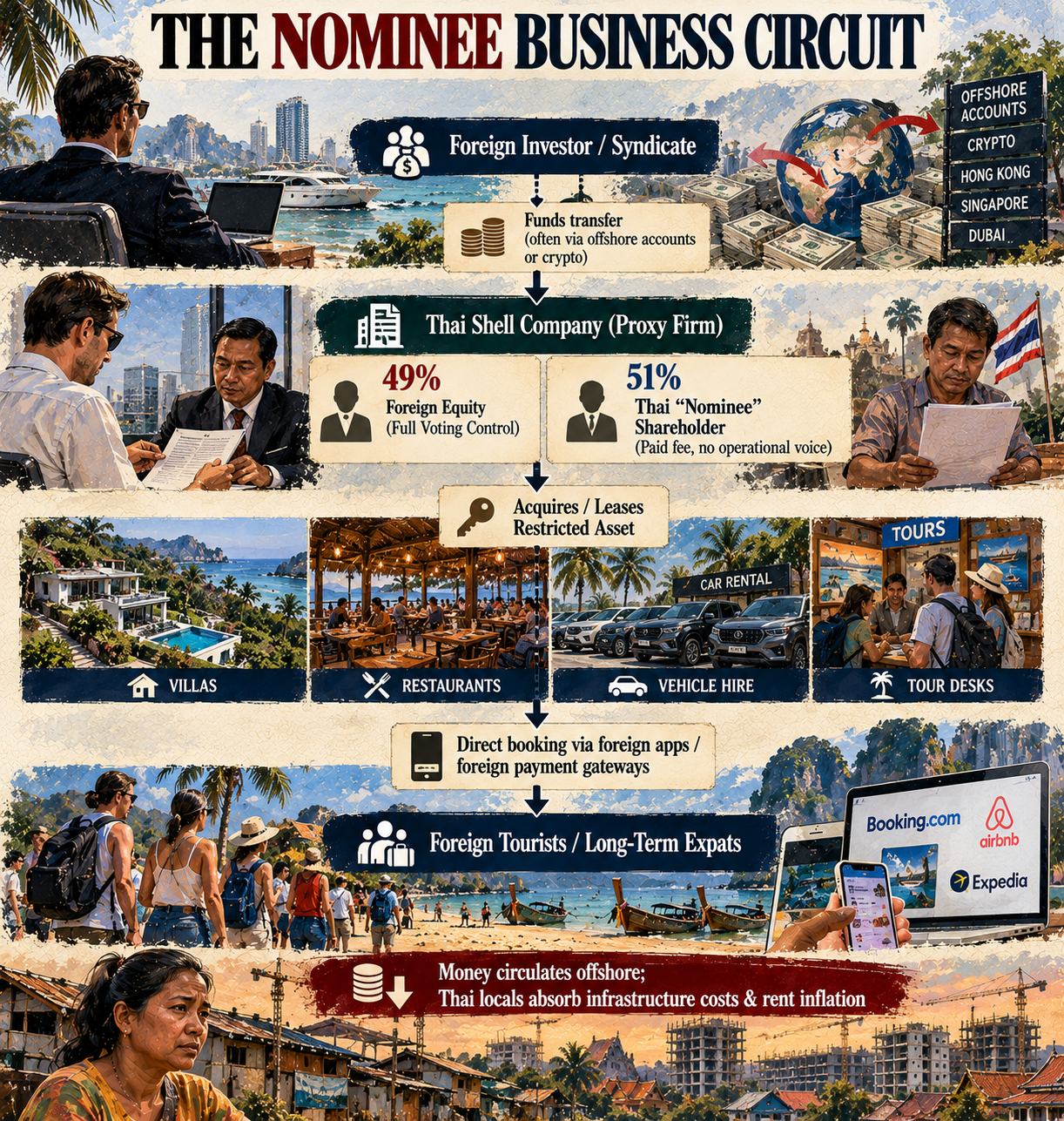
The scale of this circumvention was exposed in May 2026, when an inter-agency probe by the Department of Business Development examined 16,800 registered companies across Koh Phangan and Koh Samui. The audit revealed that nearly 68% of registered firms (11,426 businesses) had foreign shareholders.
On Koh Phangan, known globally for its Full Moon Party, these operations evolved into self-contained communities. Overseas investors built hillside villas, operated vehicle rental fleets, and ran dining establishments featuring foreign-language signage and menus. Payments are frequently settled overseas through digital apps or foreign bank accounts, meaning revenue never touches the Thai banking system or benefits municipal tax revenue.
The Commerce Ministry’s investigation uncovered widespread professional complicity: approximately 140 accountants across 29 accounting firms were found acting as proxy shareholders in more than 2,000 businesses with a collective capitalisation of ฿2.5 billion (roughly ₹580 crore / $70 million). One individual accountant was registered as a shareholder in 212 separate corporate entities.
In Phuket, a parallel influx occurred following Russia's invasion of Ukraine in 2022. Wealthier beach enclaves such as Bang Tao, Cherngtalay, and Rawai saw villa sales surge, with foreign holdings appearing in roughly 35% of the island's 32,000 registered companies. Local taxi cooperatives, hair salon owners, and small retailers found themselves displaced by unlicensed foreign operators conducting business exclusively in Russian or Mandarin.
How Big Is Tourism in Thailand’s Economy?
The political dilemma facing Bangkok is acute because the kingdom remains structurally dependent on tourism to offset sluggish manufacturing and high household debt.
According to data from the Ministry of Tourism and Sports and the Bank of Thailand:
GDP Contribution: In 2019, tourism accounted for approximately 18% to 20% of Thailand's gross domestic product, with direct tourist expenditure generating over 12% of national output. In 2024, international visitor receipts alone topped ฿1.66 trillion (about 8.9% of GDP), rising to nearly 15% when domestic travel is included.
Employment: The hospitality and travel sector directly employs approximately 4 million people—more than 10% of the country’s entire workforce.
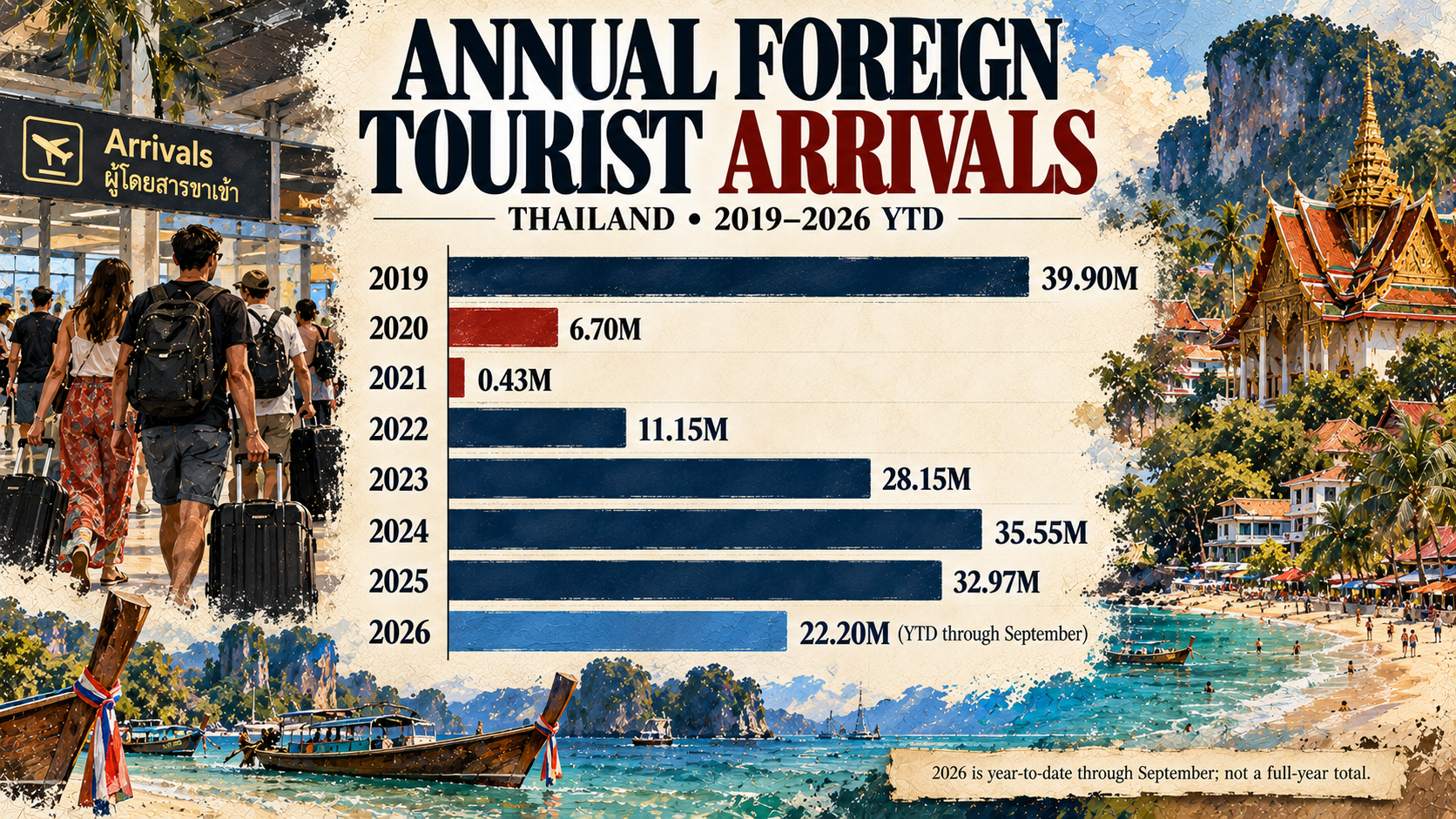
Arrival Trends: Overseas arrivals reached an all-time peak of 39.9 million in 2019 before collapsing during the pandemic. Recovery was rapid, climbing to 28.15 million in 2023 and 35.55 million in 2024, before settling at 32.97 million in 2025. Through September 2026, Thailand welcomed roughly 22.2 million international travellers.
Because tourism is an indispensable economic motor, past governments routinely liberalised travel rules to stimulate growth. In early 2024, the government expanded visa-free entry from 30 to 60 days for citizens of more than 90 nations.
However, that generosity created unintended consequences: it enabled foreign nationals to reside indefinitely on rolling tourist entries, establishing informal businesses and competing directly with local tradespeople on tourist islands where water, electricity, land, and roads are limited.
The Policy Reversal: The "Phangan Model" and Visa Rollbacks
The local protests coincided with a marked political shift. Following general elections in February 2026, Prime Minister Anutin Charnvirakul assumed office on a conservative, nationalistic platform that pledged to defend Thai sovereignty and crack down on foreign grey capital.
The response from law enforcement has been swift:
The "Phangan Model" Raids: Led by Deputy Interior Minister Polapee Suwunchwee, joint task forces involving police, immigration, and land officers launched raids across seven provinces, including Surat Thani, Phuket, Krabi, and Chonburi. Over 110 individuals have been arrested, dozens of commercial premises closed, and more than 240 illegal nominee structures dismantled.
Strict Visa Curtailment: Acknowledging that the 60-day visa exemption had been exploited by foreign workers, the government officially ended the 60-day visa-free scheme on 15 September 2026, reducing the allowable stay back to 30 days and introducing annual caps on overland border runs.
Expedited Deportations: Amendments enacted in August 2026 expanded the Interior Ministry's authority to revoke visas and immediately deport foreigners deemed disruptive to public order, culture, or communal peace.
Legal Liability for Thai Proxies: Authorities are prosecuting professional enablers under Section 36 of the Foreign Business Act, which prescribes criminal penalties of up to three years' imprisonment and fines of up to ฿1,000,000 for Thai citizens who act as nominee shareholders.
The High-Wire Act Ahead
Thailand is caught in a difficult economic balancing act. Unlike European protest hotspots such as Mallorca or Amsterdam—which enjoy diversified industrial economies—Thailand cannot afford a significant drop in international visitor spending. A broad retreat of foreign capital would damage hotel occupancy, international flight connectivity, and the service jobs that sustain millions of working-class families.
Yet the status quo has proven socially and politically unsustainable. The "Take Back Thailand" demonstrations show that local tolerance for overtourism has broken down where host communities feel disenfranchised inside their own towns.
As peak holiday season approaches in late 2026, Thailand is attempting a structural correction: welcoming short-term vacationers while systematically closing the legal loopholes that allowed foreign visitors to become unregulated local proprietors. Whether the kingdom can successfully disentangle legitimate tourism revenue from predatory nominee enclaves will determine whether its most famous resort islands remain viable homes for the people who live there.